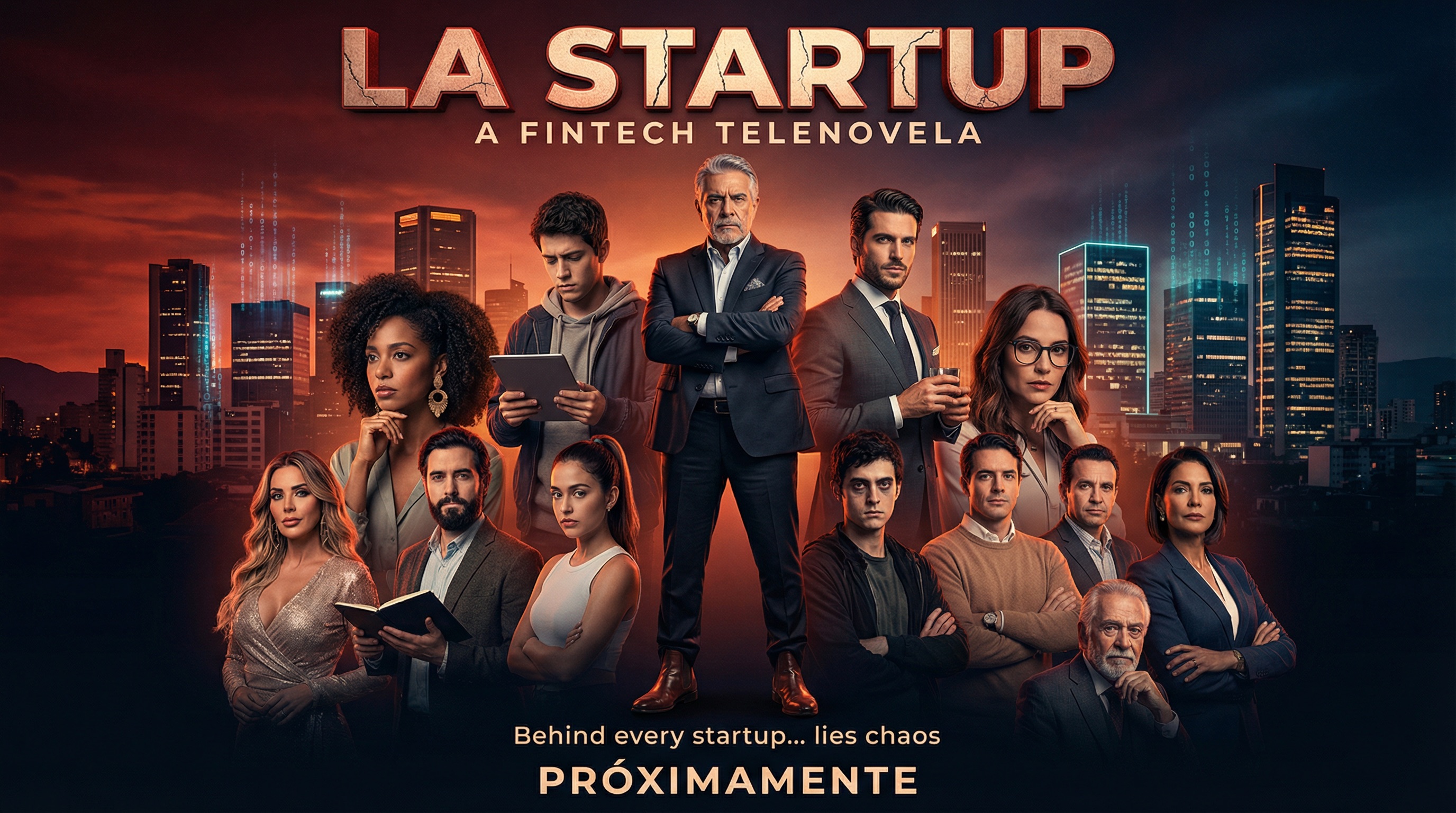
La Startup
A Fintech Telenovela from Bogotá
FinPulso raised $15 million to revolutionize Colombia’s payment sector. Six months later, the codebase is chaos, the lead developer has vanished, and the CEO is hiding the truth from investors.
This is the story of betrayal, ambition, romance, and redemption — told through the lens of software delivery dysfunction. Because the code doesn’t lie. But people do.
The Characters

Don Hernando
The Patriarch

Alejo Vega
The Villain

Sebastián
The Dreamer

Diego Vargas
The Genius

Isabella
The Heart

Luciana
The Traitor

Camila
The Rising Star

Stefan Richter
The Developer Advocate

Marco
The Italian Seducer
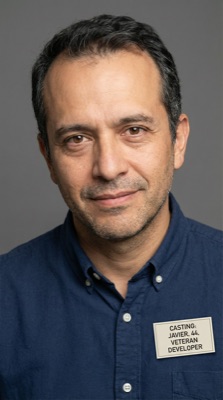
Pipe
The Survivor

Laura
The Keeper of Secrets

Mariana Ríos
The Investor
Software Development Lessons
Behind the drama, betrayal, and romance lies a deliberate exploration of real software delivery challenges. Each episode weaves technical concepts into the narrative, showing how engineering practices directly impact business outcomes.
Core Practices Explored
Trunk-Based Development & Continuous Integration
Diego’s missing documentation reveals a codebase built on continuous small changes rather than long-lived feature branches. Stefan demonstrates how trunk-based development eliminates integration friction — but only when the whole team commits to it.
Test-Driven Development (TDD)
Stefan’s pairing sessions with Camila show TDD as a design tool, not just testing. Writing tests first forces clarity about what code should do before implementation begins. The practice becomes Camila’s foundation for confident, deliberate work.
Bus Factor & Knowledge Distribution
Diego’s disappearance exposes FinPulso’s critical vulnerability: knowledge concentrated in one person. The team’s scramble to understand his code demonstrates why expertise must be shared through pairing, documentation, and collaborative ownership.
Technical Debt & Architecture
Alejo’s pressure for feature velocity created shortcuts that compounded over time. The team discovers that speed without sustainability leads to paralysis — every new feature becomes harder to add as the codebase degrades.
Sustainable Pace
Pipe’s burnout, Camila’s near-collapse, and Diego’s flight illustrate the cost of perpetual crisis mode. Sustainable delivery requires rhythm, not heroics. Long hours don’t compensate for poor process.
Deployment Frequency & Risk
Stefan introduces the concept that deploying more frequently — with smaller changes — reduces risk. The team’s fear of releases stems from accumulating large batches of untested changes, making each deployment a high-stakes event.
Intrinsic Motivation
Camila’s transformation from code-factory worker to engaged engineer shows what happens when developers understand the “why” behind their work. Autonomy, mastery, and purpose drive better outcomes than surveillance and velocity metrics.
Observable Signals vs. Status Reports
Stefan shifts the conversation from status meetings and confidence votes to measurable signals: lead time, deployment frequency, defect escape rate. Real progress shows up in production behavior, not PowerPoint slides.
The Cost of Methodology Theater
Marco’s Agile ceremonies (stand-ups, retrospectives, velocity tracking) exist without the underlying technical practices that make iterative delivery possible. Rituals without engineering discipline create the illusion of progress while masking dysfunction.
Ownership & Accountability
Don Hernando’s hands-off trust in Alejo allowed fiction to replace reality. Isabella’s courage to surface truth — backed by Stefan’s instrumentation — shows that accountability requires visibility into actual system behavior, not reassuring narratives.
The Central Message
Software delivery is not a methodology problem solved by frameworks and consultants. It is an engineering discipline requiring technical excellence, sustainable practices, and honest feedback loops.
The telenovela format lets us see what rigid case studies cannot: the human cost of dysfunction and the transformative power of restoring engineering integrity to software delivery.
Episodes
El Pitch Perfecto
December 25, 2025Champagne flows on a Bogotá rooftop as FinPulso celebrates its $15 million Series A. Six months later, the dream has become a nightmare. The lead developer has vanished. The AI everyone invested in...
About This Series
La Startup is a serialized fiction that uses the format of a Latin American telenovela to explore real challenges in software delivery: knowledge silos, technical debt, the gap between demos and reality, burnout, and the politics that undermine engineering excellence.
Each episode introduces concepts familiar to anyone who has worked in software — bus factor, continuous integration, sustainable pace — through characters you’ll love, hate, and root for.
The story is fiction. The dysfunction is all too real.