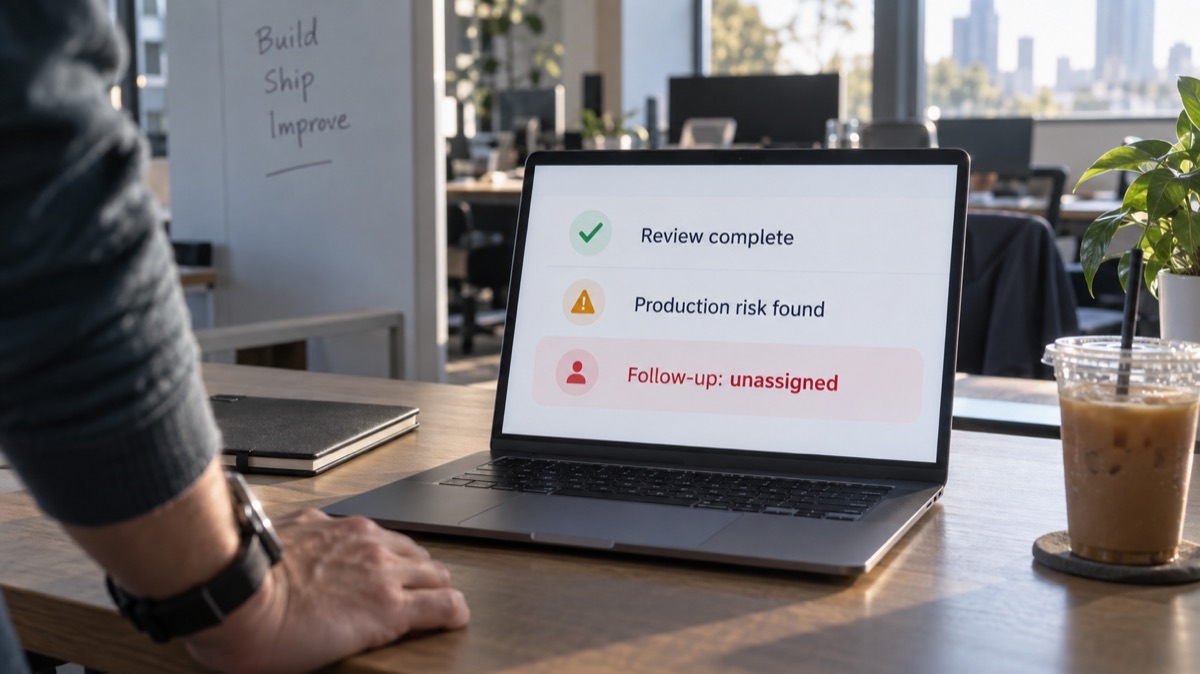
AI Makes Technical Execution Cheap. Judgment Stays Scarce.
Hiring more developers or replacing them with AI agents leaves the same question unanswered: who will make the decisi...
8 min read
22.08.2026, By Stephan Schwab

When an AI workflow changes from useful to absurd, it is not having a bad day. It is a software system without clear contracts, reliable checks, or ownership after the demo. Prompts can improve local behavior but cannot replace executable expectations. Any workflow that touches customer communication, files, approvals, or money needs defined correctness, monitoring, clear fallback behavior, and accountable software delivery.
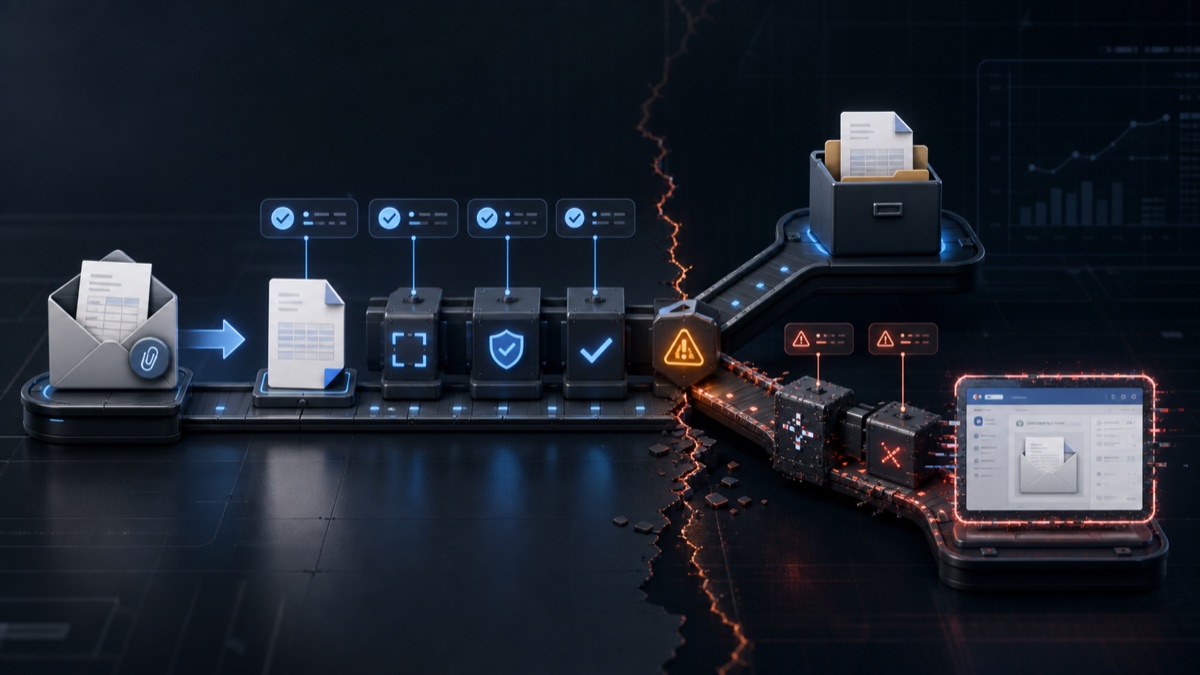
The funniest part of many AI regressions is not the bug.
It is the vocabulary around the bug.
An agent that handled invoice mail correctly last week now behaves like a confused intern with a screen-capture addiction, and grown adults start asking whether the model is having one of its emotional phases. That language is understandable. It is also a small disaster. The moment the conversation turns mystical, the real ownership question leaves the room.
An AI workflow did not wake up in a mood.
Something changed in a system.
The AI workshop will not ship, because the workshop is not the system and the model is not the control plane.
This is the mental trap for many product people, operations leads, founders, and workflow modernizers. They describe the work in business terms: automate invoice handling, reduce manual effort, connect tools, help the team move faster, roll out AI support. All reasonable language.
Then the workflow becomes important.
Now an inbox matters. Attachments matter. File types matter. Email layout matters. Permissions matter. Vendor APIs matter. Retry behavior matters. The distinction between downloading a document and taking a screenshot of it suddenly matters a lot, because one can feed the next step in a controlled process and the other is a clown mask pretending to be a document pipeline.
That is software.
Not because the company sells software.
Because the company now depends on software behavior to make a business process work.
This is exactly why seemingly “non-technical” AI efforts keep wandering into technical pain. The organization thinks it bought cleverness. What it really bought was a new operational dependency with moving parts, edge cases, integration assumptions, and failure modes.
And that dependency needs to be split properly.
Use the LLM where ambiguity is real: summarizing, drafting, classifying messy input, proposing options, helping a human judge a fuzzy situation.
Do not use the LLM as the control system for a step that must execute predictably.
If the job is “download the attachment, store the file, preserve metadata, and pass the correct object to the next step,” that is ordinary software. It should be handled by deterministic tools and code. Handing that responsibility to a probabilistic model is not innovation. It is category confusion.
Teams often respond to regressions the same way they respond to a disappointing first draft from a human assistant: give more feedback, restate the instructions, add another constraint, expand the skill, tighten the wording, remind the agent what it should have done.
Sometimes that helps. Good. Use it.
But do not confuse “we improved the prompt” with “we regained control of the workflow.”
Control comes from explicit expectations that survive memory, staff turnover, vendor changes, and the next excited round of optimization. If the intended behavior is “download the attachment, store it in the right location, preserve metadata, and hand the file to the next step,” then that behavior needs more than a beautifully phrased instruction. It needs checks.
Can the system tell the difference between an attachment download and an image capture?
Can it detect that the wrong artifact type was produced?
Can it surface the failure before the next step quietly accepts garbage?
Can somebody replay the run and see where behavior diverged?
Can the workflow fall back safely instead of continuing with decorative nonsense?
If the answer to those questions is no, the regression is not surprising. The only surprising part is that the workflow behaved for as long as it did.
This is the part non-developers keep getting wrong.
They see an LLM perform something impressive once and assume the model is a general replacement for software. It is not. It is a probabilistic component that can be useful inside a system designed by people who understand where probability is acceptable and where it is not.
Normal software did not become obsolete because a model can narrate its own guesses with confidence.
Agentic coding is not “make me X”. The same mistake shows up there too: people confuse a useful probabilistic collaborator with a deterministic execution engine and then act surprised when the workflow drifts.
Yes, providers change models. Yes, APIs shift. Yes, external dependencies occasionally regress. None of that rescues the buying organization from responsibility.
If your business process depends on a vendor model, then vendor drift is part of your system design. Pretending otherwise is managerial superstition.
The question is not whether the provider changed something. The question is what your organization built around that possibility.
Did anyone define the operational contract?
Did anyone decide what must never change silently?
Did anyone put monitoring around the critical outputs?
Did anyone make room for rollback, fallback, manual override, or approval gates?
Did anyone connect product intent, workflow knowledge, and software judgment in the same room?
That last part matters more than most teams want to admit. Many AI efforts are led by people who can see the business value, guided by people who can talk confidently about tools, and implemented by someone somewhere in the stack who is expected to make it work. What is missing is the cross-cutting senior who can translate all of that into a durable system instead of a streak of lucky runs.
Lucky runs are not reliability.
They are borrowed time.
The wrong question is:
“Did the model get worse?”
That question is not useless. It is just too small.
It keeps attention on the most fashionable component in the stack while ignoring everything else that had to go right for the workflow to behave.
The better questions are uglier and therefore more useful:
Those are software questions disguised as workflow questions.
That is the point. Much of modern AI adoption is software work in business clothing. The clothes confuse buyers. The blast radius does not.
And one of the software questions is brutally simple:
Should this step be handled by an LLM at all?
For deterministic control steps, the answer is often no.
Use the model to interpret. Use software to execute.
There is a reason this pattern now shows up in product circles instead of only in developer circles. Product and operations people are increasingly close to the real workflow problems. They see friction earlier. They see waste earlier. They can spot a valuable automation target before a technical team even gets invited.
That is good news.
The bad news is that workflow proximity can create false confidence. Because the pain is visible, the system starts to feel understandable. Because AI can produce an impressive demo quickly, the implementation starts to feel light. Because the people involved are smart and thoughtful, the missing discipline starts to feel like a detail that can be filled in later.
Later is where regressions breed.
A useful product strategist can identify where automation helps. A useful developer can make a system survive contact with reality. The market keeps pretending those are separable jobs once the AI tooling gets good enough.
It is nonsense.
The more critical the workflow becomes, the more the business needs both perspectives tied together by someone who can own the seam.
That seam is where most AI projects quietly fail. Product people can see the friction. Developers can see the failure modes. Only non-developers tend to believe the model itself replaces the need for ordinary software design. It does not. It just makes that misunderstanding more expensive, faster.
They stop asking whether the model is temperamental and start designing for drift.
They define critical outputs in concrete terms.
They add small, brutal checks around the steps that matter.
They move deterministic behavior out of the model and into ordinary software wherever they can.
They log enough to replay failures without folklore.
They decide which behavior belongs in prompts and which belongs in code or tooling.
They treat vendor change as a normal operational risk, not an insult from the universe.
They give somebody authority to say, “No, this workflow is not stable enough yet to be trusted with money, customers, or compliance.”
And they stop filing AI delivery problems under motivational categories like adoption, enablement, or experimentation once the workflow has entered production reality.
That shift can feel annoyingly sober after the excitement of the first working runs.
Good.
Sobriety is usually what separates an impressive demo from a system the finance team can survive.
Tell me what is happening. I listen, ask a few practical questions, and reflect back what I see: where the risk may sit, what may be blocking delivery, and what looks worth checking next. No pitch, no obligation. Confidential and direct.
Talk it through. Practical reflection, no pitch.
Start a ConversationTelenovelas show what we can't say in client meetings. The drama is heightened, but the patterns are real.
 Process Theater Takes Hold
BergMotor's QA team in Passau reads QuantumMind's integration documentation and asks the question nobody wanted to hear: where is the safety analys...
Embedded into your team as an active contributor, reducing delivery friction and helping important work move cleanly.
Peer-style technical assessments before far-reaching decisions; reduce architectural and product risk early.
Ship working software to real users earlier. Measure impact and adapt based on evidence rather than assumption.
High quality, maintainable software. Short-term augmentation that leaves lasting capability in your own team.
Visibility and hands-on delivery
Navigator gives your leadership clear insight into patterns, blockers, and capacity. Our Embedded Delivery Partner writes production code with your team and gets delivery moving.