AI Makes Technical Execution Cheap. Judgment Stays Scarce.
Hiring more developers or replacing them with AI agents leaves the same question unanswered: who will make the decisi...
8 min read
18.08.2026, By Stephan Schwab

The AI workshop will not ship. The maturity model will not integrate with your CRM. The transformation deck will not handle exceptions, log decisions, pass an audit, recover from bad input, or explain why the agent just sent the wrong answer to a customer. That is the part of the AI conversation senior management hears too late. The easy story is everywhere: clever colleagues, instant productivity, empowered business teams, a new operating model, maybe a few inspiring panels about the future of work. Then the real bill lands in the CTO's world. Which workflow changes? Which data is touched? Who owns the errors? Where are the tests? Who can deploy a fix? AI adoption is not primarily a change-management program. It is software work wearing business clothing. Change management can help people accept a new way of working, but it cannot replace architecture, integration, deployment discipline, observability, security, privacy, and maintenance. The useful role is not the AI prophet with a keynote. It is someone close enough to the business to understand the workflow and technical enough to make it survive contact with production. Call that a Forward Deployed Engineer, embedded senior, delivery partner, or simply the adult in the room. The label matters less than the scars. Which of those questions is still unanswered in your AI rollout?

The phrase that started the irritation was the “IQ500 colleague.”
It is brilliant executive bait: short, impressive, slightly mystical. It makes AI sound like a stellar hire who quietly joins the team and lifts everyone through cognitive horsepower.
The slogan surfaced in discussions around corporate AI maturity models. Level 0: access to models. Level 1: capacity gains from optimized workflows. Level 2: team agents. Higher levels: business model shifts. That is a serious framework.
Then the metaphor took over: what would we redesign if an impossibly smart colleague joined the team?
As a prompt to stop treating AI like a glorified search box, it is harmless. Taken literally, it is nonsense. Models do not become colleagues because a slide gives them a number. They carry no responsibility, understand no business context, and own no consequences. They agree too easily, hallucinate plausibly, and sound confident while being wrong.
The danger is not ambition. The danger is that the metaphor lets people sound strategic while avoiding operational reality.
The issue is not a shortage of smart voices. It is the filter.
The people invited to explain AI to senior management are rarely the ones who have to run the result. They are change managers, HR strategists, innovation moderators, and keynote consultants who discovered the market rewards fast confidence.
Some bring structure. Some help leadership move past fear. But danger begins when adoption framing becomes the entire strategy: mindset, literacy, enablement, culture.
These are not fake topics. They are incomplete topics.
AI adoption becomes real only when it alters a workflow. And a workflow is not a slide. It is the messy place where business intent hits software reality: identity, permissions, data quality, legacy systems, exceptions, audit trails, and undocumented compromises.
That is where inspiration ends and software work begins.
The executive fiction is that AI transformation is mostly about people learning new habits.
Learning matters. But the moment AI touches an operational process, software questions demand answers:
That is the baseline of seriousness.
AI will not run your company by itself. It amplifies the system you attach it to. Paired with clear workflows and disciplined deployment, it delivers leverage. Paired with organizational confusion, it produces faster confusion in polished prose.
Change management helps people move. Software discipline decides whether the destination works.
Palantir made the Forward Deployed Software Engineer famous. Enterprise AI is now reviving the pattern because the value is never in the platform alone. Value emerges when skilled practitioners embed near the problem and adapt software to real operations.
Strip away the mystique and keep the core: a technical practitioner operating inside the business problem with the authority to turn fuzzy intent into working software.
The role sits in the productive middle:
Leadership does not need another visionary describing AI potential, nor isolated developers receiving sanitized requirements weeks too late. It needs someone standing in the workflow asking what software must exist for the change to hold.
AI demos are seductive because the visible surface arrives in days. A chatbot answers questions over docs, an agent drafts customer replies, or a dashboard updates live. The room applauds, consultants say “scale,” and the deck marks a quick win.
Then reality charges by the hour.
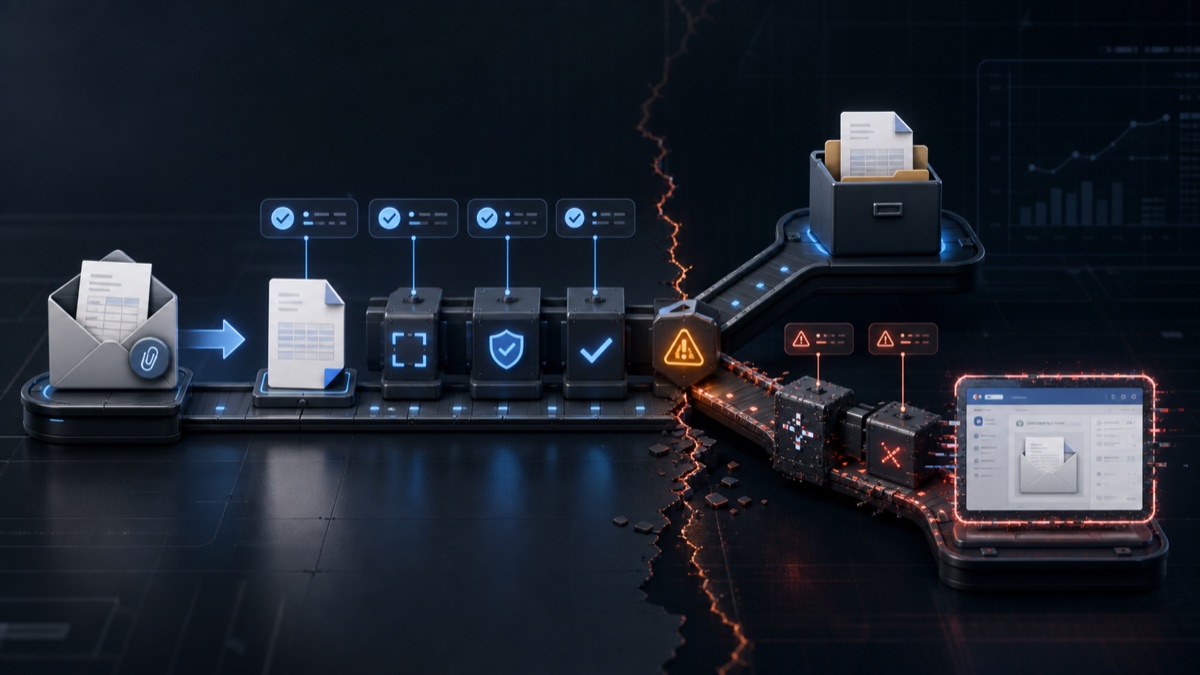
Internal documents contradict each other. Permissions are too broad. The model cites obsolete policy. The agent takes unreplayable actions. Error handling in third-party APIs falls over. Security asks about access, legal asks about data retention, and operations asks who gets paged at 2 AM.
This is what the workshop never ships.
Vibe coding is not software development because software is the surrounding discipline that keeps output working across time, scale, and failure. Demos got cheap. Robust systems did not.
The core practices of software development return with a smirk. The techniques once dismissed as developer preferences are precisely what makes AI safe to deploy.
AI generates more code, workflows, and plausible explanations than legacy release cycles can absorb. Without discipline, you get output inflation: bigger repos, bloated process maps, and compounded risk. With discipline, you get genuine leverage.
Predictable software delivery was never about process worship. It was about fast feedback loops. AI raises the penalty for lacking them.
Compliance is non-negotiable. GDPR, the AI Act, data sovereignty, and auditability are real constraints. Anyone urging enterprise teams to “move fast and ignore rules” is selling imported recklessness.
Yet governance has its own failure mode: substituting policy for delivery.
Committees draft principles, risk matrices, and operating models while real work migrates to unmonitored scripts, SaaS automations, and ad-hoc prompts. That is paperwork watching shadow IT unfold.
Effective governance requires delivery visibility. It demands knowing which systems exist, where data flows, who owns the components, and how incidents are resolved.
The CTO must anchor this dialogue—not to block progress, but to make commitment operationally honest.
When excitement sweeps the executive room, the CTO does not need to perform skepticism. The stronger move is asking operational questions consistently:
These questions cut through abstraction. Change managers can still contribute, vendors must discuss operational mechanics, and leadership sees that the CTO is defining what progress must survive.
That is not anti-AI. It is anti-theater.
The riskiest AI initiatives start innocently: a department pilot, a turnkey vendor pitch, a workflow built around IT because “engineering is backlogged.”
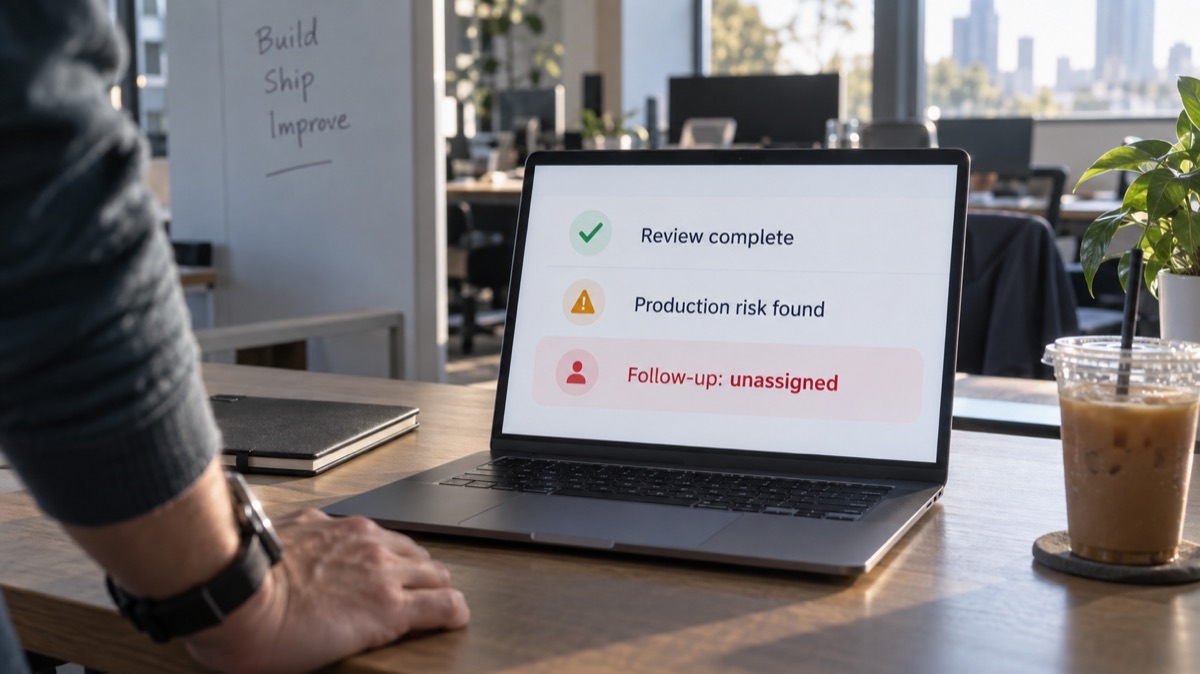
That creates software liability without technical ownership. By the time IT is consulted, the tool has active users, political momentum, and unmanaged risks that the CTO is suddenly expected to sanitize.
AI work belongs with the CTO the instant it touches systems, data, or customer workflows.
A useful external partner reinforces that responsibility rather than bypassing it. They embed near the business problem and the development team to turn executive intent into reliable software.
Whether you call it a Forward Deployed model, embedded delivery partnership, or senior software judgment near the work, the conclusion stands: the workshop will not ship, the deck will not integrate, and the clever colleague will not write the postmortem.
Someone still has to build the system, own the consequences, and know where software breaks.
Tell me what is happening. I listen, ask a few practical questions, and reflect back what I see: where the risk may sit, what may be blocking delivery, and what looks worth checking next. No pitch, no obligation. Confidential and direct.
Talk it through. Practical reflection, no pitch.
Start a ConversationTelenovelas show what we can't say in client meetings. The drama is heightened, but the patterns are real.
 QuantumMind Arrives
Three weeks in, Stefan's teams are shipping. Radio plays podcasts. Navigation reads temperature sensors from the CAN bus. Climate control has its f...
 The Scattered — Part Two
After Whitaker Payroll shuts its doors, the damage spreads unevenly. Some former employees find new work quickly. Others discover that decades of l...
Embedded into your team as an active contributor, reducing delivery friction and helping important work move cleanly.
Peer-style technical assessments before far-reaching decisions; reduce architectural and product risk early.
Ship working software to real users earlier. Measure impact and adapt based on evidence rather than assumption.
High quality, maintainable software. Short-term augmentation that leaves lasting capability in your own team.
Visibility and hands-on delivery
Navigator gives your leadership clear insight into patterns, blockers, and capacity. Our Embedded Delivery Partner writes production code with your team and gets delivery moving.