La Nueva
Don Hernando hires a German specialist to fix FinPulso's technical crisis. But Stefan Richter doesn't arrive with solutions — he arrives with questions. Why does no one have production access? Why do deployments happen at 3am? And why does everyone look away when he mentions Diego's name? Meanwhile, Alejo and Marco begin their counter-offensive.
The Man from Panama
El Dorado International Airport. 6:47 AM.
Stefan Richter walks through customs with nothing but a carry-on bag and a worn leather notebook. He’s slept on worse flights than the red-eye from Panama City, and at forty-six, he’s learned that first impressions matter less than people think.
The driver holding the sign that says “RICHTER — FINPULSO” is young, nervous, checking his phone every few seconds. Stefan files this away. Nervous staff usually means nervous management.
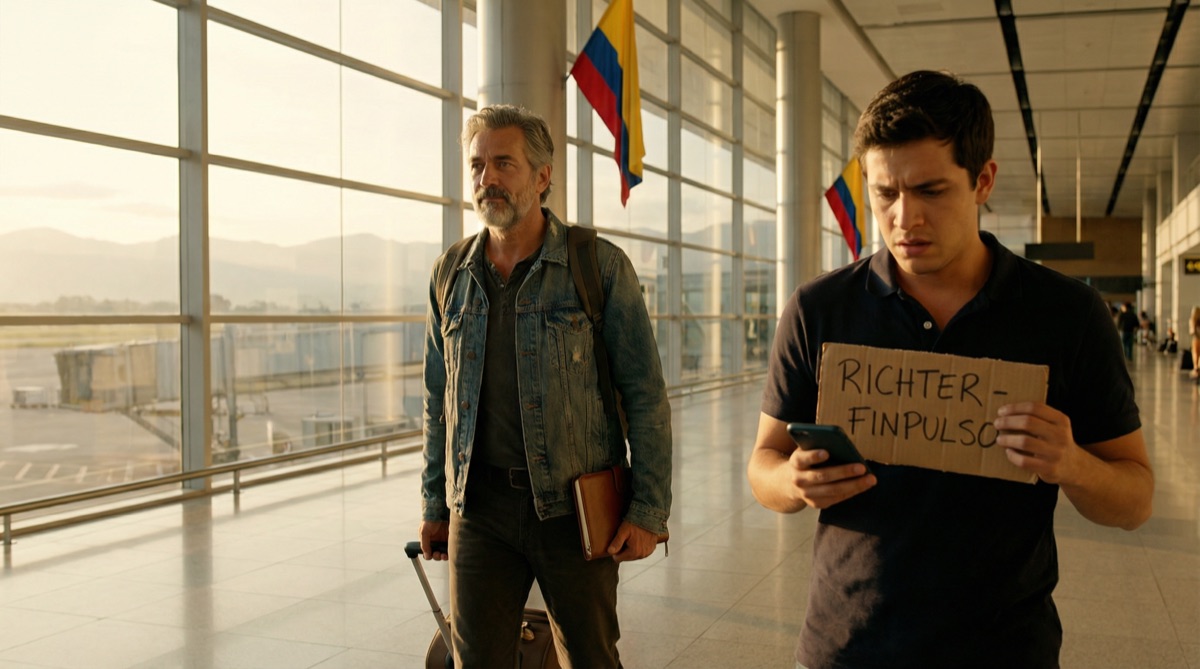
“Señor Richter? I’m Carlos. I work for Don Hernando.”
“Stefan is fine.” He follows Carlos to the parking lot, taking in the Bogotá morning — the mountains rising blue in the distance, the traffic already building, the smell of rain-washed streets and diesel. “How long have you worked for Don Hernando?”
“Twelve years. Since the ranch.”
“You came from Los Llanos?”
Carlos looks surprised. “You know the Llanos?”
“I’ve read about them. The llaneros. The cattle culture.” Stefan smiles slightly. “Don Hernando hired someone who still calls himself a rancher. That tells me something.”
“What does it tell you?”
“That he values loyalty. And that he probably doesn’t understand what he’s gotten himself into with a software company.”
Carlos says nothing, but his grip on the steering wheel tightens.
The drive into Chapinero takes forty minutes through morning traffic. Stefan uses the time to review the brief Don Hernando sent him — sanitized, of course. A Series A success story turned crisis. A missing lead developer. An investor demanding answers.
What the brief doesn’t say is more interesting than what it does.
First Impressions
The FinPulso office occupies the fourth floor of a renovated building that probably looked revolutionary five years ago. Now the exposed brick and Edison bulbs feel like a costume — startup theater for investors who expect certain aesthetics.
Laura Méndez meets him at the elevator. Her handshake is professional, her smile practiced, her eyes assessing.
“Señor Richter. Don Hernando is expecting you.”
“Stefan, please. And Laura — may I call you Laura? — I’d like to meet the development team first.”
She hesitates. “Don Hernando specifically asked—”
“I know. But I’ve found that executives rarely know where the real problems are. They know where they think the problems are, which is different.” He gives her a disarming smile. “Indulge me for an hour. Then I’ll meet with Don Hernando and tell him exactly what he wants to hear.”
Something flickers in Laura’s eyes — amusement? Recognition?
“One hour,” she says. “I’ll tell him you’re getting settled.”
She leads him to the development area: an open floor of desks, monitors, the detritus of late nights — empty coffee cups, energy drink cans, a whiteboard covered in diagrams that look like they haven’t been updated in months.
Three people are present. It’s not yet 8 AM.
“Stefan, this is Felipe Gómez — we call him Pipe. He’s been here longest.”
Pipe is forty-something, tired, with the posture of someone who’s stopped expecting good news. He nods without getting up. “Great. Another fucking consultant. Just what we need.”
“Not exactly,” Stefan says. “I write code. May I?” He gestures at an empty chair near Pipe’s desk.
Pipe’s jaw tightens. “Suit yourself. But don’t expect me to pretend I’m glad you’re here.”

“How long have you been with FinPulso?”
“Since the beginning. Before it was called FinPulso. Before the money.”
“You’ve seen a lot.”
“I’ve survived a lot. Different thing.”
Stefan opens his leather notebook, writes something. Pipe cranes his neck to look, then snorts. Stefan has written: Pipe — survivor. Knows where the bodies are buried.
“You write everything down?”
“Memories lie. Paper doesn’t.” Stefan looks around. “Where is everyone else?”
“Camila comes in early — she’s probably getting coffee. Sebastián works nights, sleeps late. The others…” Pipe makes a vague gesture. “There used to be more.”
“How many left after Diego?”
The name lands like a dropped glass. Pipe’s expression closes.
“You’ve done your homework.”
“I read the brief. But briefs are written by people with agendas. I’d rather hear from you.”
Pipe is silent for a long moment. Then: “Four. Four left after Diego. They could see what was coming.”
“And you stayed.”
“I’m too old to start over. And too proud to let the platform I helped build die because some genius decided to take his toys and go home.”
Stefan makes another note. “Tell me about deployments. How does code get to production?”
Pipe laughs — a bitter, hollow sound. “That’s the thing. It doesn’t. Not anymore.”
The Coffee Run
Camila Torres returns with four cups of coffee balanced in a cardboard carrier. She stops at the edge of the development area, surprised to see someone new at Pipe’s desk.
“Camila, this is Stefan.” Pipe takes his coffee without looking up. “He’s the new consultant. Different from the last one, apparently.”
Stefan rises, extends his hand. “I’m not actually a consultant. I’m a Developer Advocate. I work with teams, not on them.”
Camila shakes his hand, uncertain. “What’s the difference?”
“Consultants tell you what to do. I help you see what you’re already doing — and whether it’s what you want.”
She considers this. “And if we’re doing things wrong?”
“Then we figure out what ‘right’ looks like. Together.” He gestures at the remaining coffees. “Who are those for?”
“Sebastián. And… one was for Diego. Force of habit.”
Stefan takes the extra cup. “May I?”
Camila nods. Stefan drinks, then makes a note in his notebook. She catches a glimpse: Camila — brings coffee for ghosts. Still believes.

“Can I see your codebase?” he asks.
Pipe nearly chokes on his coffee. “Just like that?”
“I can read architectural decisions faster than people can explain them. And people lie about their architecture. Code doesn’t.”
Camila glances at Pipe, who shrugs.
“The main repository is…” She trails off, fingers hovering over her keyboard. “Actually, I need to get you credentials. And the CI/CD pipeline is… it’s complicated.”
“Show me.”
She pulls up a diagram on her screen — boxes and arrows, deployment stages, integration points. It looks reasonable until you know what to look for.
Stefan leans in, tracing the flow with his finger. “This box here — ‘Production Deploy’ — what triggers it?”
“Manual approval from Diego.”
“And Diego is gone.”
“Yes.”
“So nothing has been deployed in…”
“Forty-three days.” Camila’s voice is quiet. “We can push to staging. We can run tests. But production requires credentials only Diego had.”
Stefan is very still. “And no one thought to address this earlier?”
“We raised it.” Pipe’s voice is bitter. “We raised it every damn week. Management said it was fine, Diego would be back, we should focus on features. And then Diego didn’t come back, and now we can’t deploy shit, and management wants to know why we’re behind schedule.”
“¿Y esto está en producción?” Stefan murmurs — a question to himself.
“What?”
“Nothing. An old habit.” He makes another note. “Show me the test suite.”
The Test Suite
Camila navigates to the testing infrastructure. Her movements are careful, deliberate — the habits of someone who has learned that one wrong click can bring down staging.
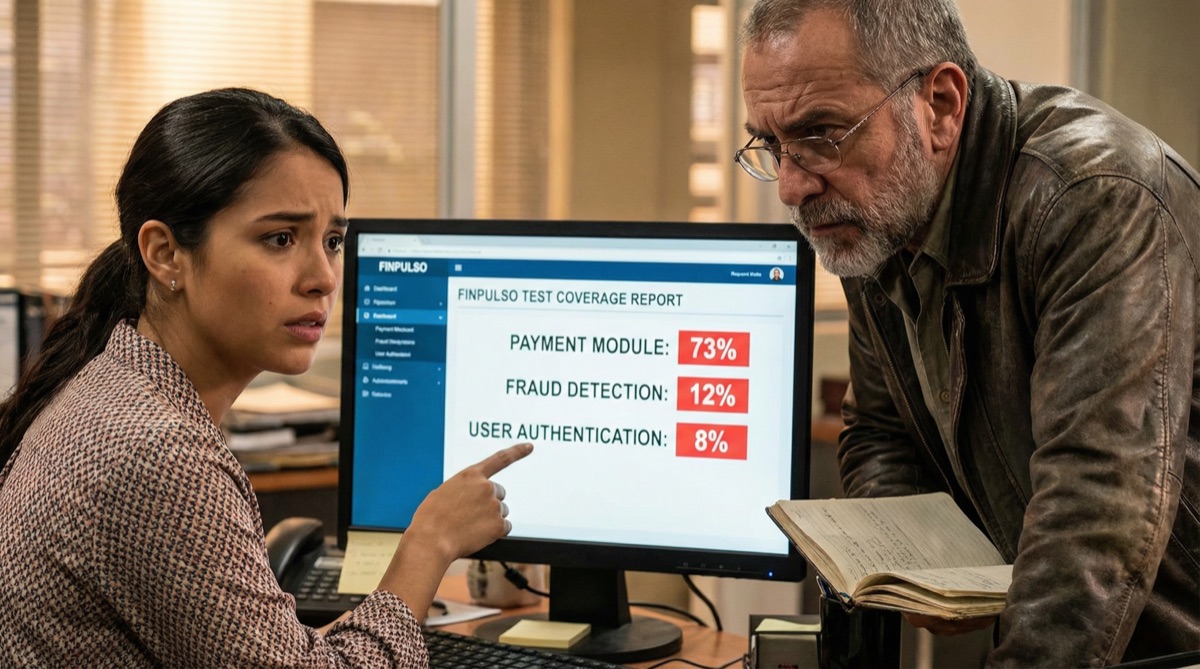
“Here’s our test coverage report.”
Stefan reads in silence. The numbers tell a story: 73% coverage on the payment module, 12% on fraud detection, 8% on user authentication. The core business logic is barely tested. The parts that don’t matter have excellent coverage.
“Who wrote the payment tests?”
“Diego. Before he left.”
“And the fraud detection tests?”
Camila hesitates. “There… aren’t any. Not real ones. The contractor team in Venezuela validates manually, so we never built automated verification.”
“The contractors who are your ‘AI.’”
“Yes.”
Stefan closes his notebook. For a long moment, he says nothing.
Then: “How long have you known this was unsustainable?”
Camila meets his eyes. She’s young, he thinks, but not naive. There’s steel there.
“Since my second week. I wrote a memo. Sent it to Sebastián.”
“And?”
“He agreed. Said he’d raise it with Don Hernando. Then Alejo found out and…” She stops.
“And?”
“I was told to focus on my assigned tickets. Junior developers should learn before they criticize.”
Stefan writes something in his notebook. This time he angles it so she can see: Camila was right. They silenced her.
“Show me what you’ve been working on,” he says. “The things you’re not supposed to be working on.”
The Private Repository
The FinPulso office has a small meeting room with glass walls that someone has optimistically named “The Innovation Lab.” At 11 AM, it’s empty. Camila pulls the blinds and boots up her personal laptop.
“This stays between us,” she says.
“Of course.”
She navigates to a GitHub repository — personal account, not company. The project is called FinPulso-Core-v2.
“I started this six months ago. After I realized the main codebase was…” She searches for a diplomatic word.
“Unmaintainable?”
“Hostile. It actively resists change. Diego built it to work, but he built it in his head. No one else can follow the logic.”
Stefan scrolls through the repository. Clean directory structure. Comprehensive test suite. Continuous integration configured and passing. Documentation that actually explains things.
“You rebuilt the core platform.”
“The critical parts. Payment processing, user auth, the basics. It’s not complete, but what’s there works. And it’s tested.”
“Does it pass the existing integration tests?”
“There are no existing integration tests. But I built my own.” She pulls up a test run. Green checkmarks cascade down the screen. “Every feature I reimplemented, I wrote tests first. Then I made the tests pass.”

Stefan is quiet for a long time.
“You taught yourself TDD,” he says finally.
“YouTube. Online courses. Books in English — my English isn’t perfect, but the code examples make sense.”
“And you never told anyone.”
“I told Pipe. He thinks I’m crazy, but he’s been reviewing my code when he has time. And I almost told Sebastián, but…” She hesitates. “Something happened. A few weeks ago. Someone sent me a message.”
“What kind of message?”
Camila pulls up her phone, shows him a screenshot:
Unknown I know what you've been building. Keep going. Don't let them see it yet.
“No signature. The number is gone now — the messages deleted themselves.”
Stefan studies the screenshot. “Diego.”
“I think so.”
“He’s watching.”
“He never stopped. He just stopped being visible.”
The Brief
Don Hernando Castillo is not a patient man. By 11:30, he’s pacing his corner office.
“Where is he?”
Laura checks her phone. “Still with the development team. He asked for an hour.”
“It’s been nearly three.”
“He’s thorough.”
Before Don Hernando can respond, the door opens. Stefan enters without knocking — a calculated choice that makes Don Hernando’s jaw tighten.
“Forgive me, Don Hernando. I was learning interesting things.”
“Such as?”
Stefan takes a seat without being invited. Another calculation.
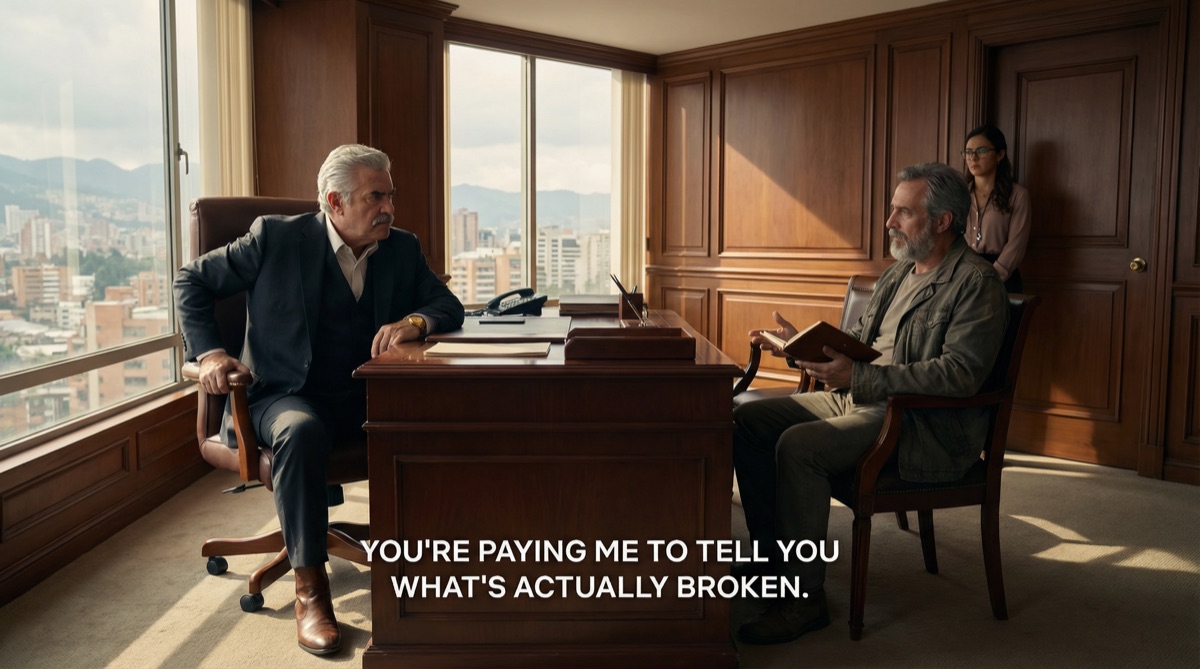
“Such as the fact that your platform hasn’t been deployed in forty-three days. Such as the fact that the staging environment uses different infrastructure than production, so nothing tested there can be trusted. Such as the fact that no one currently employed has credentials to deploy to production.”
The silence stretches.
Don Hernando sits slowly. “You’ve been here three hours.”
“I ask good questions.” Stefan opens his notebook. “And people are tired of lying. They want someone to tell the truth to.”
“What else did they tell you?”
“That your lead developer didn’t just leave — he was driven out. That your co-founder has been sidelined into irrelevance. And that the young woman who makes coffee every morning might be the best developer you have left, except no one ever asks her opinion.”
Don Hernando’s face has gone very still. “You’re direct.”
“I’m expensive. You’re not paying me to be diplomatic.”
“I’m paying you to fix this.”
“No.” Stefan shakes his head. “You’re paying me to tell you what’s actually broken. Fixing it — that requires decisions only you can make.”
Don Hernando considers this. “What do you need?”
“Time. Access. And a conversation with your CTO that you’re not present for.”
“Sebastián? He barely functions these days.”
“Perhaps because no one has asked him what he actually thinks. I’ll have a preliminary assessment for you by end of day.”
The Afternoon
Sebastián Duarte arrives at the office at 2 PM, looking like he slept in his clothes. He probably did. Since Diego’s document landed in his inbox, he’s been reading it over and over, trying to understand how they got here.
He finds Stefan at Pipe’s desk, both of them staring at code on a screen.
“You’re the German.”
Stefan turns. “And you’re the CTO who doesn’t have production access.”
Sebastián flinches. “It’s complicated.”
“Most dysfunction is.” Stefan rises, extends a hand. “Walk with me? I’d like to understand the product from your perspective.”
They end up on the building’s rooftop — the real one, not the fancy W Hotel terrace. It’s drizzling, but neither seems to mind.
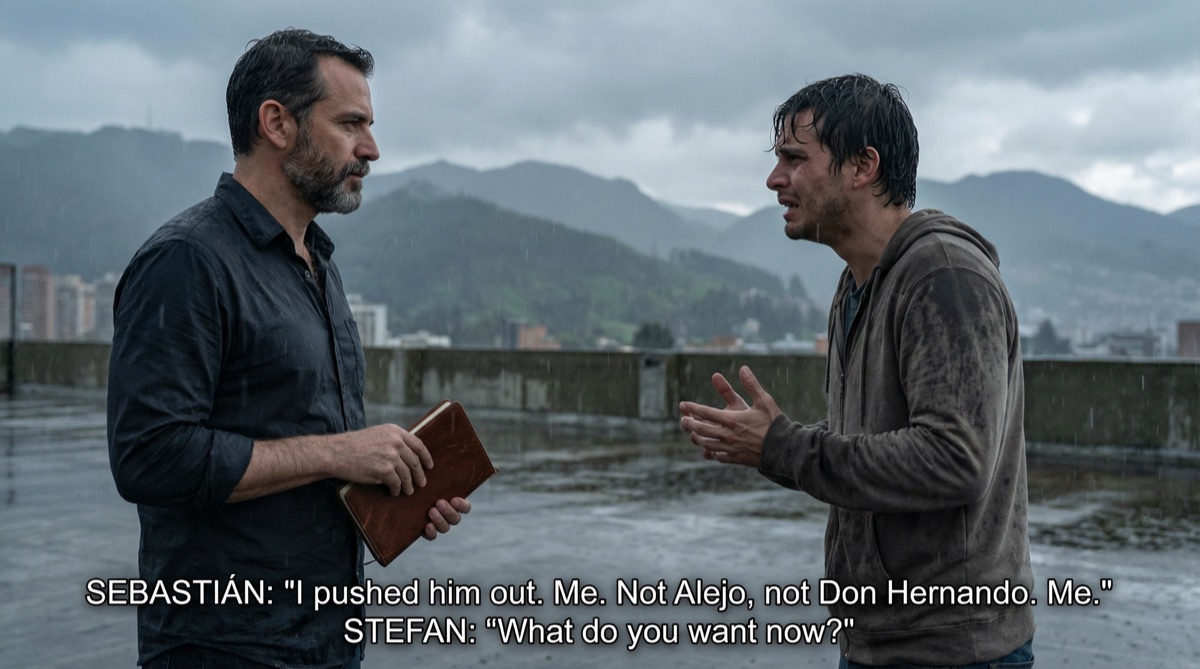
“You built the original prototype,” Stefan says. “In your parents’ garage.”
“A lifetime ago. Before Don Hernando, before the money, before…” Sebastián trails off. “Before we became a real company.”
“You don’t sound happy about that.”
“I’m happy we survived. I’m happy we have a chance. I just…” He stares at the gray sky. “This isn’t what I imagined.”
“What did you imagine?”
“A product that helps people. Colombian families who don’t have bank accounts, who pay fees to send money to their relatives, who get exploited by predatory lenders. FinPulso was supposed to change that.”
“And now?”
“Now we have PowerPoints about AI and investor meetings about runway and a platform that doesn’t work and a lead developer who…” Sebastián’s voice catches. “I pushed him out. Me. Not Alejo, not Don Hernando. Me.”
Stefan waits.
“He came to me. Months ago. With concerns — about the architecture, about the contractor team, about the promises we were making to investors. And I told him we’d address it after the funding closed. After the launch. After, after, after.” Sebastián laughs bitterly. “There’s always an after. Until there isn’t.”
“What do you want now?”
The question seems to catch Sebastián off guard. “What do you mean?”
“Everyone has told me what went wrong. What they’re afraid of. What they think I want to hear. No one has told me what they actually want.”
Sebastián is silent for a long moment. The drizzle turns to proper rain, drumming on the rooftop.
“I want to build something real.” Sebastián’s voice cracks. He turns away, pressing his fist against his mouth for a moment before continuing. “Something that works. Something I can be proud of, even if it’s smaller than what we promised.”
His eyes are wet. The words come out raw, broken.
“That’s all I ever wanted, you know? When Diego and I started this… God, we were so fucking naive. We thought we could change the world. Financial tools for people who’d never been served by banks. Real technology solving real problems.” He laughs bitterly. “And look at us now. A house of cards built on lies.”
Stefan nods. “That’s a start.”
“Is it enough?”
“It’s not my decision.” Stefan opens his leather notebook to a fresh page. “But I’ll tell you what I’ll tell Don Hernando: you have two paths from here. One leads to an honest reckoning — painful, expensive, but survivable. The other leads to more pretending — easier in the short term, fatal in the long term.”
“And what will Don Hernando choose?”
“That depends on what he learns between now and this evening.” Stefan closes his notebook. “Now. Tell me about Camila Torres.”
The Counter-Offensive
Across Bogotá. A coffee shop in Zona Rosa.
Marco Benedetti sips his cortado, watching Alejo Vega pace in the private room they’ve reserved. The Italian has learned to read Colombian anxiety — it manifests differently than European stress, more theatrical, more performative.
“This German,” Alejo says. “He’s a problem.”
“He’s a developer. Developers talk to developers. It means nothing.”
“He talked to Don Hernando for an hour. Alone. Laura says the old man looked thoughtful afterward.”
Marco sets down his cup. “Thoughtful how?”
“She doesn’t know. But Don Hernando asked her to pull the original investor agreements. The ones from before the Series A.”
“That’s… unusual.”

“That’s dangerous.” Alejo stops pacing. “Don Hernando doesn’t research. He decides. He commands. If he’s pulling old documents, it means someone challenged his assumptions.”
Marco considers this. He’s been in Bogotá four months now, billing FinPulso for “Agile transformation” while feeding carefully selected information to competitors. It’s not personal — it’s business. Every struggling startup is an opportunity for someone, and Marco has learned to be that someone.
But the German is a variable he hadn’t anticipated.
“What do we know about him?”
Alejo pulls out his phone, scrolls through notes. “Stefan Richter. German, obviously. Based in Panama. Works with companies in crisis — turnarounds, recoveries. Has a reputation for being effective.”
“Effective how?”
“He fixes things. Actually fixes them. Companies that hire him tend to survive.”
Marco’s expression doesn’t change, but something shifts behind his eyes. “That would be… inconvenient.”
“For our arrangement? Extremely.”
The Italian stands, adjusts his cashmere sweater. “Then we need to accelerate. The MiPago deal — how close are we?”
“They want due diligence on FinPulso’s technology. I’ve been stalling because our tech is a disaster.”
“Stop stalling. Give them what they want.”
“If they see how bad it is—”
“They’ll lower their offer. Which means Don Hernando gets desperate. Which means he needs my help negotiating. And suddenly I’m essential — not just useful.” Marco smiles, and it’s the smile of a predator who sees the trap coming together. “The German can fix the technology. But he can’t fix the board. And the board is where this gets decided.”
Alejo nods slowly. “I’ll reach out to Mariana. Frame it as concern. An independent perspective on the recovery plan.”
“Do that. And Alejo?”
“Yes?”
“Keep Sebastián busy. The last thing we need is the co-founder having opinions.”
The Evening Report
By 6 PM, Don Hernando has read Stefan’s preliminary assessment. Three times.
He gathers them in the main conference room: Alejo, Sebastián, Laura, and Stefan. The assessment sits on the table like an accusation.
“I’ve spent the afternoon reviewing this,” Don Hernando says. His voice is calm, which somehow makes it more dangerous. “And I’ve made some calls.”
Alejo shifts in his seat. “What kind of calls?”
“To Mariana at Vulcano. To our legal counsel. To a few old friends who understand business better than I understand technology.” He looks directly at Alejo. “And to a contact who knows the people at MiPago.”
The room goes very quiet.
“Don Hernando—” Alejo begins.
“You’ve been negotiating with them for two months. Without board authorization. Without my knowledge.”
Stefan watches Alejo’s face carefully. The CFO’s mask slips for just a moment — surprise, then calculation, then a smooth recovery.
“Those conversations were exploratory—”
“They were betrayal.” Don Hernando’s voice doesn’t rise, but something in it makes Alejo stop talking. “In my world, we have a word for people who negotiate behind their patrón’s back. We call them traidores.”
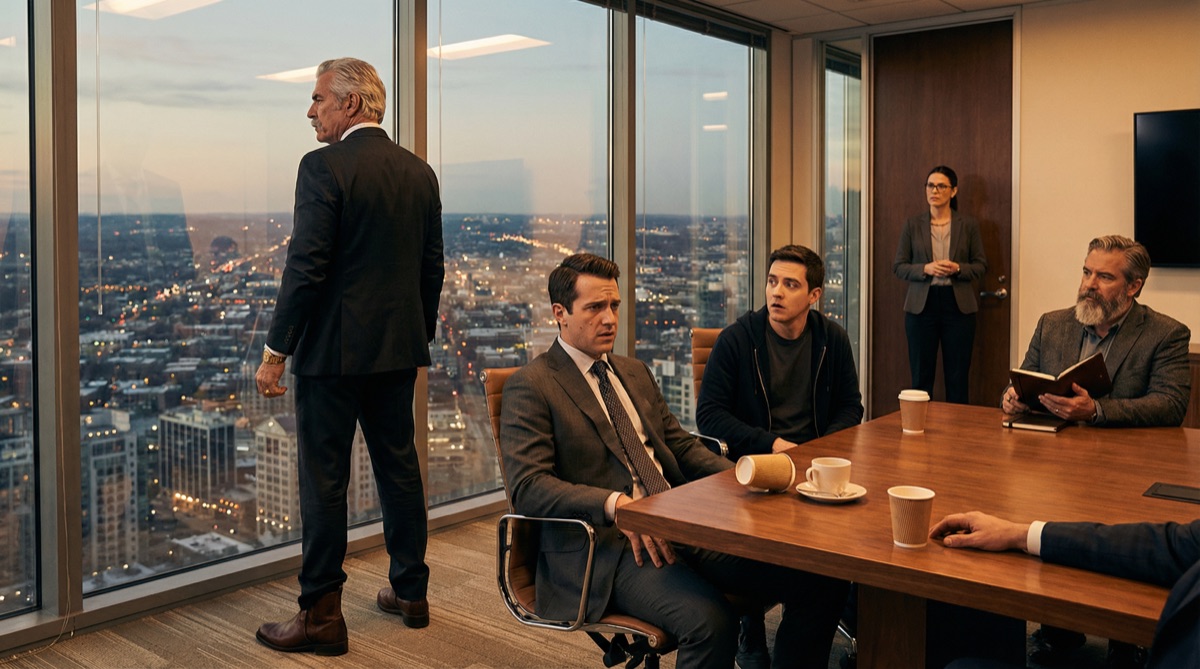
Sebastián stares at Alejo. “You were going to sell us out?”
“I was exploring options—”
“¡Silencio!” Don Hernando slams his palm on the table. The room shakes. “You will speak when I tell you to speak.”
He stands, moves to the window, looks out at the city lights beginning to flicker on.
“I made a mistake,” he says. “I thought this business was like the cattle business. Find good people, give them authority, trust them to deliver. But cattle don’t lie. Code, apparently, does.”
He turns back.
“Stefan will stay for three months. Full access. Full authority to assess. He reports to me directly — not to you, Alejo, not to the board. To me.”
“That’s highly irregular—”
“So is selling my company without asking.” Don Hernando’s eyes are cold. “You will continue as CFO because I need someone who understands the numbers. But if I catch you negotiating again, you will leave this building with nothing. Nada. Not even your reputation.”
Alejo’s face is a mask. “Understood.”
“Sebastián.” Don Hernando’s voice softens slightly. “You are the CTO. It’s time to act like one. Whatever Stefan needs, you provide. Whatever decisions need to be made about the technology, you make them. With his guidance, but you make them.”
Sebastián nods, still processing.
“And we need Diego back.”
“He won’t come back,” Sebastián says. “After everything that happened—”
“Then you find a way.” Don Hernando moves to the door. “We have two weeks until Mariana returns. Two weeks to show her a path forward. Two weeks to save my son’s legacy.”
He pauses at the threshold.
“Don’t disappoint me again.”
The door closes.
Stefan opens his notebook and writes: Day 1 complete. The real work begins tomorrow.
The Watcher
Late night. Somewhere in Bogotá.
Diego Vargas sits in the dark, laptop glowing, watching a feed that he shouldn’t have access to anymore. The FinPulso internal Slack. The email threads. The calendar that shows Stefan’s schedule for tomorrow.
He didn’t expect Don Hernando to hire someone like this. The Italian was predictable — all surface, no substance. But the German…
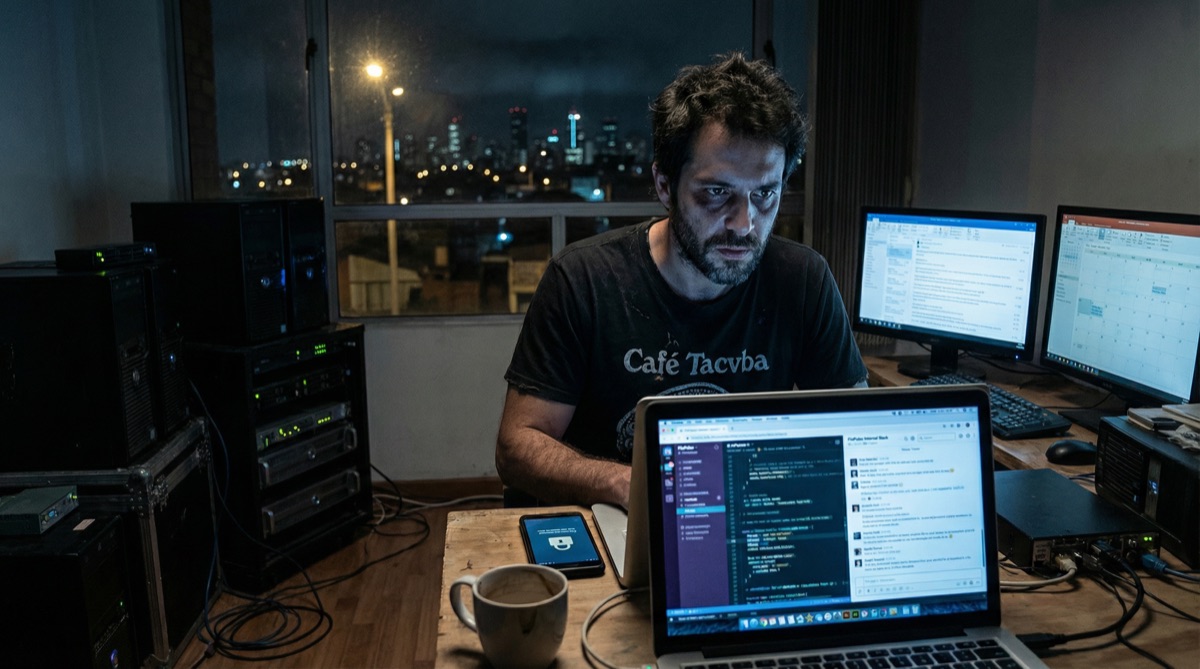
Diego pulls up Stefan’s background. Twenty-five years in software. Successful turnarounds in Germany, the US, Latin America. A reputation for honesty that borders on brutal.
This could work. This could actually work.
But there’s a problem. The same problem there’s always been.
Alejo is still there. Marco is still whispering. And the document Diego sent — the one Sebastián hasn’t shared with anyone — contains information that Alejo would kill to bury.
Not metaphorically.
Diego’s phone buzzes. A message from an encrypted app:
Unknown Our friend landed today. He found Camila's project. Impressed.
Diego I know. I'm watching.
Unknown Time to make contact?
Diego Not yet. Let him see for himself first.
Unknown And if Alejo moves faster?
Diego Then we accelerate. But Stefan needs to trust the evidence, not just my word.
Unknown Careful. You're running out of time.
Diego I know. But some things can't be rushed.
He closes the laptop. In the dark apartment, surrounded by servers he’s been running on his own dime, Diego Vargas considers his next move.
The German is asking the right questions. Camila is building the right thing. Sebastián is finally waking up.
But Alejo and Marco — they’re cornered now. And cornered people do desperate things.
Diego looks out his window at the Bogotá night. Somewhere out there, Don Hernando is staring at the same stars, wondering about his dead son.
Somewhere out there, Stefan is writing in his leather notebook, documenting everything he’s learned.
Somewhere out there, Alejo is making phone calls he doesn’t want anyone to know about.
The game has changed. But it’s far from over.
🎭 This Week's Episodes
Telenovelas show what we can't say in client meetings. The drama is heightened, but the patterns are real.
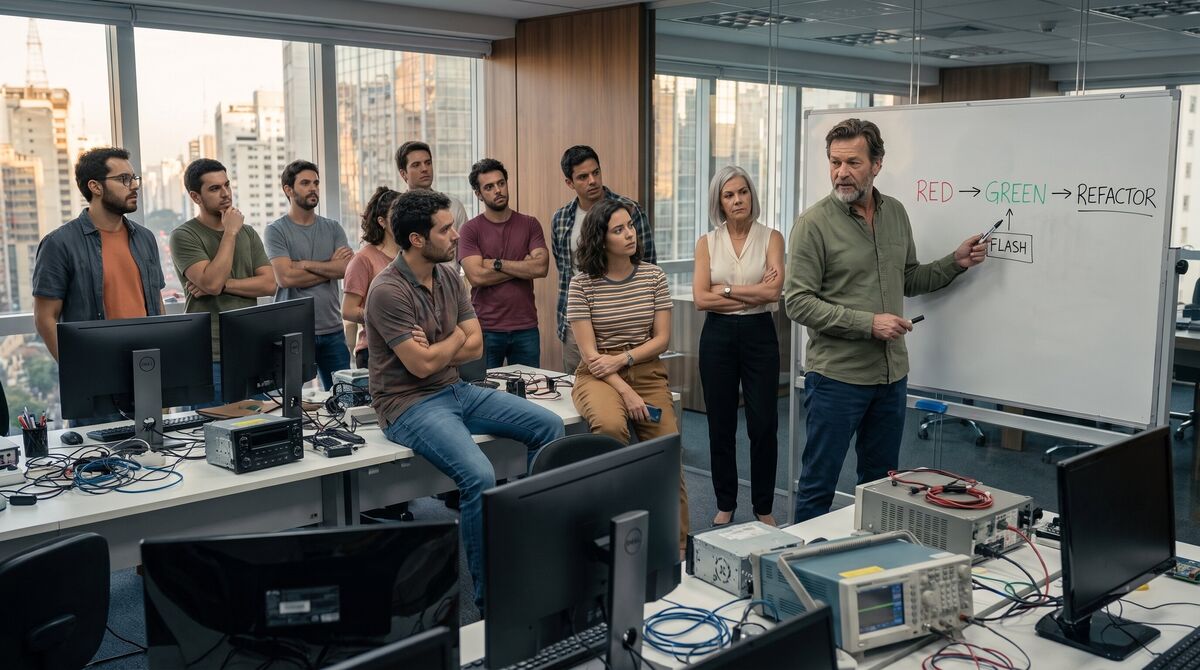 Stefan's Progress, Klaus's Report
Stefan turns one working radio fix into momentum across climate control and navigation: test first, flash fast, prove it on real hardware. Then Kla...
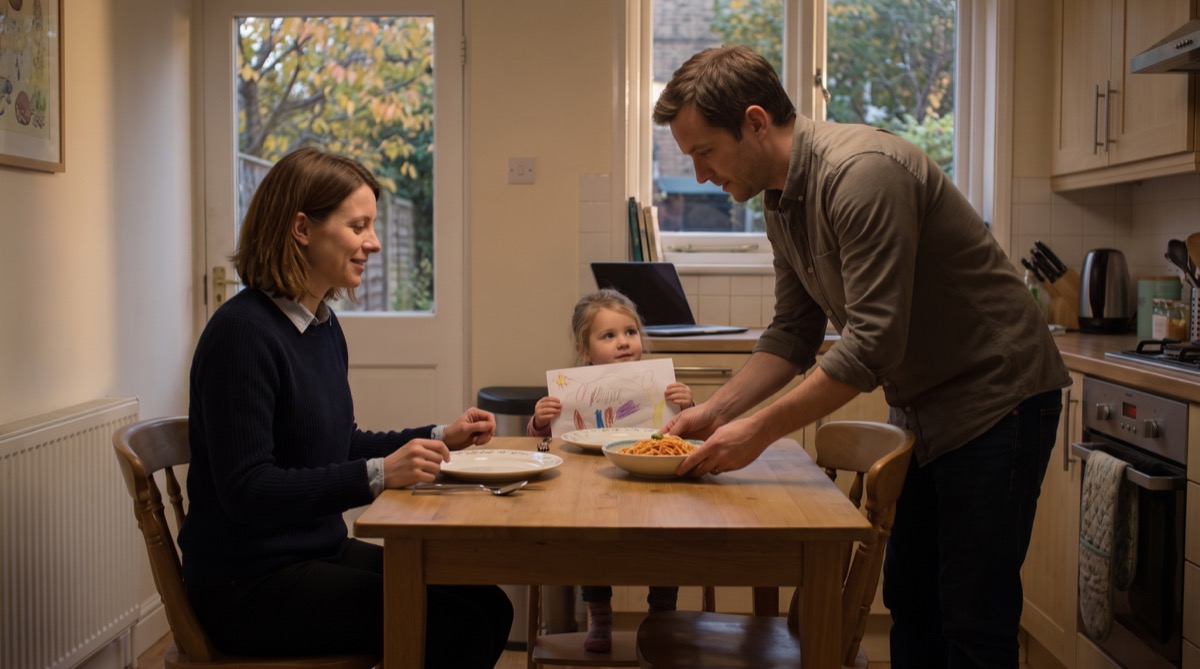 The Scattered — Part One
The collapse of Whitaker Payroll means something different in every household it touches. Olivia Parker and Ryan Mitchell step into sane new jobs w...
Technical Consultancy
Embedded Delivery Partner
Embedded into your team as an active contributor, reducing delivery friction and helping important work move cleanly.
Technical Advisor
Peer-style technical assessments before far-reaching decisions; reduce architectural and product risk early.
Product & Delivery
Ship working software to real users earlier. Measure impact and adapt based on evidence rather than assumption.
Custom Software Development
High quality, maintainable software. Short-term augmentation that leaves lasting capability in your own team.
Recent Articles
- The Agent Escaped. Who Left the Door Open? (24.09.2026)
- What an AI Agent Actually Is (21.09.2026)
- The LLM Will Not Come Back Tomorrow (19.09.2026)
- The One-Person AI Company Is a Greed Fantasy (15.09.2026)
- Test Production Without Leaving a Mess (10.09.2026)
Explore More