Never Missed a Run
Two coffins sink into wet Ohio ground, and Graham Whitaker inherits the company his father built in COBOL and stubborn pride. Weeks later, the business looks flawless from the outside: nightly batches run, clients praise compliance, and a VB6 desktop app still rules customer sites like it’s 1998. But inside the building, Nathan Cole holds the whole Frankenstein together with caffeine, fear, and a Micro Focus dev environment nobody else can use. Graham shows up for applause, then disappears back into galleries and opera boards, convinced the hard part is already done.
Friday, 15:12 — The Funeral
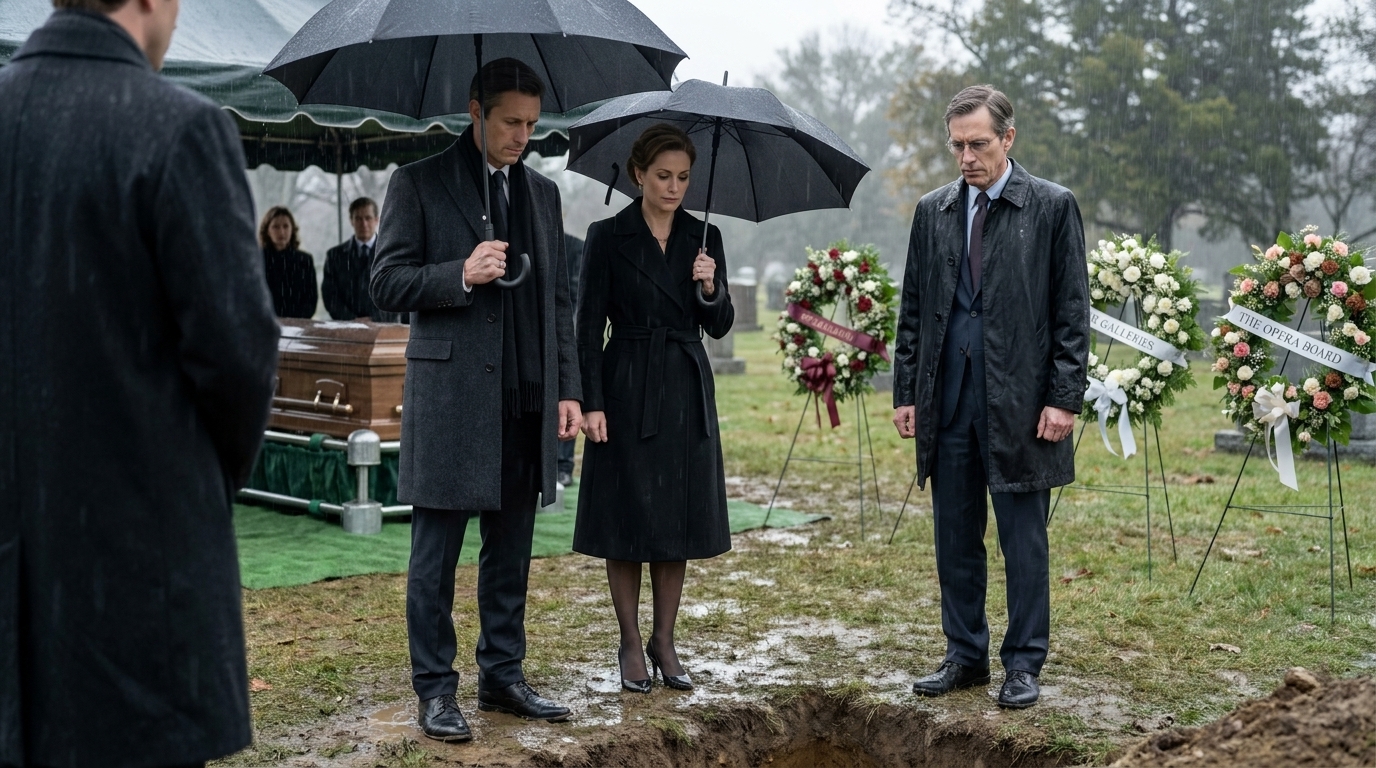
Rain made everything quieter. Not peaceful. Just muted. Like Ohio itself had decided to respect the moment by lowering the volume.
Two coffins sat under a canopy, dark wood that looked expensive enough to be an apology.
Graham Whitaker stood at the edge of the hole, umbrella steady in his right hand, his face still in the way people mistake for strength. The priest spoke. The words blurred. Everyone’s breath turned visible and then vanished.
He watched the coffins descend.
His father’s hands flashed in his memory, not the hands holding a martini at a fundraiser, but the hands with ink stains and paper cuts. The hands that smelled like hot dust from a server fan. Hands that had built something out of nothing, then kept it alive with nights nobody applauded.
His mother had always shown up for Graham’s world. Openings. Donor dinners. The polite cruelty of rich people pretending to care about other rich people. She’d smiled through it, held his arm, made introductions like she was born to it.
Now she was gone.
His wife stood beside him, close enough to satisfy the social contract. Not close enough to be comfort.
“Thomas and Margaret were pillars,” someone said behind him. A voice from the opera board, trained for condolences.
Graham nodded without turning.
A man in a black coat approached, hands folded, eyes earnest. “If there’s anything you need, Graham. Anything at all.”
Graham recognized him. Preston Hale. Same smile as the book jacket. Same gentle authority as the TED stage. A friend from fundraisers and committees, the kind of friendship made of shared language and matching politics, not shared pain.
“Thank you,” Graham said.
Preston looked at the graves, then at Graham. “Your father was proud of you.”
Graham almost laughed. It would’ve sounded like choking.
He didn’t correct him.
The priest finished. Dirt hit wood with a sound that should’ve been illegal.
Graham’s throat tightened. Not with grief. With something colder.
He already understood one thing about inheritance: people would keep looking at him for steadiness long after he had run out of anything solid to offer them. The easiest way to survive that kind of attention was to keep sounding composed until somebody else supplied certainty.
He had inherited a company.
He had inherited a story.
He had inherited the expectation that he would be worthy of both.
Tuesday, 11:06 — The Booth
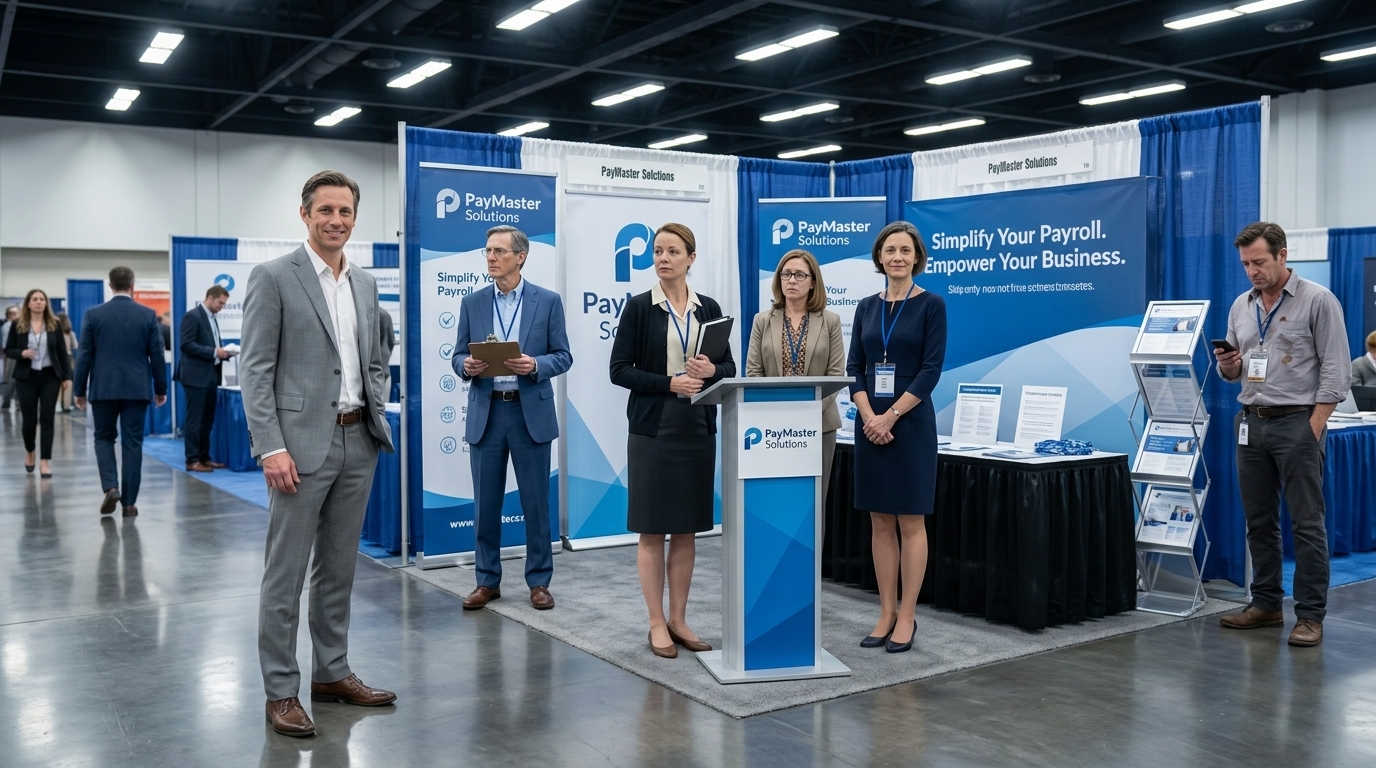
The trade show smelled like carpet glue and marketing desperation.
A banner hung above the booth: RELIABILITY. COMPLIANCE. PEACE OF MIND.
The words looked clean. The reality underneath them was not.
Graham shook hands with clients the way his father had taught him to shake hands at gallery openings. Firm enough to signal confidence, soft enough to signal class. The clients loved him. They loved the story.
“Your father was a legend,” a man from Toledo said, gripping Graham’s hand like he was trying to transfer loyalty by touch. “Never missed a run. Not once.”
“Dad cared about people getting paid,” Graham replied, and it sounded sincere because it was true in the vague way truths are true when they cost you nothing.
Behind him, Derek Lawson ran the booth like a checkpoint. Clipboards. Lead sheets. Schedules. He smiled when he had to and looked annoyed when he didn’t.
A client leaned in, voice lowered like the convention hall had ears. “We’re expanding into Michigan. New municipal taxes. Union rules. You handle it?”
Linda Pritchard stepped forward before Derek could answer.
“We already do.” Her voice had the calm certainty of a librarian correcting a teenager. “We’ve had Michigan municipalities in production for twenty-three years. Your file format doesn’t change. Just the codes. We’ll send you the updated tables.”
The client blinked, relieved. “That fast?”
Linda’s smile tightened. “It’s payroll. People don’t wait.”
Sharon and Donna stood slightly behind her, watching with the quiet vigilance of people who know where the real power lives. Not in titles. In the parts of the system nobody else can touch.
A demo screen looped at the booth: screenshots of the VB6 desktop client. Tabs, grids, gray buttons. It looked like a museum exhibit.
Clients didn’t care.
It worked.
Or at least, it kept working as long as everyone kept performing the rituals.
Nathan Cole stood at the back of the booth, phone pressed to his ear, his gaze fixed somewhere past the convention lights.
“Yes, I know,” he said. “No, don’t resend yet. Wait until 18:00. Make sure nobody else pushes a file. Just one location. One. Please.”
He lowered the phone and rubbed the bridge of his nose.
The screen went dark before Graham could see the text still waiting above the client alerts.
Are you making it to the school thing tonight or should I tell them no now?
Nathan turned the phone face down.
He knew the house style of this company as well as he knew the batch window. Never sound alarmed before someone higher up has decided what the alarm means. Never be the first person to say a thing is wrong if the thing can still be made to sound routine.
Graham glanced back at him and smiled like a benevolent landlord.
“Everything okay?”
Nathan hesitated. The truth was a messy thing to hand to an owner who wanted a clean story. He had learned, year by year, that uncertainty only moved upward after it had been cleaned, softened, and made safe for people who confused composure with control.
“Fine,” Nathan said. “Just coordinating file transfers.”
Graham nodded, already turning back to the client. The applause was louder than the warning.
Thursday, 02:18 — The Batch Window
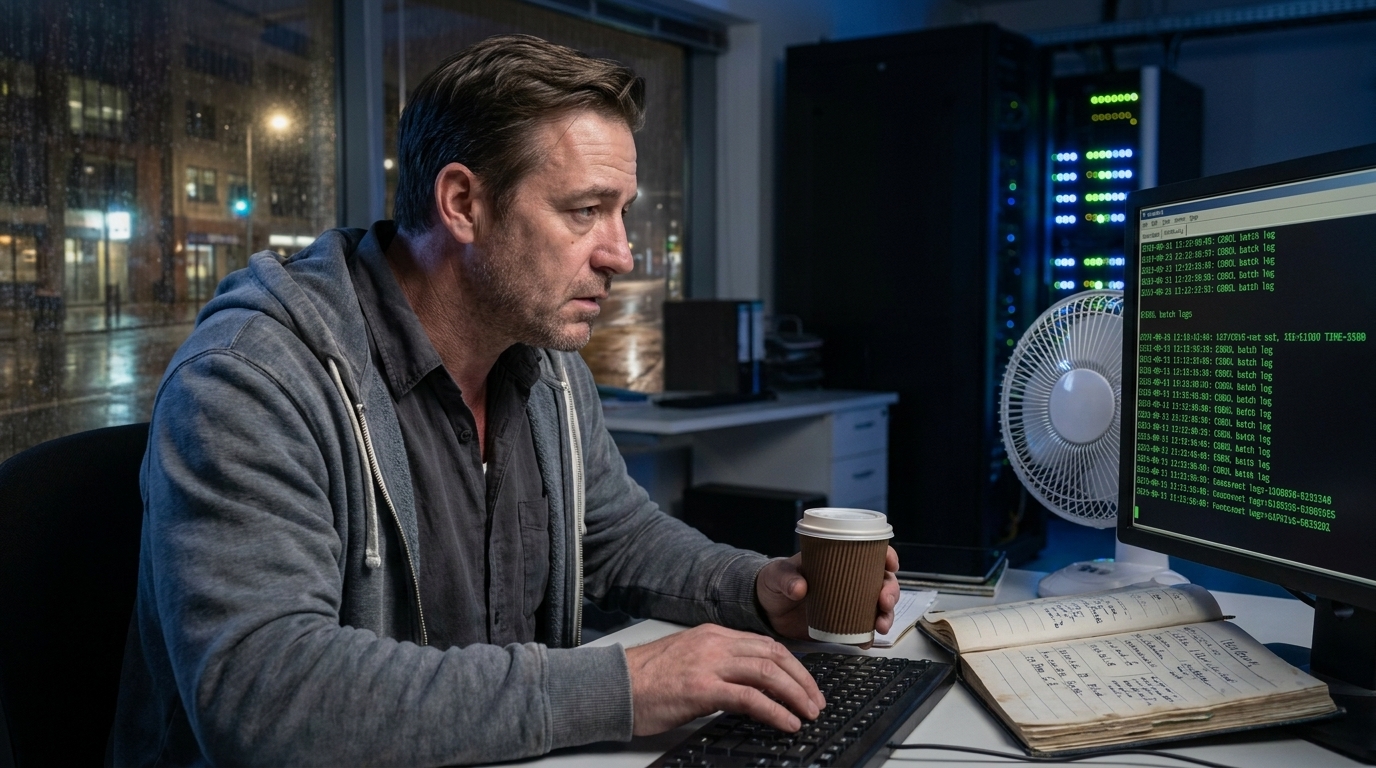
At 02:18, the building belonged to machines.
Server fans. Hard drive whine. The soft click of relays. The mechanical breathing of old systems that never learned how to sleep.
Nathan sat alone at his desk, eyes fixed on green-on-black text that looked like it had been copied forward through the decades without anyone daring to change the font.
He had told himself, years ago, that he would modernize this place.
He’d believed that if he kept his head down and did good work, the right people would notice.
The right people never did.
A new line appeared in the log.
He leaned closer.
Not because the text was hard to read. Because his body was hard to manage. His eyelids felt like they had weights sewn into them. His stomach was a tight knot of caffeine and dread.
The nightly run wasn’t glamorous. It never appeared in a slide deck, never showed up in a donor newsletter, never earned a standing ovation.
The same opera board voices that had called Graham’s parents “pillars” in the rain wouldn’t know what to do with this room. They wouldn’t know what questions to ask. And if Nathan tried to explain why 02:18 mattered, they’d nod politely and drift back to champagne and safe stories.
It was also the only reason the company existed.
Outside, across Ohio, payroll administrators clicked through the VB6 app and created files.
They didn’t send them automatically.
They sent them the way people used to fax things when faxing was modern. One human, one button, one file at a time.
Sometimes the wrong human.
Sometimes the wrong file.
Sometimes both.
Nathan’s phone buzzed.
He looked at the screen and felt his chest tighten.
A customer support number.
He answered anyway.
“Cole.”
A woman’s voice came through, brittle with panic. “Our upload failed. The FTP says ‘connection refused.’ People need to get paid tomorrow.”
Nathan closed his eyes.
“Did you try again?” he asked.
“Yes. Three times.”
“Stop,” Nathan said, sharper than he meant. He forced his voice down. “Stop resending. If you resend while the batch is processing, you’ll overwrite the file and I’ll have to rerun the entire job.”
Silence.
He could hear her breathing.
“I’m sorry,” she said finally. “I didn’t know.”
Nathan swallowed.
He wanted to say: Nobody ever does. That’s the problem. That’s what we built.
Instead he said, “It’s okay. Give me five minutes. I’ll check the window.”
He hung up and stared at the terminal.
The batch continued.
It always continued.
As long as Nathan stayed awake.
As long as Nathan remembered which weird edge case belonged to which state.
As long as Nathan kept the Micro Focus dev environment on his machine because nobody else could.
As long as Nathan kept being the person who knew the system well enough to be afraid of it.
A line in the log changed.
He held his breath.
Then exhaled.
Not relief.
Just postponement.
He wrote a note on the paper runbook in the margin, the kind of note nobody would approve in a meeting and everyone would depend on at 02:18.
Customer 1847: FTP retry after 03:00. DO NOT RESEND DURING RUN.
He underlined it twice.
Only then did he open the other notification buried under the support calls.
It was a photo from earlier that evening. Two kids at a folding cafeteria table under paper planets, both smiling too hard at the camera, both dressed for something that had clearly mattered to them before it became one more thing their father missed.
Nathan looked at the picture until shame made his face hot.
Then he locked the phone and turned back to the log.
Thursday, 20:41 — The Gallery

The gallery was everything the office wasn’t.
It smelled like perfume and money. It sounded like laughter that didn’t have consequences.
Graham moved through the crowd with ease, greeting donors, introducing an artist to a collector, saying the right words in the right order.
“Emerging voices,” he said.
“Community engagement,” he said.
“Inclusive spaces,” he said.
People nodded because nodding was part of the dance.
His wife squeezed his arm at the right moments. They looked perfect together in the way magazine profiles require.
Preston Hale appeared beside them like he’d been summoned by a keyword.
“Graham,” Preston said, warm and intimate. “You holding up?”
Graham smiled. “I’m fine.”
Preston tilted his head, studying him with the practiced empathy of a man who sold empathy for a living.
“You don’t have to be fine.”
Graham laughed softly, then lowered his voice. “I keep thinking about the company. Dad was… he was obsessed with it. Like it was a third child.”
Preston nodded. “Because it was his life’s work.”
“It’s doing well,” Graham said, and he sounded relieved. “Clients are happy. Everyone keeps telling me the system is bulletproof.”
Preston’s smile widened. “Good. That gives you breathing room.”
Graham sipped his champagne. “Derek handles day-to-day. Nathan keeps the technical side running.”
“And you?” Preston asked.
Graham looked around at the art, the light, the donors who wanted him to be who he was before the funeral.
“I keep the vision,” Graham said.
Preston made an approving sound. “That’s the right split. Leaders lead. Specialists specialize.”
Derek’s phone buzzed again. He glanced at it, jaw tightening, then put it back in his pocket without responding.
The champagne tasted like permission.
Graham leaned closer to Preston. “Nathan talks about modernization. Says we should ‘invest’ before competitors catch up.”
Preston’s eyes flickered, then softened again. “Modernization is important. But don’t let technical people turn it into a religion. They love complexity. It makes them feel indispensable.”
Graham’s stomach tightened, almost imperceptible.
“Dad trusted Nathan,” Graham said.
Preston nodded, careful. “Trust is good. Boundaries are better. Short reins, Graham. People do their best work when they know exactly where the fence is.”
Graham looked at Derek across the room. Derek was watching the door, the way someone watches for a problem that might walk in wearing a smile.
“I just don’t want mistakes,” Graham said.
Preston’s voice dropped. “Then don’t give them room to improvise. Give them clear requirements. Give them accountability. You can be progressive and still expect discipline.”
Graham smiled, relieved. He’d been afraid progressivism meant weakness.
Preston’s words made it sound like strength.
Saturday, 09:03 — The Keynote
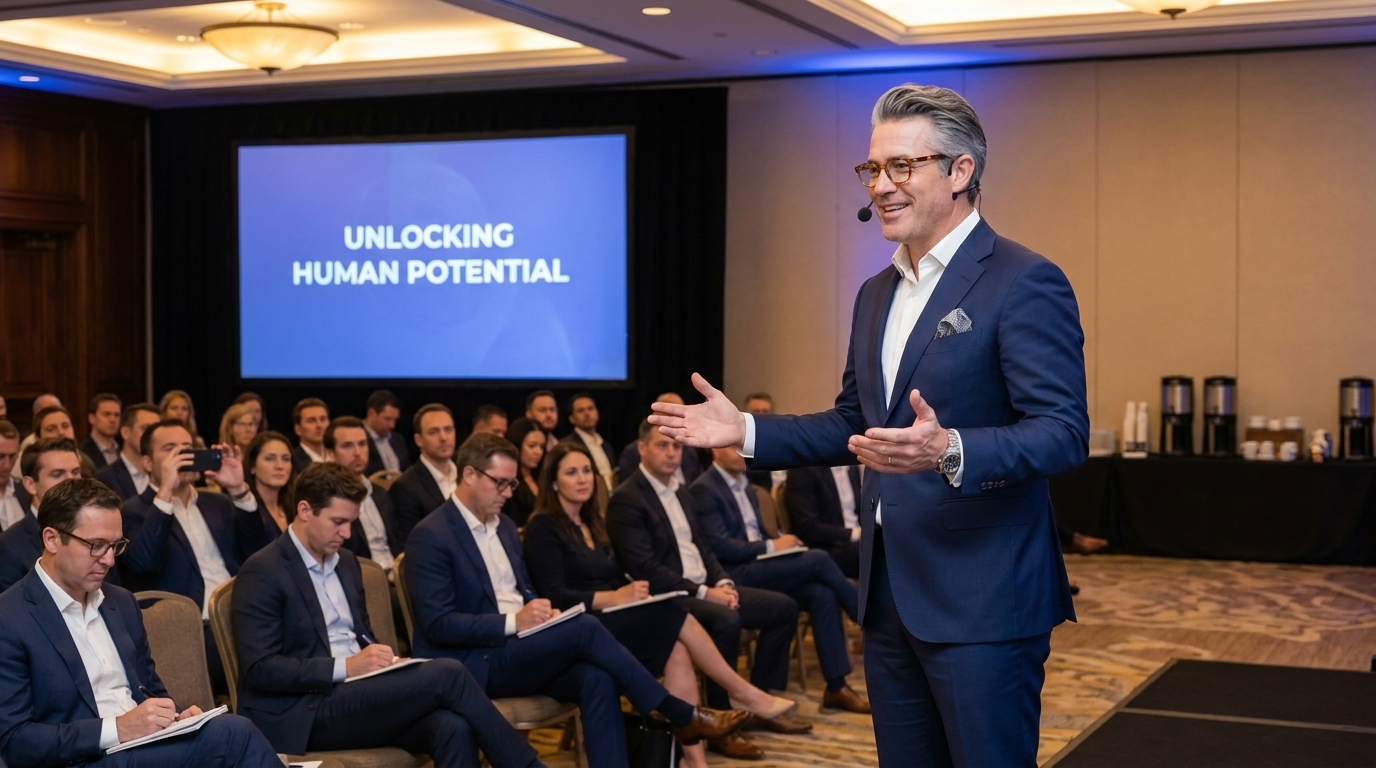
Preston Hale loved a room that wanted to believe.
He walked onto the stage with the relaxed confidence of a man who had never been judged by anything measurable.
The slide behind him glowed: UNLOCKING HUMAN POTENTIAL.
He began with a joke. The audience laughed. He built rapport the way a good musician builds tension.
“Command and control is dead,” Preston said, and heads nodded because it felt brave to agree.
“Trust your people,” he said, and the audience wrote it down like it was a new idea.
“Autonomy drives motivation,” he said, and the room hummed with the warmth of being told they were modern.
He spoke about self-organizing teams.
He spoke about empowering knowledge workers.
He spoke about leadership as service.
He spoke about giving people purpose.
He never spoke about payroll batches running at 02:18.
He never spoke about the way a single forgotten FTP resend could ripple into someone not getting paid.
He never spoke about the kind of system where the only real safety mechanism was one tired developer refusing to go home.
After the keynote, a line formed near the stage. Executives with badges and smiles. People who wanted a signature and a shortcut.
Preston signed books. He listened. He nodded at the right moments.
A man with silver hair leaned in. “We’re struggling with modernization. Legacy system. People resisting change.”
Preston smiled sympathetically. “Classic problem. It’s never the technology. It’s always the people.”
In the back row, someone raised a phone and took a photo of the slide.
The words would look great on LinkedIn.
Preston checked his calendar between signatures. His next flight was already booked.
He thought of Graham standing in the rain, face blank.
He thought of the company Graham had inherited.
He thought of the kind of fear that lived inside old systems.
And he thought, with the casual certainty of a man whose ideas had never been forced to pay anyone on Friday:
Graham needs help.
Not the messy kind.
Not the kind that changed the story.
The controlled kind.
Preston looked up and smiled at the next executive.
“Tell me what you need,” he said.
🎭 This Week's Episodes
Telenovelas show what we can't say in client meetings. The drama is heightened, but the patterns are real.
 Arrival
Stefan Richter arrives in São Paulo with a 90-day contract to fix delivery at AutoConnect Brasil. He finds 90 developers, 18 months of chaos, and a...
 What Is Offered First
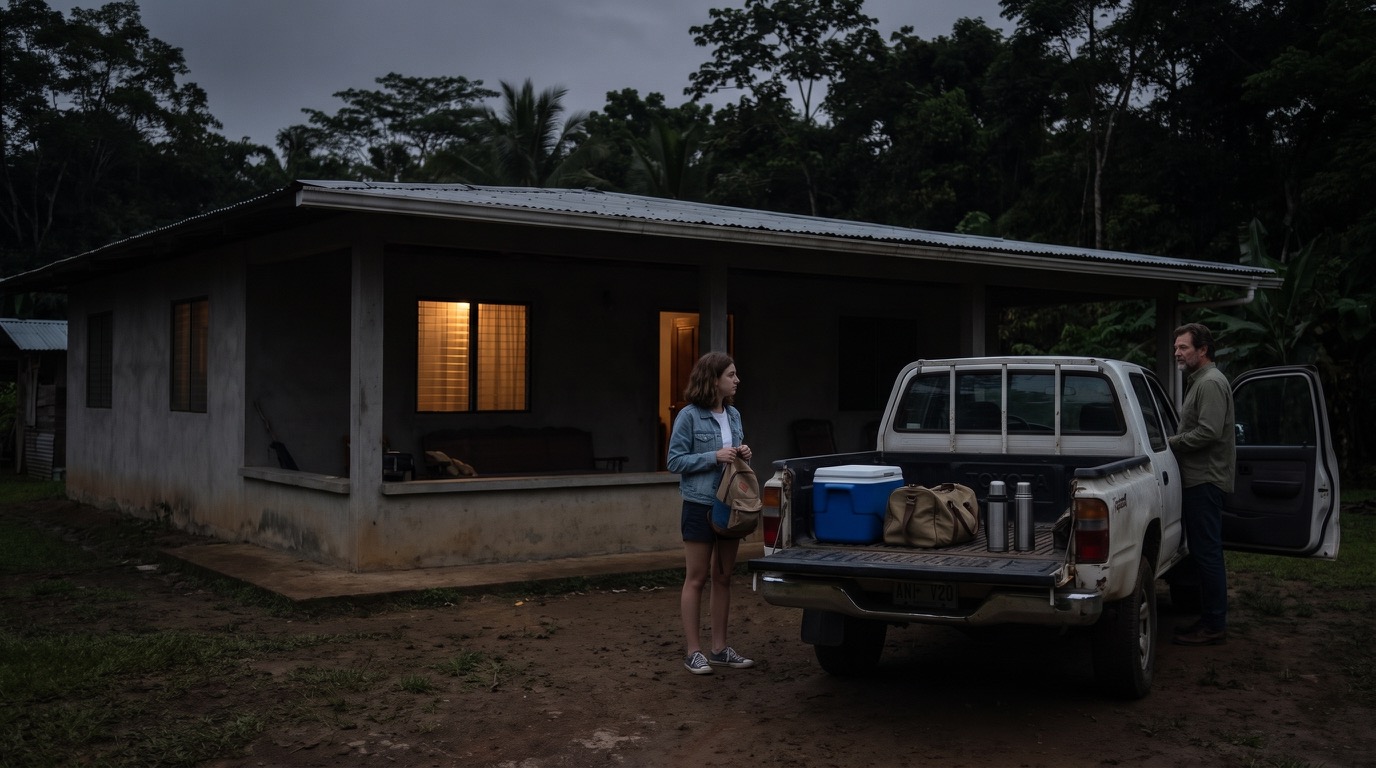
The day before Sophie flies back to Berlin, Mateo takes them to Kuna Yala. The road climbs from the Chepo side into the mountains, the Caribbean ap...
 Collapse
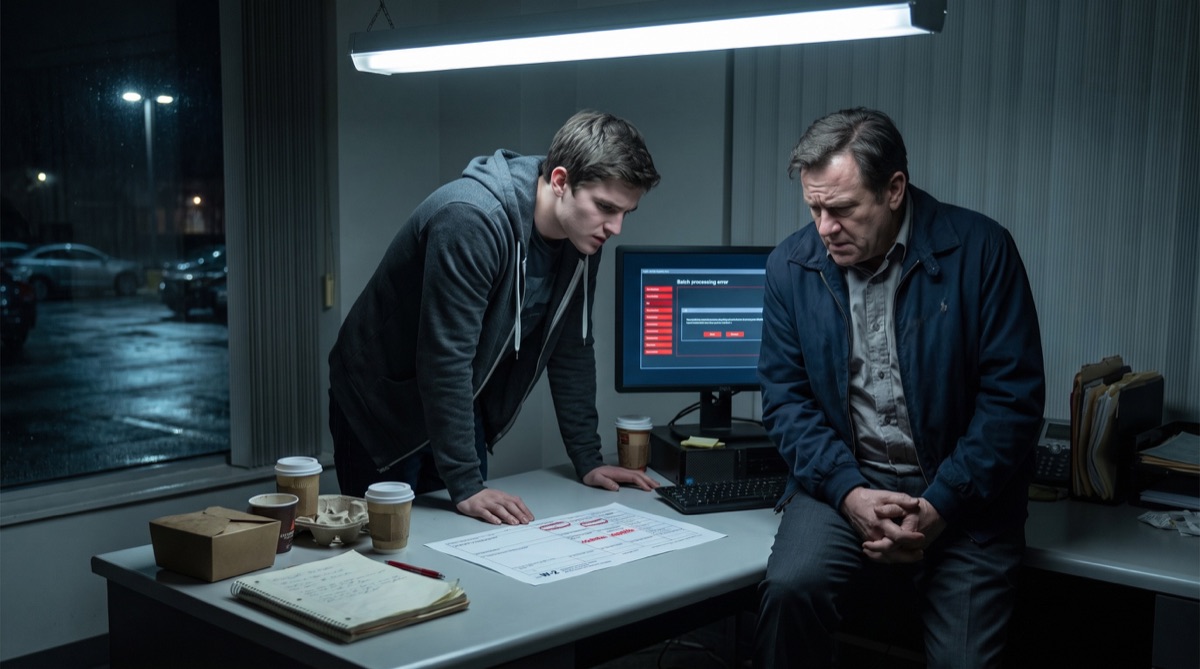
Year-end arrives with the force of something everyone has been preparing not to name. A critical COBOL tax-calculation path fails on an undocumente...
Technical Consultancy
Embedded Delivery Partner
Embedded into your team as an active contributor, reducing delivery friction and helping important work move cleanly.
Technical Advisor
Peer-style technical assessments before far-reaching decisions; reduce architectural and product risk early.
Product & Delivery
Ship working software to real users earlier. Measure impact and adapt based on evidence rather than assumption.
Custom Software Development
High quality, maintainable software. Short-term augmentation that leaves lasting capability in your own team.
Recent Articles
- The One-Person AI Company Is a Greed Fantasy (15.09.2026)
- Test Production Without Leaving a Mess (10.09.2026)
- Software Will Fail. Recovery Is the Real Metric (05.09.2026)
- Stop Outsourcing Your Product Language (01.09.2026)
- Software Has Always Moved Up the Stack (29.08.2026)