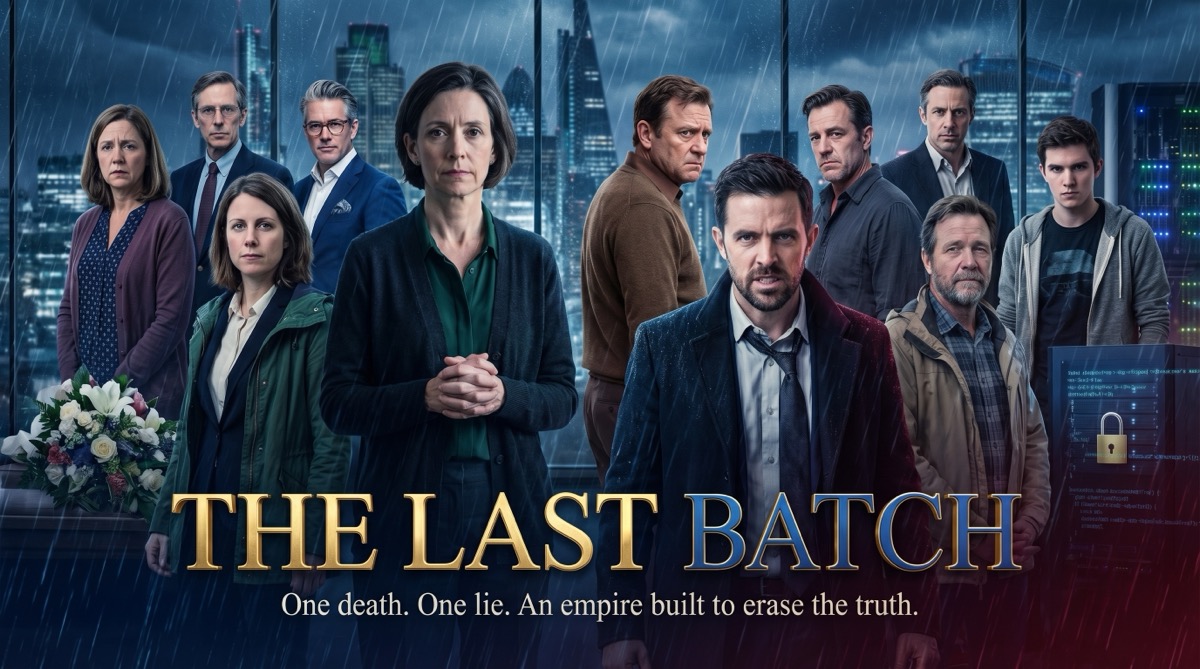
The Last Batch
When Competence Becomes an Existential Threat
Ohio, 2026. A veteran technical coach was fired, hired back, and fired again—not because his work failed, but because proving modernization worked threatened the security of everyone who thrived on the system’s obscurity.
The Characters
-
Graham Whitaker
The Absent Patron
-
Preston Hale
The Poisonous Enabler
-
Derek Lawson
The Regent with Wounded Pride
-
Nathan Cole
The Linchpin Who Breaks
-
Ethan Carter
The Technical Coach
-
Olivia Parker
The Smart Exit
-
Ryan Mitchell
The Smart Exit
-
Caleb Turner
The Oblivious Survivor
-
Marcus Doyle
The Trapped Provider
-
Linda Pritchard
Lead SME
-
Sharon Mills
Senior SME
-
Donna Reeves
Senior SME
-
Thomas Whitaker
The Innovator Who Stopped
Supporting cast includes the 45 non-technical employees and the offshore contractor pool — the human and operational blast radius of executive failure.
Episodes


Why this story matters
This series follows the collision between delivery reality and executive ego. It is a study in identity-protective cognition: how organizations protect status over capability, treat evidence of failure as a social threat, and routinely expel the person who makes delayed progress visible.
It tracks the full arc of a “Double Firing” from fragile stability to irreversible collapse: the first firing, a short-lived return, AI-assisted rule extraction, institutional backlash, talent exodus, offshore mismatch, and a year-end W-2 disaster that ends with a Friday shutdown and Monday lockout.
The core claim is blunt: when leadership protects status over capability, collapse is not bad luck. It is scheduled.
Software Development Lessons
Every character in this story believes they are doing the right thing. The patterns they enact — role-framing, process theater, hedged consensus, commodity hiring — are not fictional inventions. They are the recurring mechanisms through which real organizations convert competence into threat and stability into collapse.
🏷️ Role Framing as a Control Mechanism
Ethan is introduced as "a guy who is good at coding." His retainer documents go unread. The unread document is the framing: "I don't need to understand who you are because who you are doesn't matter to me." He arrives as hands—and everything he does that requires a brain becomes a violation of the contract they never wrote down. A verifiable number from someone with standing is a finding. A verifiable number from a contractor is an opinion with delusions of authority. Redefining your role would require leadership to shrink, so they keep you inside the box where your output is welcome but your judgment is trespassing.
🎭 Performative Progressivism
Graham talks about "inclusive workplaces" and "empowering teams." Preston keynotes conferences on self-organizing teams and autonomy. Derek uses soft words, process language, and moralized euphemism. Underneath: selfish, ego-driven, hierarchical. When threatened, authority and ego win. Progressive language was always a costume masking ruthless self-interest.
🔒 Weaponized Complexity as Survival Strategy
Linda, Sharon, and Donna are not villains. They are prisoners of narrow expertise and age — late 40s, no CS degrees, able to read COBOL but not write it, too young to retire, too old to retrain. Their value is institutional memory: jurisdictional edge cases, union rules, decades of "it's always been that way." They weaponize that complexity as defensive survival, not malice: "Touch the wrong thing and 5,000 people don't get paid Friday." When AI-assisted extraction makes their moat drain, fear becomes institutional sabotage.
🤝 Hedged Consensus and the Authority Loop
Nobody experiences evidence as permission to act. The SMEs defer to executive sign-off. Derek and Graham defer to SME legitimacy. Everyone reads everyone else's hesitation as a reason to doubt their own judgment. In this *Authority Loop*, mutually reinforced denial feels indistinguishable from consensus. The group remains polished and collective, while the only person willing to speak a plain, truthful sentence is expelled as a destabilizing threat because they make everyone else's delay visible.
📋 Process Theater Replacing Working Software
Graham imposes "discipline" — requirements documents, sign-offs, validation chains. Sounds reasonable. In practice: SMEs write long, incomplete documents full of historical context and missing the actual business rules. Programmers drown trying to convert unusable requirements into working code while babysitting SMEs through basic tooling. The formal workflow creates the illusion of progress while actual progress dies.
🌐 Commodity Hiring Fantasy
Preston and Derek convince Graham: "Hire offshore. They're cheap and get it done — that's what big companies do." They find website developers on Upwork. Zero COBOL, zero VB6, zero payroll domain knowledge. Leadership treats specialized legacy rescue like a commodity staffing problem. Costs mount. The system deteriorates faster, not slower. Headcount is not capability.
💔 The Human Cost of Deferred Judgment
Nathan's marriage collapses under the weight of nights and weekends spent saving a company that called him disloyal. Marcus can't leave because his wife's medication costs $3,200/month without insurance. Olivia and Ryan escape because they chose family over loyalty theater. Every deferred judgment, every hedged consensus, every polite evasion — someone pays. The cost is always personal.
🏚️ Collapse Is Scheduled, Not Accidental
The year-end W-2 batch fails. Thousands of forms go to the IRS with incorrect withholding. 40% of customers gone in 72 hours. Friday 3 p.m.: Graham reads a statement and walks out. Monday morning: employees find the building locked. The collapse feels sudden. It was visible for months — in every hedged email, every process meeting, every truth-teller labeled disloyal. When leadership protects status over capability, the end date is already set.
Episodes
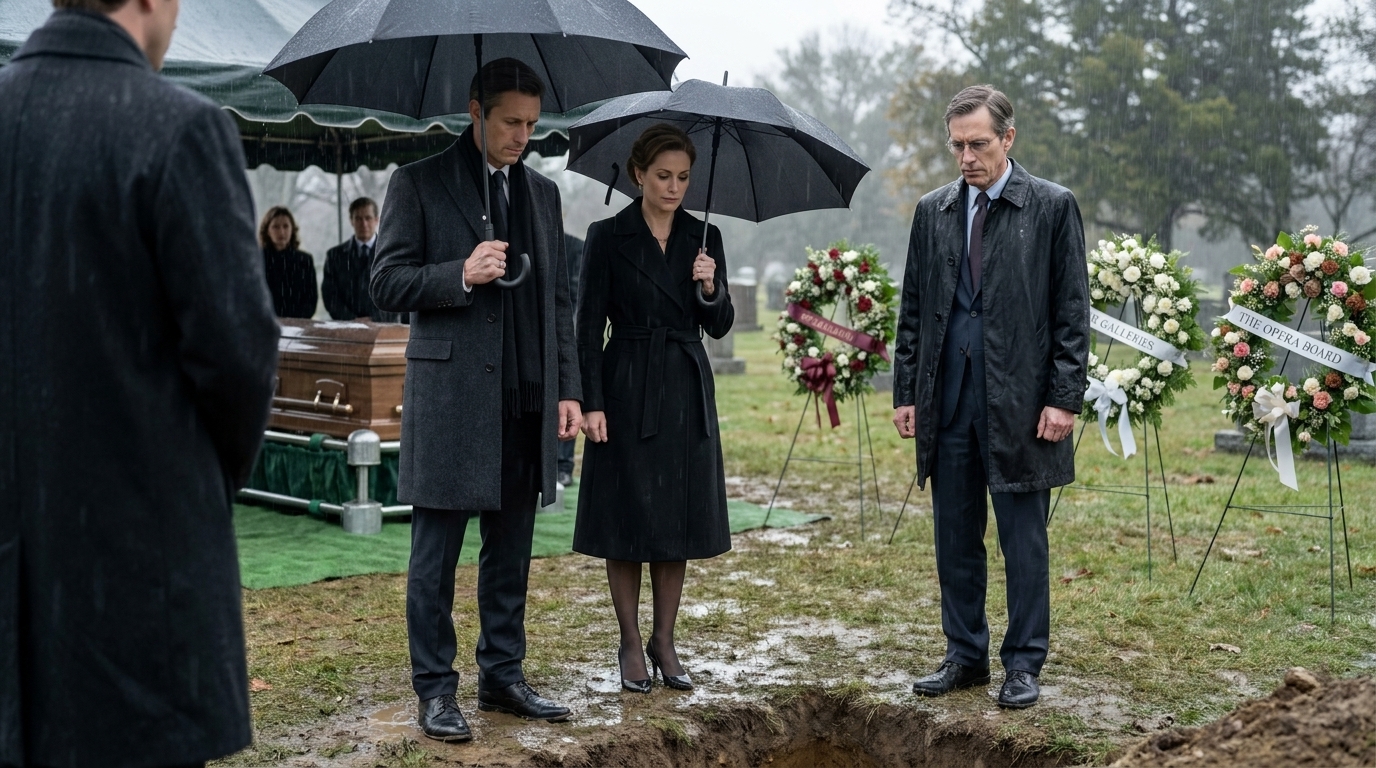
Episode 1
Never Missed a Run
Two coffins sink into wet Ohio ground, and Graham Whitaker inherits the company his father built in COBOL and stubborn pride. Weeks later, the busi...
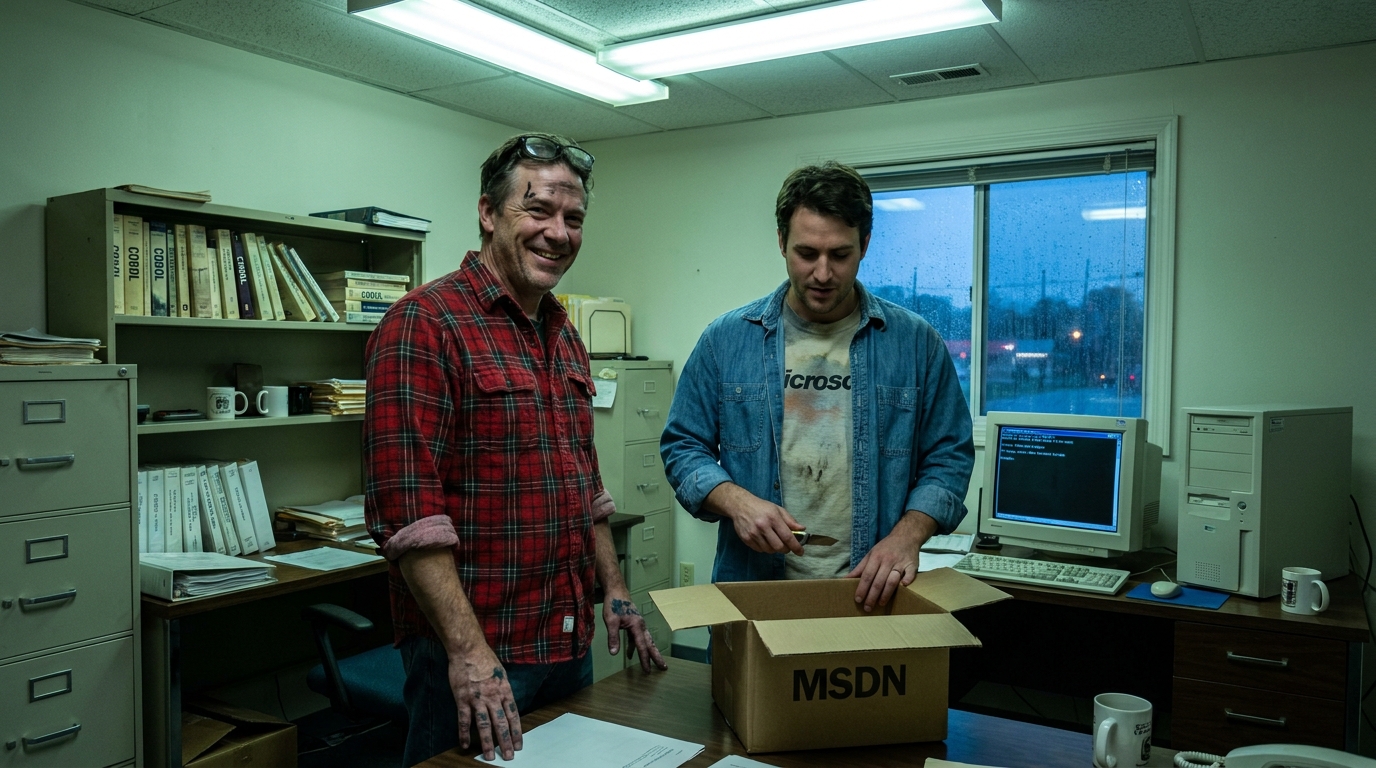
Episode 2
When VB6 Was the Future
Long before the batches became a liability, they were a triumph. Thomas Whitaker built a payroll business on COBOL discipline, then reinvented it w...
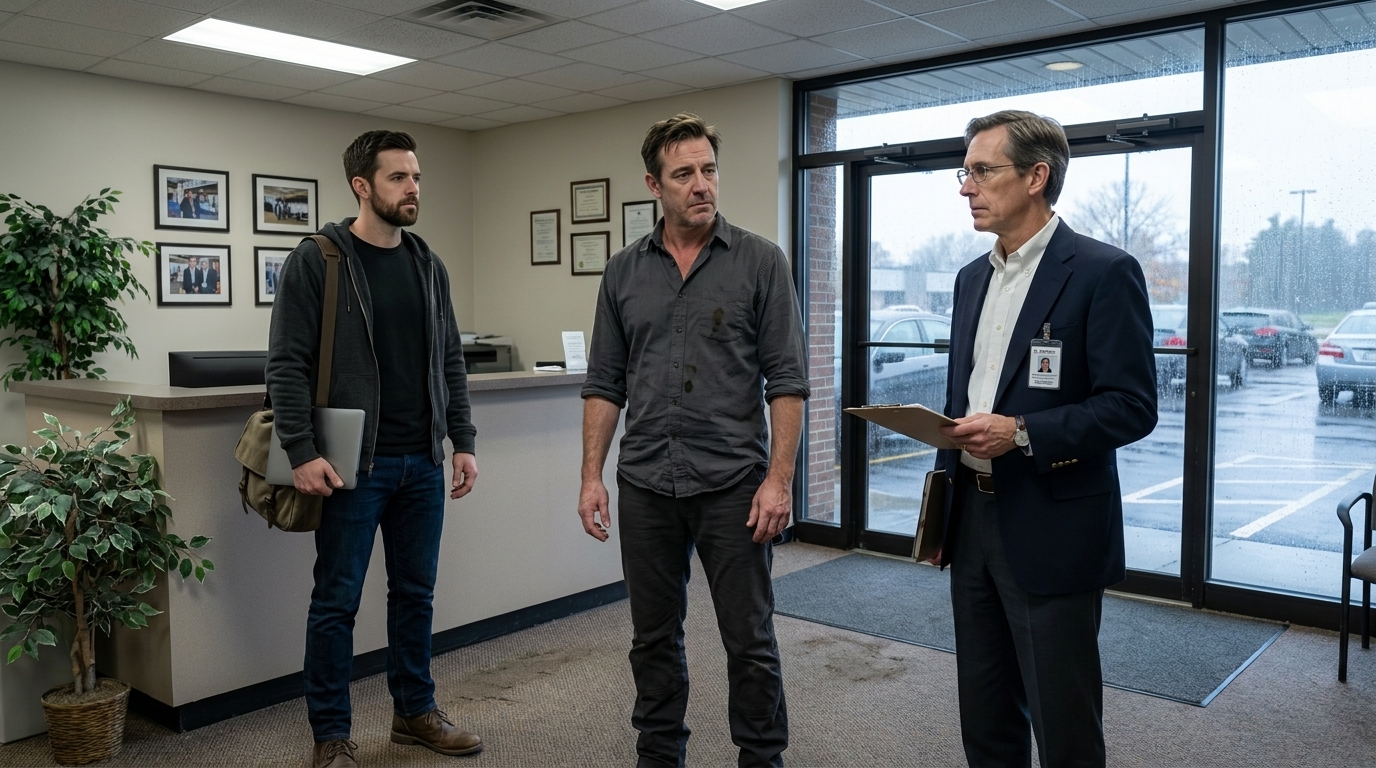
Episode 3
Foundation Building Begins
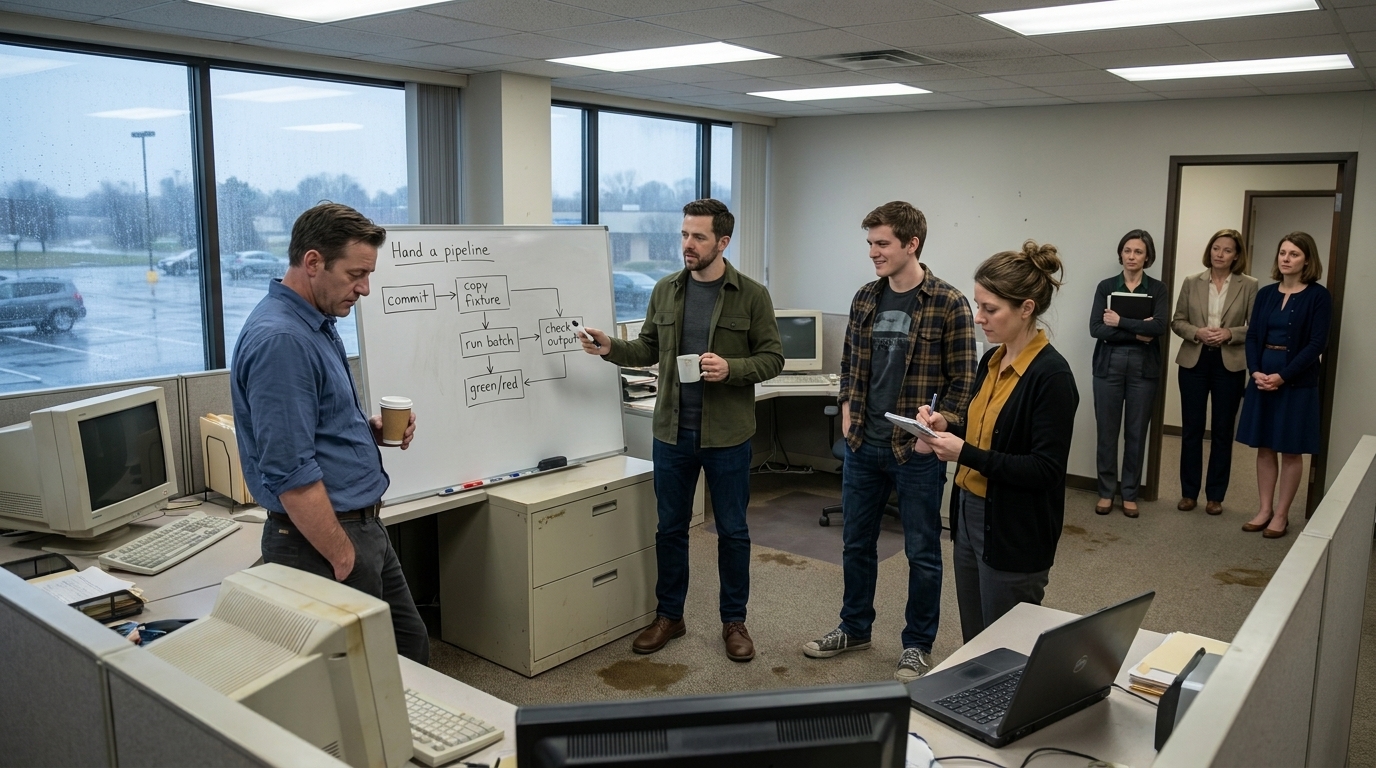
Ethan Carter doesn't start with a rewrite. He starts with a test harness: plain-English scenarios that copy files into the INCOMING folder, kick of...
Episode 4
The Run Tells the Truth
Ethan Carter turns the harness into a habit: every change runs the batch in daylight, and the Cucumber scenarios refuse to lie. Nathan Cole feels s...
Episode 5
The First Confrontation
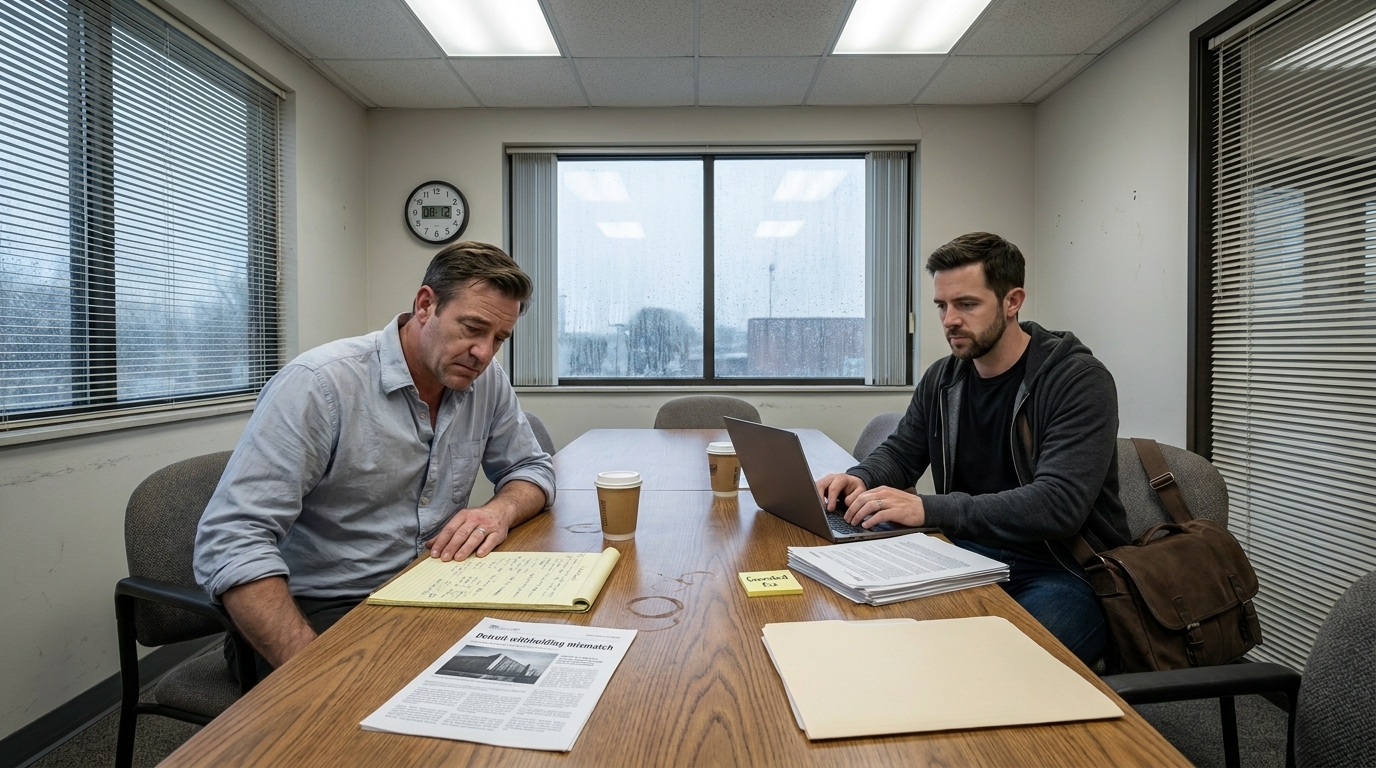
Nathan Cole thinks the Detroit tax defect has finally become visible enough to be handled like an adult problem: evidence on the screen, a bounded ...
Episode 6
Outside the Door
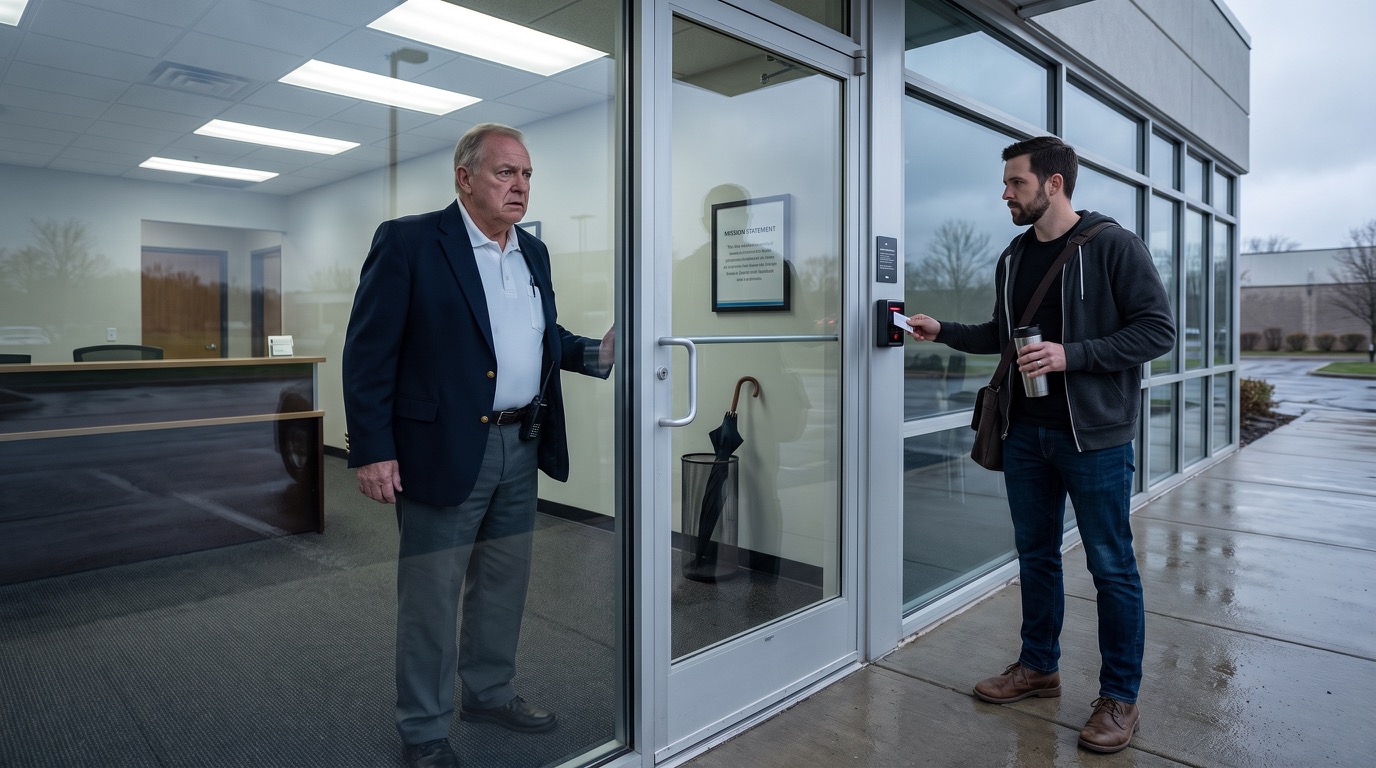
Ethan Carter arrives early, carrying the same packet that should have started a disciplined fix, and learns what Whitaker Payroll does when it want...
Episode 7
The AI Extraction
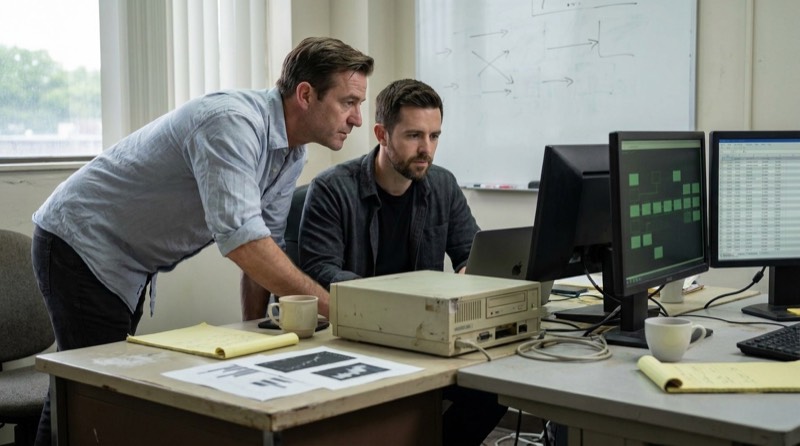
Back inside on temporary access, Ethan Carter goes after the oldest part of Whitaker Payroll: the COBOL itself. With Nathan Cole beside him, he use...
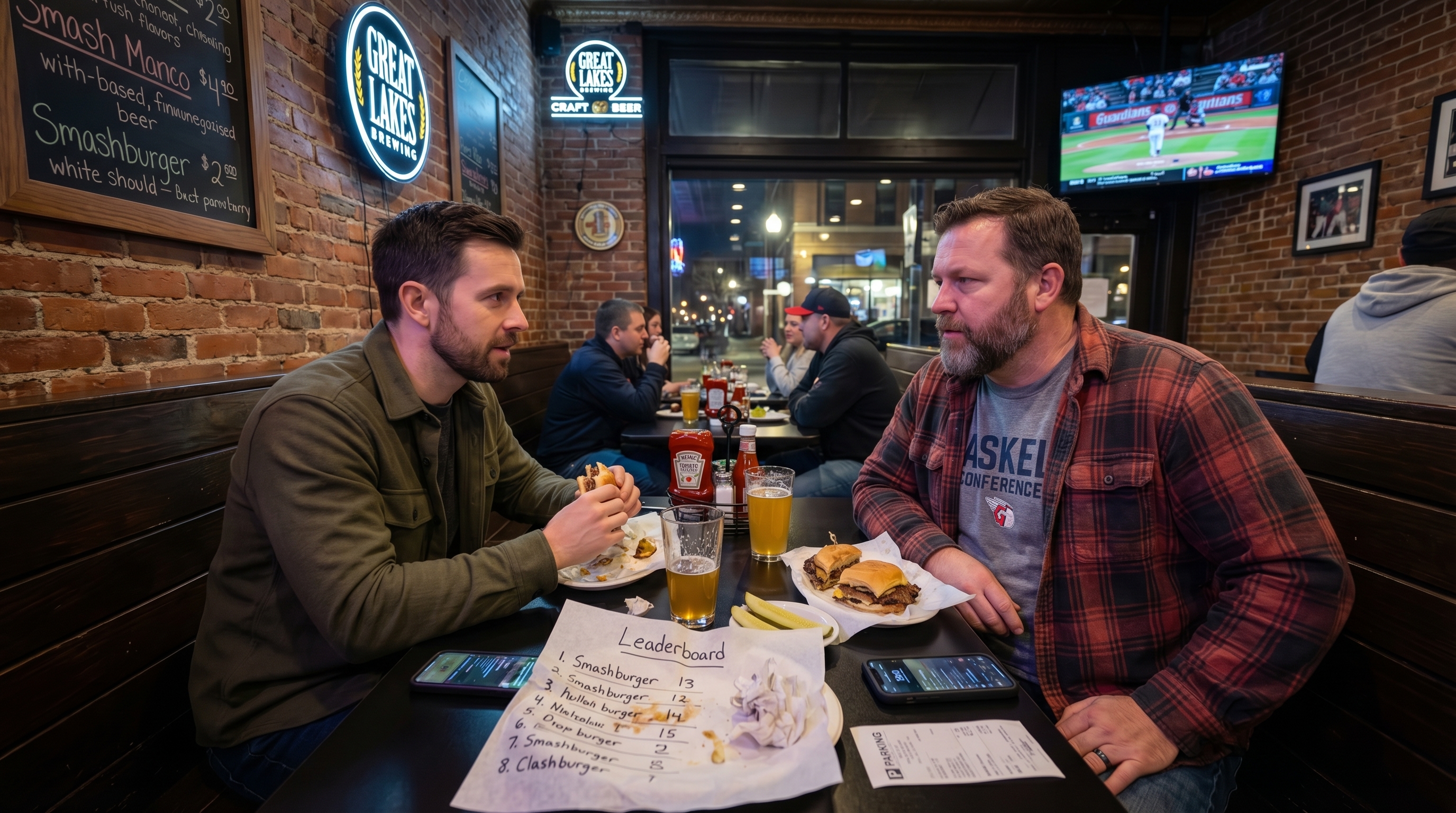
Episode 8
The Aftermath of Expertise
The night after his second firing, Ethan Carter sits in a Cleveland burger bar with two fellow rescue specialists and finally names the trap he wal...
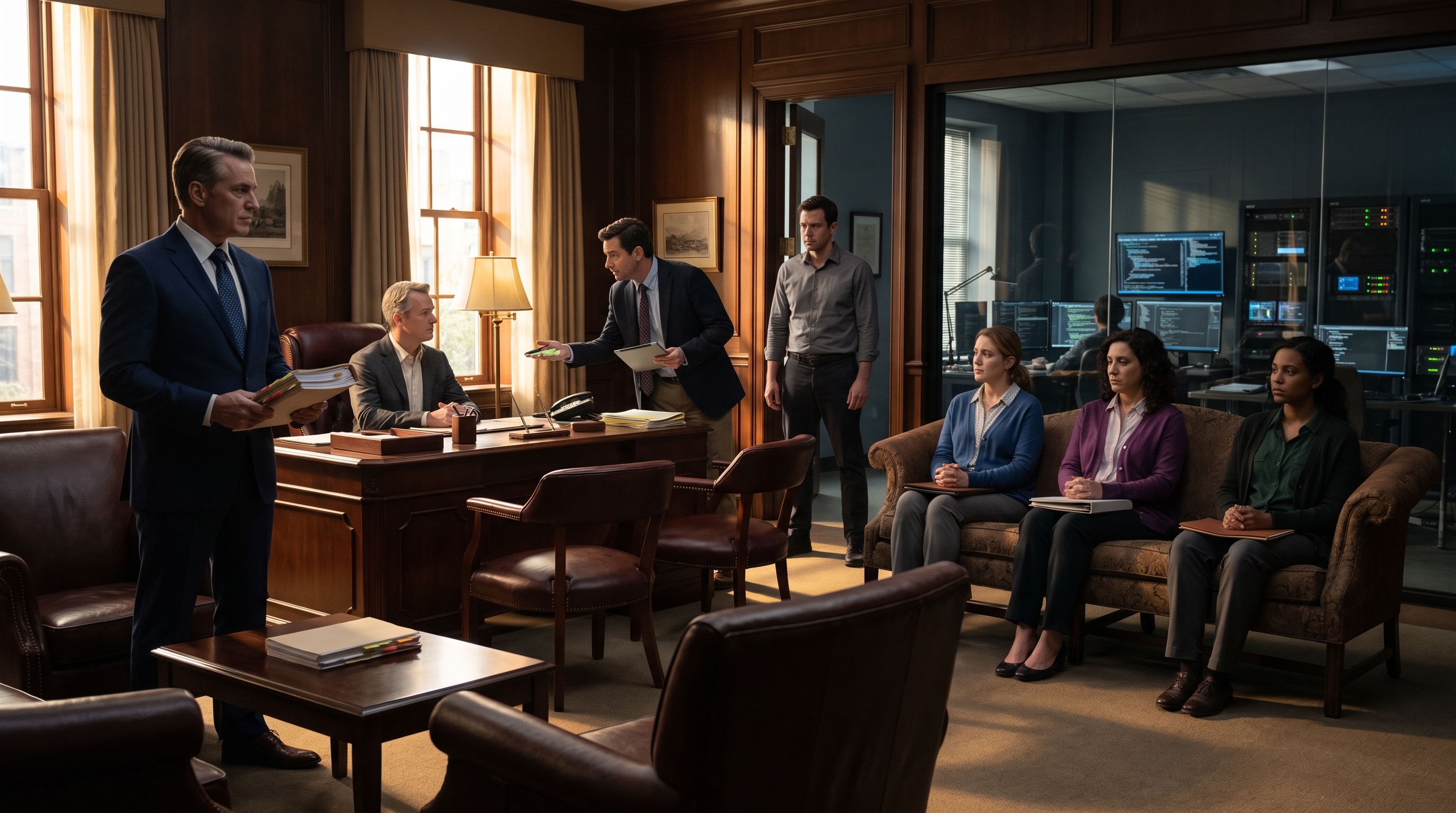
Episode 9
Process Theater and the Grind
Preston Hale arrives just in time to do what he does best: call fear professionalism and bless documents that cannot actually guide the work. By Th...
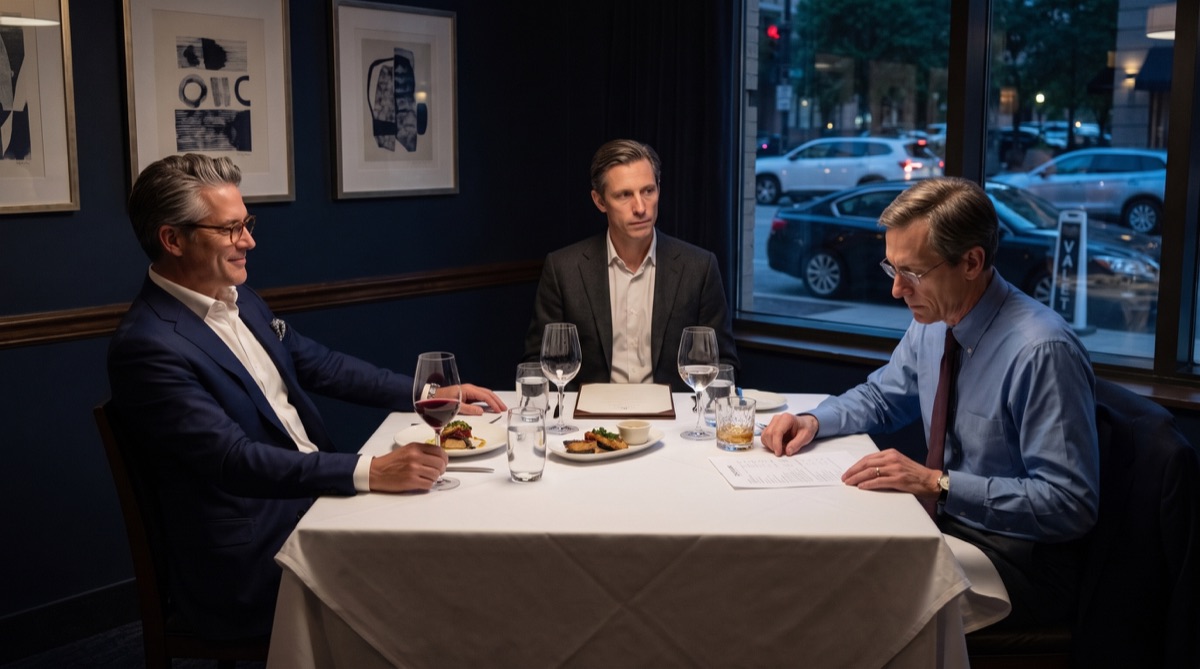
Episode 10
Contrasts
Preston Hale, Graham Whitaker, and Derek Lawson sit behind closed doors turning failure into vocabulary elegant enough to survive their consciences...

Episode 11
The Resignations
Nathan Cole resigns on a Monday morning with two sentences and no argument left in his body. By Tuesday his desk is empty and the company's institu...
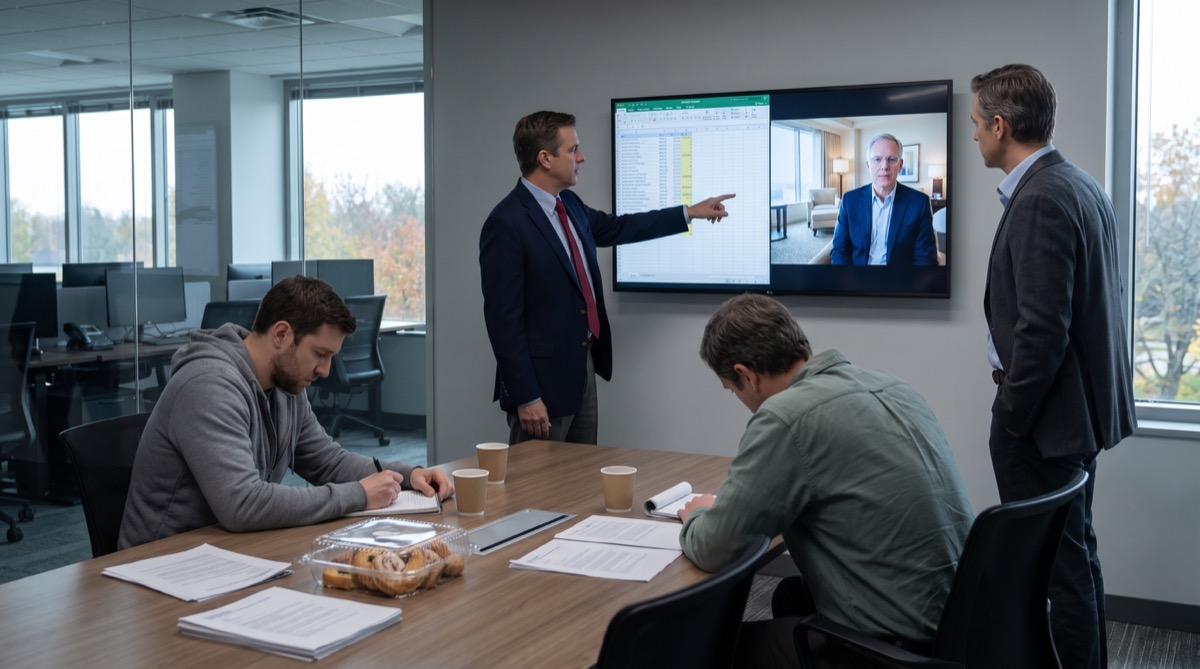
Episode 12
The Offshore Disaster
With Nathan gone and only Caleb Turner and Marcus Doyle left in the development room, Graham Whitaker and Derek Lawson need a story that turns unde...

Episode 13
Collapse
Year-end arrives with the force of something everyone has been preparing not to name. A critical COBOL tax-calculation path fails on an undocumente...

Episode 14
The Scattered — Part One
The collapse of Whitaker Payroll means something different in every household it touches. Olivia Parker and Ryan Mitchell step into sane new jobs w...

Episode 15
The Scattered — Part Two
After Whitaker Payroll shuts its doors, the damage spreads unevenly. Some former employees find new work quickly. Others discover that decades of l...
About the Story
The Last Batch is a 15-episode series following the full lifecycle of institutional failure at an Ohio payroll company — from inherited stability through modernization success, institutional backlash, talent exodus, offshore disaster, and catastrophic collapse.
Unlike stories that frame technology failure as a single bad decision, this series traces the organizational psychology that makes collapse inevitable: the hedged consensus where everyone sees the evidence but nobody owns the judgment, the performative progressivism that masks ego with inclusive language, and the process theater that substitutes ceremony for capability.
Set in Ohio in 2026, the series features a Frankenstein architecture spanning three eras — COBOL nightly batches from the 1970s, VB6 desktop clients from the 1990s, and MS SQL Server bridging them — guarded by SMEs whose institutional knowledge is real but whose skills froze decades ago.
Each episode demonstrates a recognizable organizational pattern. The drama is structural. The collapse is predictable. The human cost is permanent.
This is a work of fiction inspired by recurring delivery and leadership patterns in software organizations.