When VB6 Was the Future
Long before the batches became a liability, they were a triumph. Thomas Whitaker built a payroll business on COBOL discipline, then reinvented it with VB6 optimism when Windows GUIs became the new normal. He and Kevin Brody worked late, learned fast, and shipped a desktop client that made customers feel modern without touching the core that made payroll safe. But platforms keep moving. When .NET arrived, Kevin wanted to learn again, and Thomas refused. The partnership cracked, the learning stopped, and the company froze in 1998 with the lights still on. Years later, Thomas finally books a Bahamas trip, tired enough to believe the system can run without him. It can’t. And his son will inherit the frozen future as if it were a gift.
Monday, 19:38 — The Box
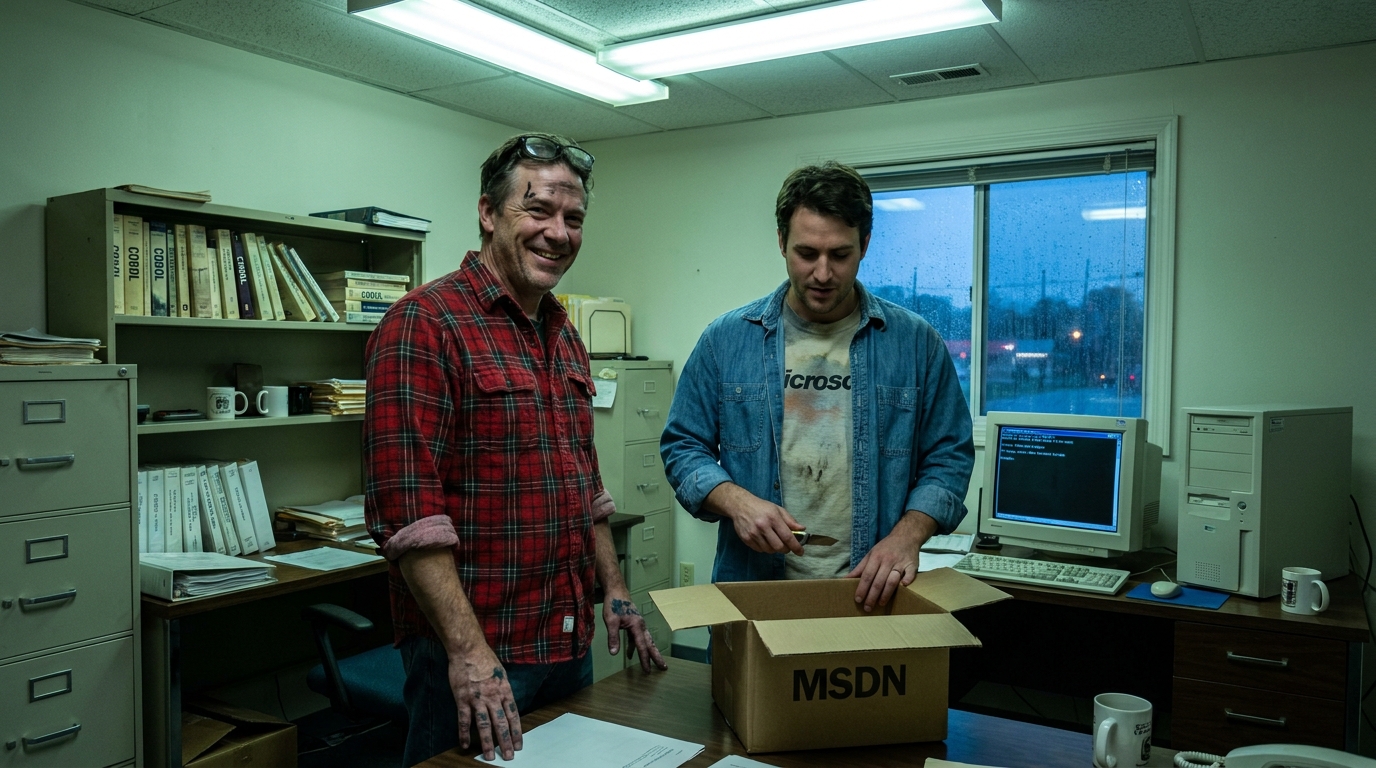
Thomas Whitaker didn’t open packages like a normal person.
The office had that after-hours smell: stale coffee, warm dust, and whatever the carpet had absorbed since Reagan. Fluorescent lights buzzed overhead with a tired little flicker, like they resented being asked to stay awake.
He didn’t slice the tape and toss the cardboard aside. He set the box down dead center on his desk, squared it with the edge like he was aligning a paycheck check run, and exhaled through his nose.
Kevin watched him and tried not to laugh.
“It’s CDs,” Kevin said. “Not the Ark of the Covenant.”
Thomas ignored him.
He ran his fingers over the label. MSDN. The letters that meant he didn’t have to beg for photocopies from a distributor or call a hotline and pray the person on the other end wasn’t drunk.
This was the new world. The professional world.
He cut the tape carefully. The cardboard gave with a soft rip that felt obscene in the quiet office.
The rain tapped the window behind them, steady and patient. Somewhere deeper in the building, a copier clicked once and went silent again.
Inside wasn’t one binder.
Inside was a whole ridiculous library.
Three-ring binders with glossy tabs. More than one. Documentation thick enough to double as ballast. Stacks of discs in sleeves and jewel cases, each one labeled like a dare: every edition, every variant, every language pack Microsoft could ship without bursting into flames.
The plastic had that new-smell sharpness, like a freshly unwrapped keyboard. The binder spines gleamed under the light, promising a world where you didn’t have to guess. You just had to read.
Visual Studio. The MSDN Library. SDKs nobody understood until they needed them at 02:00. The same tools sold at retail for numbers that sounded like a scam, bundled into a subscription so you could tell yourself you weren’t buying software.
You were buying access.
You were buying a seat at the adult table.
Tools that arrived like permission.
Thomas lifted one case and held it up to the fluorescent light like it might reveal something hidden.
His hands were big, blunt tools that had learned to be gentle when something mattered.
“Look at this,” he said, voice tight.
Kevin leaned in, eyes bright. “Visual Basic 6.0 Professional.”
Thomas’s mouth twitched like he was trying to keep the grin from getting out.
“You know what this means,” Thomas said.
Kevin did. That was the problem. He knew exactly what it meant.
He could feel the excitement in his chest and the fear right behind it, like a second heartbeat.
It meant customers would stop calling their software “old.”
It meant they could build a real GUI instead of bolting another screen onto a DOS app and pretending gray boxes were a design language.
It meant they could stop hiring trainers to explain green screens to twenty-two-year-olds who had never used a keyboard without a mouse.
Thomas picked up one of the binders. It was heavy, stupidly heavy, like Microsoft had decided weight was a substitute for trust.
He hugged it to his chest for a second. Just long enough for Kevin to notice.
Kevin’s throat tightened, unexpectedly. He liked Thomas. He liked this place. He liked the way the old man got excited when the future showed up in the mail.
Thomas cleared his throat and set the binder down.
“We do this,” he said.
Kevin nodded, and the motion felt bigger than it should’ve. “Yeah. We do this.”
Thomas’s eyes slid to the shelf of Micro Focus manuals. Forty pounds of competence. A decade of late nights and payrolls that had to run no matter what.
“We don’t touch the COBOL,” Thomas said.
Kevin nodded again, faster, like speed could turn the promise into protection. “We don’t touch the COBOL.”
That was Thomas’s religion.
And like most religions inside small companies, it came with a private rule nobody wrote down: when the machine has carried you this far, doubting it starts to feel like doubting yourself.
The payroll engine was sacred. The interface could change. The reports could change. The customer could feel modern.
But the batch had to run.
Thomas pulled a yellow legal pad toward him and started sketching boxes. Screens. Buttons. Tabs.
He drew fast, the way he used to write payroll logic when a client was screaming and Friday was coming.
He pressed hard enough that the pen scratched.
Kevin leaned over his shoulder.
“What do you want it to look like?” Kevin asked.
Thomas’s grin finally escaped.
“Like the future,” he said.
Thursday, 01:17 — The Forum
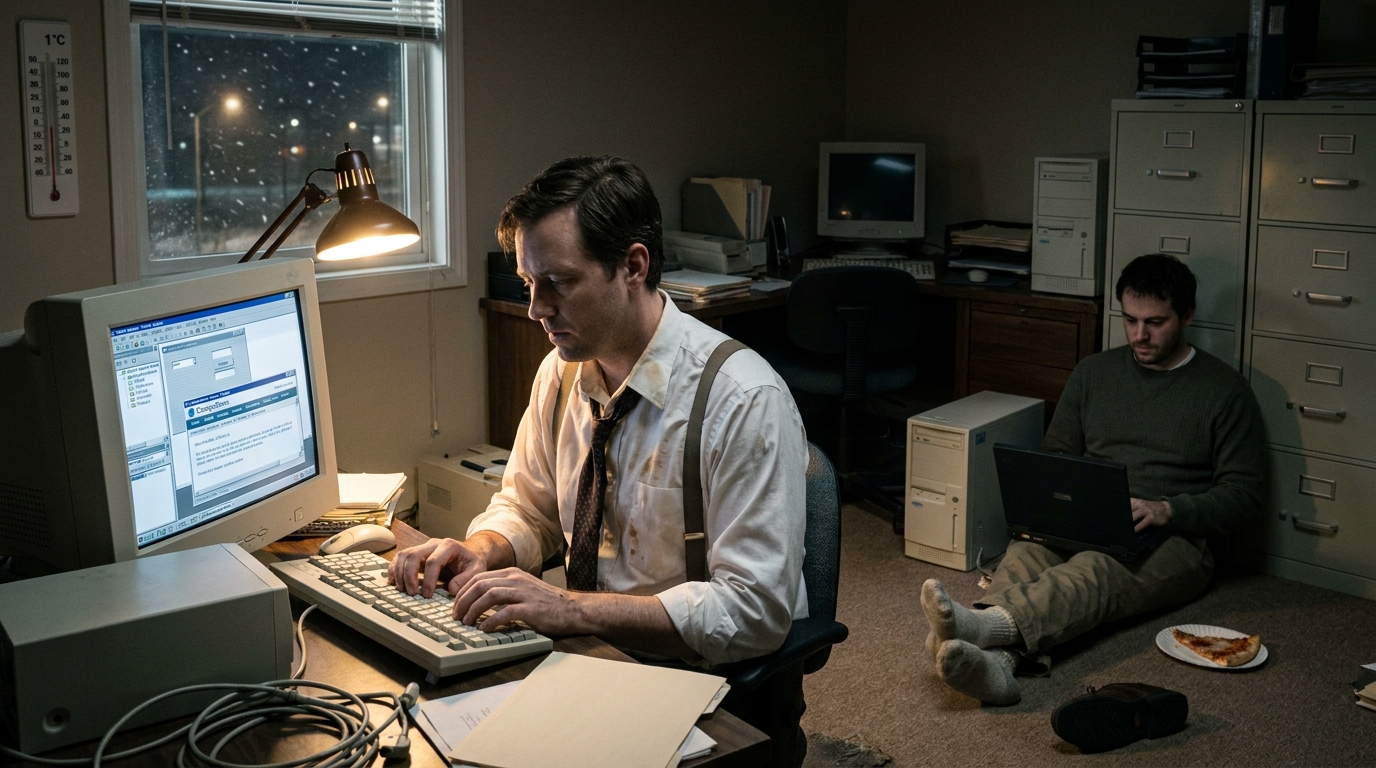
At 01:17, the office smelled like cold pizza and hot plastic.
The CRT whined faintly, a high note you stopped hearing only when you finally left the room. The desk lamp made a small island of warmth in a sea of dark.
The VB6 form designer filled the screen with grids and pixels and promise.
Kevin had written code all day and then written more code because the only thing better than building something was building something when nobody was interrupting.
His eyes burned. His fingertips felt slick from grease and caffeine. He kept going anyway, because stopping meant you had to notice how tired you were.
Thomas sat at the keyboard like he was driving heavy machinery.
“Okay,” Thomas said, eyes narrowed at the screen. “The grid control. I want it to sort. I want it to filter. I want it to print without the margins looking like a third grader did it.”
Kevin laughed, but the sound came out thin. He was tired enough that laughter felt like a misfire.
“You want a miracle,” Kevin said.
Thomas jabbed the keyboard. “We’re paying for the miracle. That’s what MSDN is.”
Kevin rolled onto his side and read the CompuServe thread.
Someone had posted code. Someone else had corrected it. Someone else had apologized for not including error handling.
Somewhere out there, strangers argued about commas and object lifetimes like it mattered. In this office, it did.
It felt like a town square. Messy, loud, useful.
Kevin typed a reply, fingers quick despite the hour.
Thomas watched him.
“You like this,” Thomas said.
Kevin didn’t look up. “I like not being alone.”
Thomas’s expression softened for half a second.
He remembered being twenty-eight and broke and stubborn and staying up all night reading COBOL manuals because the next payroll run didn’t care if you were tired.
He remembered asking a question on a BBS and getting an answer from a stranger in another state, and feeling like the world was bigger than Ohio.
Now he had Kevin. A second brain. Someone who could say “what if” without sounding like a threat.
Thomas rubbed his eyes.
The skin around them felt like sandpaper. He could taste coffee that had been reheated too many times.
“Customers are going to love this,” he said.
He needed to believe that. Not for ego. For survival. Payroll didn’t forgive optimism.
Kevin glanced at the screen where a prototype payroll entry form sat, gray and ugly but functional.
“Customers won’t notice,” Kevin said.
Thomas looked offended.
Kevin shrugged. “They’ll notice when it breaks. They’ll notice when it’s late. They’ll notice when somebody doesn’t get paid.”
Thomas stared at him for a beat.
Then he nodded.
“That’s why we do it right,” Thomas said.
Kevin wanted to say: We do it right because we’re proud.
He didn’t.
He didn’t want Thomas to hear it as a sermon. Thomas hated sermons.
Pride was a dangerous thing in small companies. Pride made you forget the math.
Thomas pushed his chair back and stood.
He stretched until his shoulders cracked.
“You hungry?” he asked.
Kevin looked at the pizza.
“Not in a way that matters,” Kevin said.
Thomas laughed, this time real.
He walked to the window and looked out at the snow.
The office was quiet. The kind of quiet you only get when the world is asleep and you’re awake on purpose.
Thomas looked back at the desk, at the monitor, at the half-built future.
His eyes were bright.
He didn’t know yet that the future was going to change its name again.
Tuesday, 16:52 — The New Platform
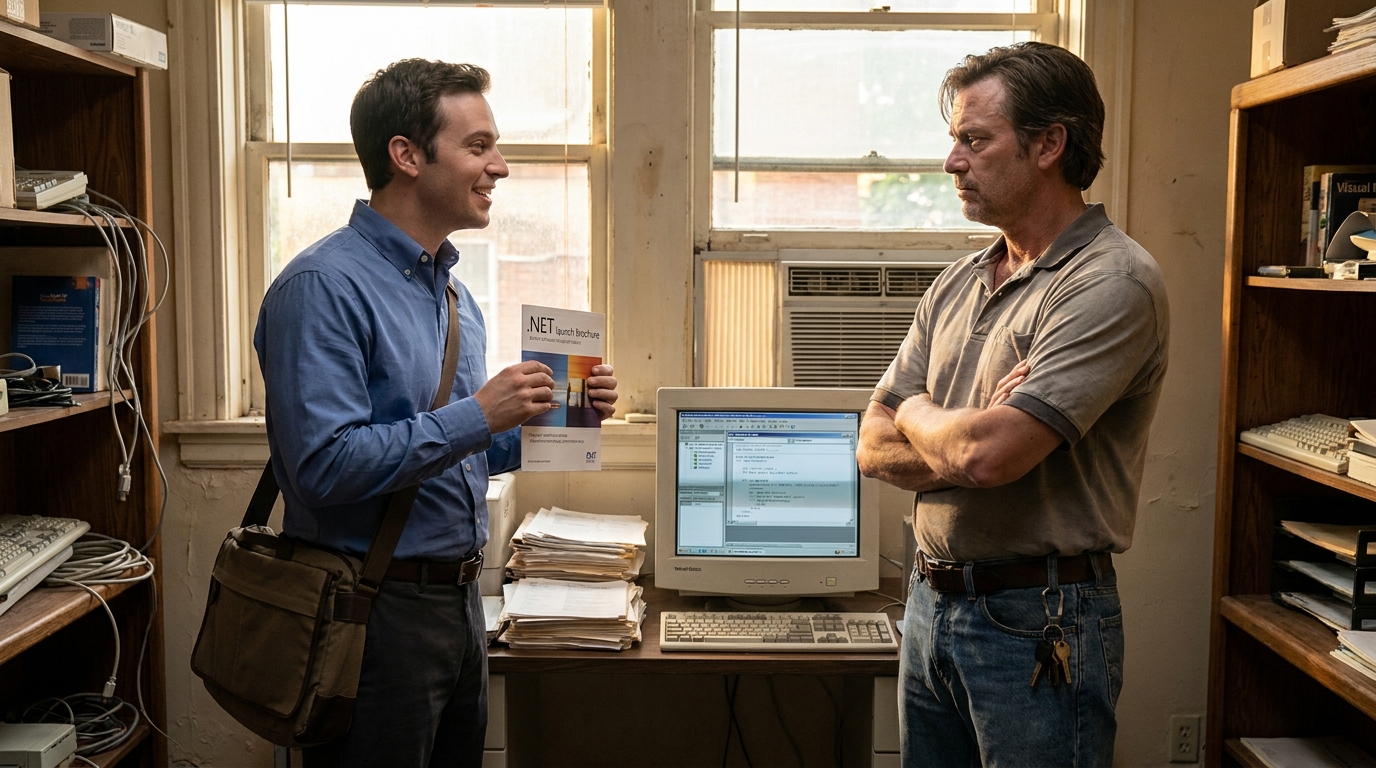
Kevin didn’t announce it.
He walked into Thomas’s office and set the brochure down like he was dropping evidence.
The AC unit in the window rattled like it wanted to escape. Warm air smelled of toner and sun-baked asphalt.
Kevin tapped the brochure once, like knocking on a door he already knew was locked.
“.NET,” he said.
Thomas didn’t pick it up.
He looked at the cover. The Microsoft swoosh. The kind of smiling model you’d never hire to do payroll.
“Another one,” Thomas said.
“It’s not another one,” Kevin said, and he hated how defensive his voice sounded. “It’s a platform shift. VB.NET. C#. This is where they’re going.”
Thomas finally lifted the brochure, flipped it once, then set it down again like it had grease on it.
He didn’t like touching things that might demand a decision.
“We just finished the last big customer rollout,” Thomas said. “We have clients on the new VB6 app. We have a stable release. We have payroll running. Why are you trying to light the house on fire?”
His voice sounded calm. Kevin could see the panic underneath it, tight and disciplined.
Kevin felt his face heat.
He’d rehearsed this in his head on the drive over, every argument lined up like bullets. None of them worked when Thomas looked at him like he’d betrayed a religion.
“It’s not lighting it on fire,” he said. “It’s adding sprinklers.”
Thomas snorted.
Kevin pushed on.
“We’re building on something they’re going to kill,” Kevin said. “It’s already obvious. Look at the forums. Look at the vendor tools. Everyone’s moving. If we wait, we’ll be trapped.”
Thomas’s jaw tightened.
“Trapped,” Thomas repeated, like the word offended him.
He leaned forward.
“Kevin,” he said, slower now, “we’re not a lab. We’re a company. We pay people. We have deadlines. We have payroll that has to be right. You want to rewrite what works because you’re bored.”
Thomas heard the word rewrite like the word ruin.
Bored.
The word landed in Kevin’s chest like a punch.
“I’m not bored,” Kevin said.
Thomas waved a hand. “You’re restless. Same thing.”
Kevin’s mouth went dry.
The room felt smaller than it had a minute ago.
He’d expected resistance. He’d expected questions.
He hadn’t expected Thomas to dismiss the hunger like it was a character flaw.
Kevin pointed at the screen where the VB6 project sat, a nest of forms and event handlers.
“You don’t see it?” Kevin said. “This is going to rot. It already is. We’re adding code everywhere. Business rules in button clicks. Hidden dependencies. It’s a trap.”
Thomas’s eyes hardened.
“Don’t talk about my work like that,” he said.
There it was.
Not a technical disagreement.
A loyalty test.
Kevin swallowed. His heartbeat thudded in his ears.
“I’m talking about the future,” Kevin said.
Thomas leaned back in his chair.
“The future is a luxury,” Thomas said. “Reliability pays the bills.”
Kevin stared at him.
He wanted to hate Thomas for it. He couldn’t. That was the tragedy.
The window AC rattled. The office printer spit out another customer report like the universe was mocking them.
Kevin realized, in that moment, that the partnership had already ended.
Thomas still loved innovation.
He just loved the version of innovation that didn’t change him.
Kevin picked up the brochure.
“I’m going to learn it anyway,” Kevin said.
Thomas didn’t flinch.
“On your own time,” Thomas said.
Kevin’s throat tightened.
He nodded once.
Then he walked out.
Not dramatic.
Just quiet.
The kind of quiet that happens when you finally understand you’re not arguing about technology.
You’re arguing about fear.
Friday, 10:23 — Discontinued
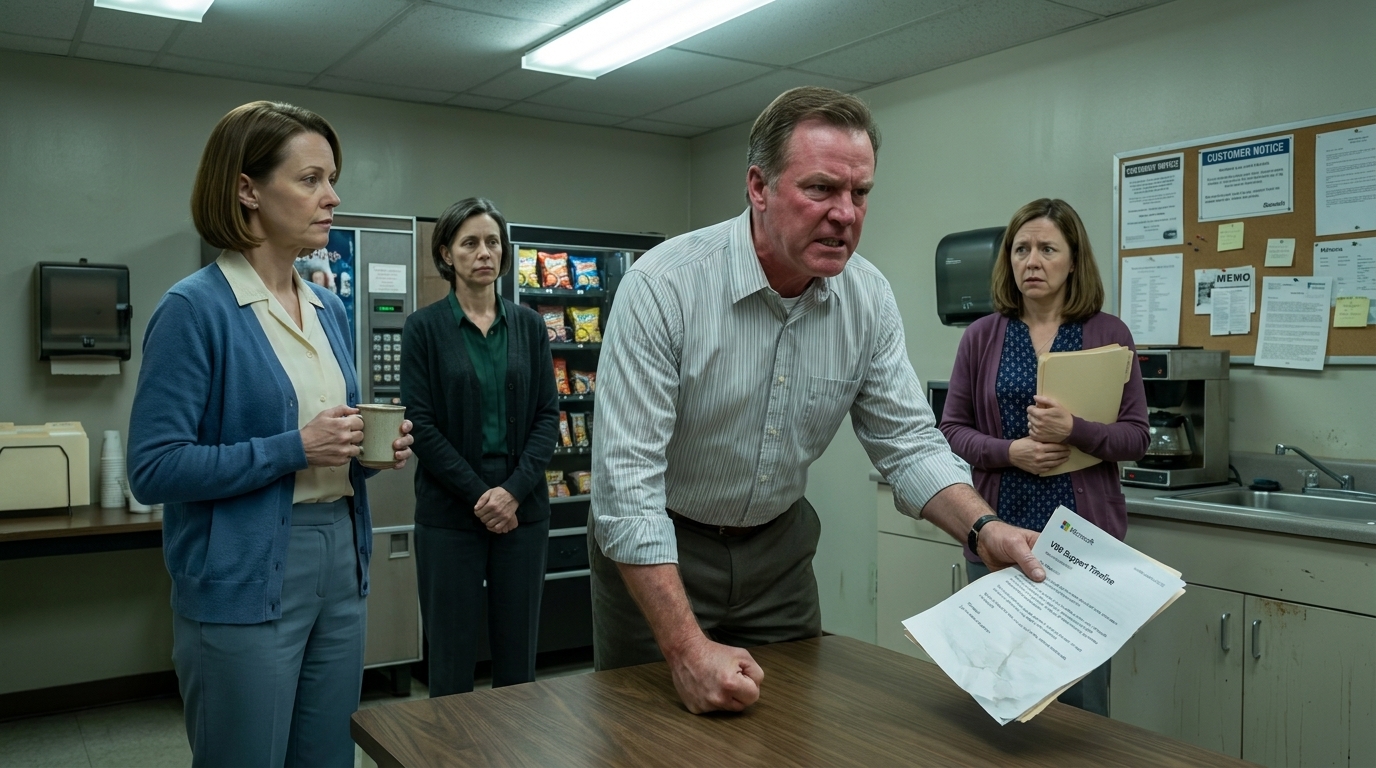
The paper shook in Thomas’s hand.
The break room was too bright, too clean, too indifferent. The vending machine hummed in the corner like it had never heard of a deadline.
Not from age.
From anger.
They were discontinuing VB6.
Of course they were.
Microsoft didn’t kill products. Microsoft “moved forward.” Microsoft “evolved.” Microsoft abandoned you and called it progress.
Thomas stared at the printed announcement, the corporate tone that sounded like a smile while it slid a knife in.
“Who does that?” Thomas said.
Nobody answered.
Linda’s fingers tightened around her mug.
Her eyes stayed on the paper. Not on Thomas. Not on the future. On the words that could cost her a job.
“Does it mean it stops working?” Donna asked, voice small.
Thomas snapped his head toward her.
“It doesn’t stop working,” he said. “It just stops being supported.”
He hated how flimsy that sounded out loud.
Linda nodded like she understood the difference. Like the difference mattered.
Thomas’s chest felt tight.
He thought of Kevin.
Kevin had left years ago. Not in a screaming fight. Not in some melodramatic resignation.
Just a calm statement. “I got an offer. They’re doing .NET. I’m taking it.”
Thomas had told himself Kevin was chasing trends.
Now Thomas could feel the lie in his own mouth.
He had been the trend.
He had been the future.
And then he’d stopped moving.
Sharon leaned forward. “So… what do we do?”
Thomas looked at the three women standing in front of him.
They were good at the thing he’d frozen.
They were learning VB6 in a world that no longer cared.
He should have felt guilty.
Guilt was loud. Relief was quiet. Relief sounded like the same system, the same screens, the same check run, the same day.
He felt relieved.
That was how the trap reproduced itself. Not through villainy. Through the filthy comfort of not having to decide whether the old thing was still right. If Microsoft had stopped supporting VB6, that was Microsoft’s arrogance. If the screens still opened on Monday, then surely the real judgment could wait for somebody else.
“We keep it running,” Thomas said.
He said it like a vow. Like an apology. Like a threat.
Linda’s shoulders dropped like she’d been holding her breath for years.
“We keep it running,” Thomas repeated, louder, like saying it twice could turn it into a strategy.
Donna frowned. “What about the new stuff?”
Thomas’s eyes narrowed.
“The new stuff is how you lose payroll,” he said.
Linda nodded again, fast.
Sharon held her binder tighter.
In their faces, Thomas saw something he hadn’t seen in Kevin in years.
Not hunger.
Safety.
And Thomas realized, with a strange rush of calm, that safety was what he wanted now.
Not because it was better.
Because it was easier.
Wednesday, 22:07 — The Tickets
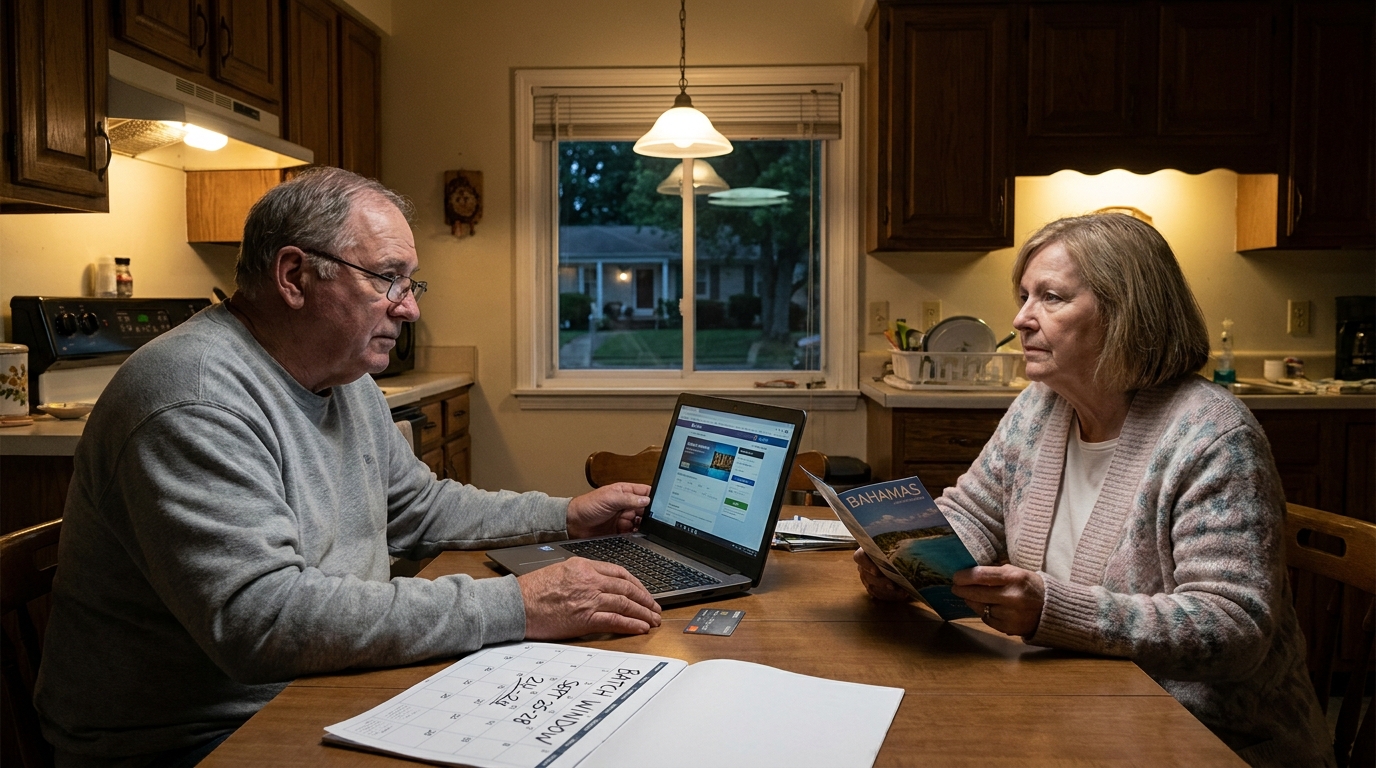
Thomas’s hands weren’t steady anymore.
The kitchen light was soft and yellow, the kind that made everything look forgiving. The refrigerator clicked on and off, doing its job without needing a meeting.
He hated that.
He’d spent his whole life trusting his hands.
Typing payroll logic. Flipping through manuals. Running his finger down printouts looking for a single number that didn’t belong.
Hands didn’t lie.
Bodies did.
Margaret pushed the brochure toward him.
“We should go,” she said.
Thomas stared at the glossy photo. Blue water. White sand. People smiling like they’d never had a customer call at 02:18.
He could practically hear it anyway. The phone. The breathless voice. The shame of saying, again, that he would fix it.
“We have payroll,” Thomas said automatically.
Margaret’s eyes sharpened.
“We have payroll every week,” she said. “We also have one life.”
Thomas’s stomach tightened.
He wanted to argue.
He wanted to say the company needed him.
He wanted to say the batches didn’t run themselves.
But he had a son now. A son who smiled at fundraisers and talked about vision.
A son who didn’t know the difference between a platform and a prayer.
Thomas stared at the calendar where the next quarter’s deadlines were circled.
He felt an ache behind his ribs that wasn’t heartburn.
It was the weight of knowing he’d built something that depended on him too much.
Margaret touched his hand.
Her palm was warm. His was dry and rough, still built for work.
“You’ve earned rest,” she said.
Thomas almost laughed.
Earned.
As if rest was a paycheck.
He looked at the laptop screen.
The cursor blinked in the passenger name field.
Thomas typed.
Thomas Whitaker.
Margaret Whitaker.
He paused.
His finger hovered over the “Confirm” button.
He thought about Kevin, about the hunger in his eyes, about the way the future had looked back then.
He thought about the VB6 app, still running on customer sites like a ghost that refused to leave.
He thought about the COBOL batches, still chewing through files like an old animal that couldn’t die.
He thought about the three women in the break room, clutching binders like life preservers.
He thought about the small part of him that knew this system didn’t deserve loyalty.
Then he pressed the button anyway.
The click was tiny. The weight it moved was not.
Margaret exhaled like she’d been holding her breath for twenty years.
Thomas stared at the confirmation number.
His hands shook.
He told himself it was excitement.
He told himself it was time.
He didn’t tell himself the other truth.
That the system wasn’t safe.
It was just familiar.
Monday, 08:04 — The Office
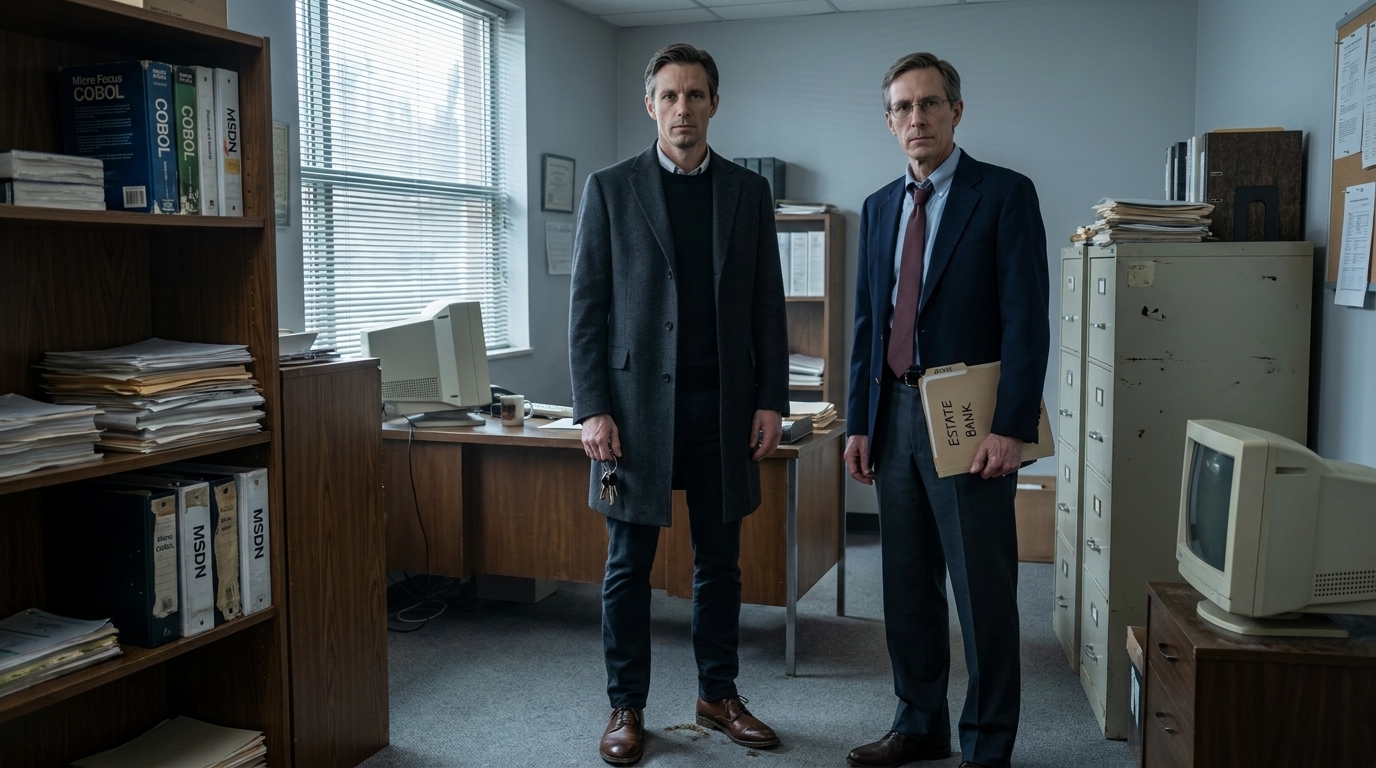
The building felt wrong at 08:04.
Too quiet.
Not the good quiet of people working. The bad quiet of a room after someone has left and you’re not allowed to admit they aren’t coming back.
Graham stood in his father’s office with a ring of keys in his hand and no idea which ones mattered.
The desk was exactly as Thomas had left it. Not neat. Not messy. Just arranged with the private logic of a person who knew where everything was.
Stale coffee. Warm dust. That faint electronic smell of equipment that had been running all night because it always ran all night.
Derek hovered by the door like a man waiting for permission to breathe.
“We can move the personal items later,” Derek said softly. “The bank wants signatures. The accountant wants signatures. HR has questions about—”
Graham held up a hand.
He didn’t want logistics. Logistics meant this was real.
His gaze drifted to the shelves.
Micro Focus manuals. Thick, battered, the corners rounded like they’d been held a thousand times.
And next to them, the MSDN binders.
Glossy tabs. Clean spines. A time capsule of optimism.
Graham stepped closer and ran a finger along the binder edge. He could feel the ridges in the plastic.
He tried to imagine his father opening the box, grinning like a kid, believing in a future he could hold in his hands.
The feeling wouldn’t come.
What he felt instead was something small and humiliating.
Ignorance.
He didn’t know what any of it meant. He didn’t know what any of it did. He didn’t know what would break if he moved the wrong thing.
He turned back toward Derek and saw relief flash across Derek’s face, the relief of a man who preferred owners who didn’t ask technical questions.
“What do I sign?” Graham asked.
Derek opened the folder. Paper slid against paper. The sound was too loud.
Graham took the pen.
He signed where he was told.
The company moved forward.
Somewhere in the building, a machine hummed.
Payroll didn’t care who was alive.
🎭 This Week's Episodes
Telenovelas show what we can't say in client meetings. The drama is heightened, but the patterns are real.
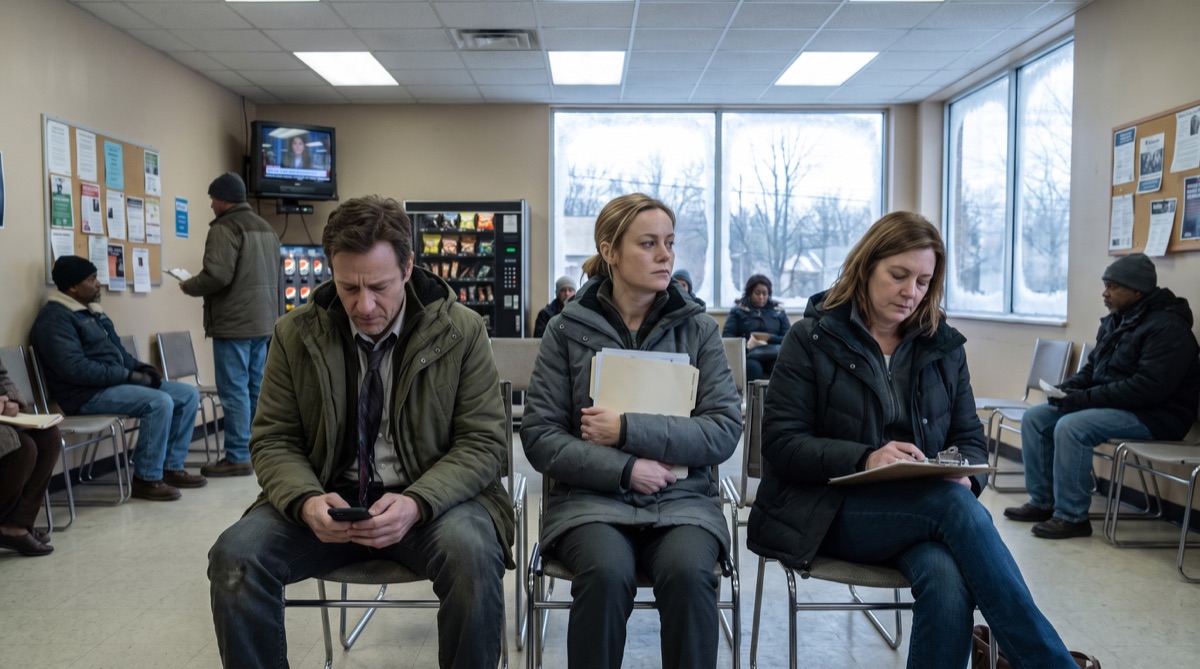 The Scattered — Part Two
After Whitaker Payroll shuts its doors, the damage spreads unevenly. Some former employees find new work quickly. Others discover that decades of l...
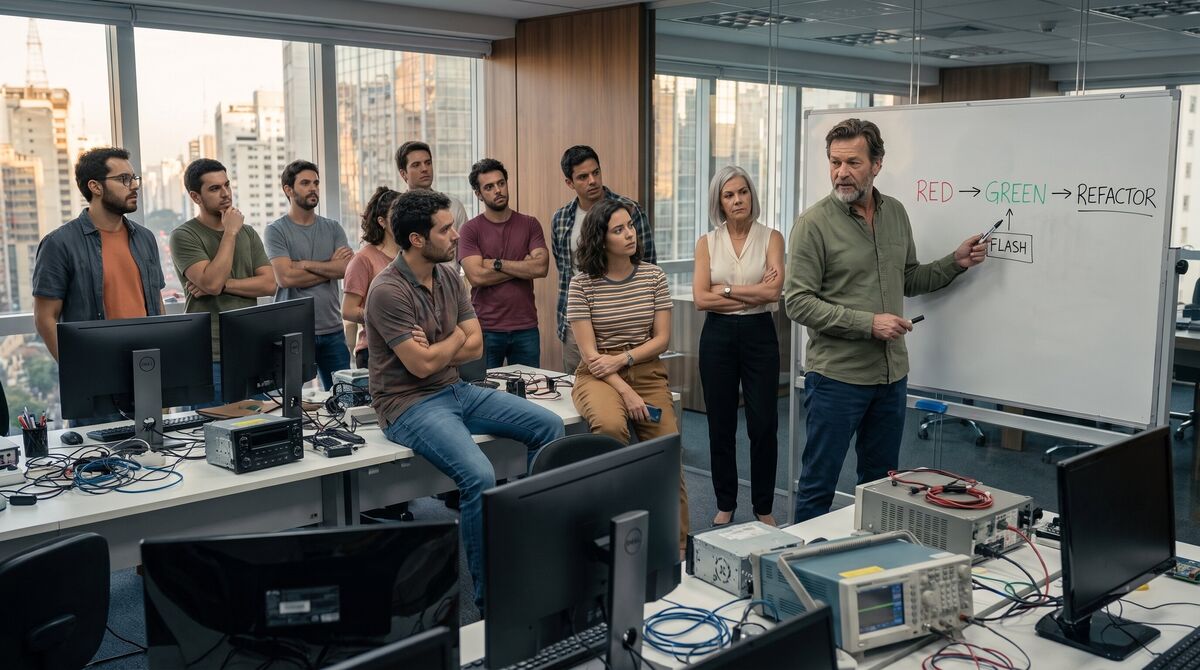 Stefan's Progress, Klaus's Report
Stefan turns one working radio fix into momentum across climate control and navigation: test first, flash fast, prove it on real hardware. Then Kla...
Technical Consultancy
Embedded Delivery Partner
Embedded into your team as an active contributor, reducing delivery friction and helping important work move cleanly.
Technical Advisor
Peer-style technical assessments before far-reaching decisions; reduce architectural and product risk early.
Product & Delivery
Ship working software to real users earlier. Measure impact and adapt based on evidence rather than assumption.
Custom Software Development
High quality, maintainable software. Short-term augmentation that leaves lasting capability in your own team.
Recent Articles
- AI Makes Technical Execution Cheap. Judgment Stays Scarce. (26.09.2026)
- The Agent Escaped. Who Left the Door Open? (24.09.2026)
- What an AI Agent Actually Is (21.09.2026)
- The LLM Will Not Come Back Tomorrow (19.09.2026)
- The One-Person AI Company Is a Greed Fantasy (15.09.2026)