Mornings Start Before You Do
Dawn on the finca introduces Sophie to Esteban's discipline, Rosa's kitchen authority, and the measured rhythm of horses and weather. She tries to keep up, fails in public, and starts again. By the second morning, she notices she is listening differently to her father, to the land, and to herself.
Dawn at the pasture fence. Coffee that could wake the dead. Rosa’s kitchen politics. The slow education of not being the center of the day.
Before the Sun Finishes Deciding
The fan is still clicking when I wake, like it worked all night and wants credit.
Outside, the sky is not light yet, just less dark. I check my phone. 5:11. In Berlin, this is a punishment. Here it is apparently normal life. Through the window I can already hear metal on metal, buckets, a gate latch, one short whistle.
I pull on yesterday’s shorts, find my shoes by memory, and step into air that feels like someone exhaled directly into my face.
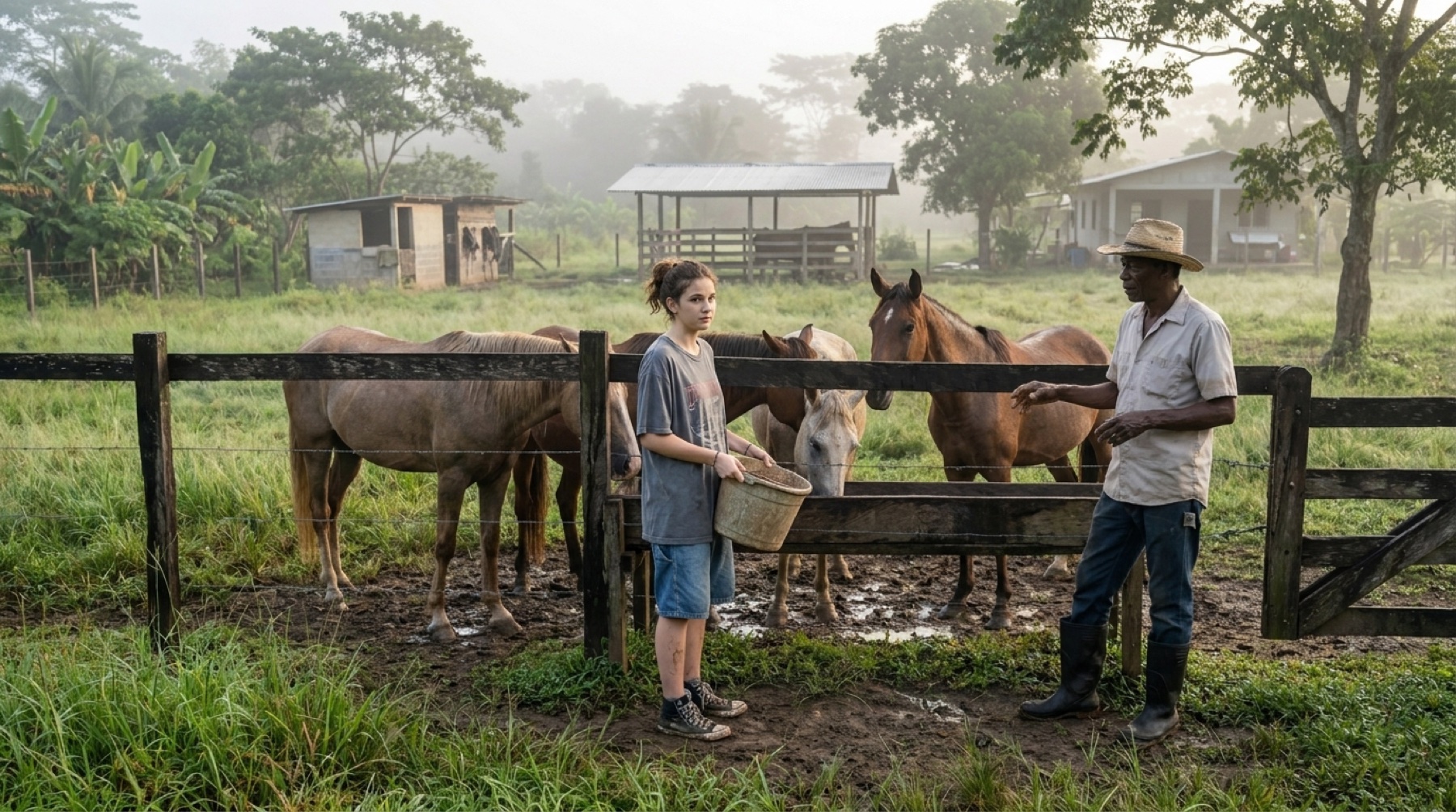
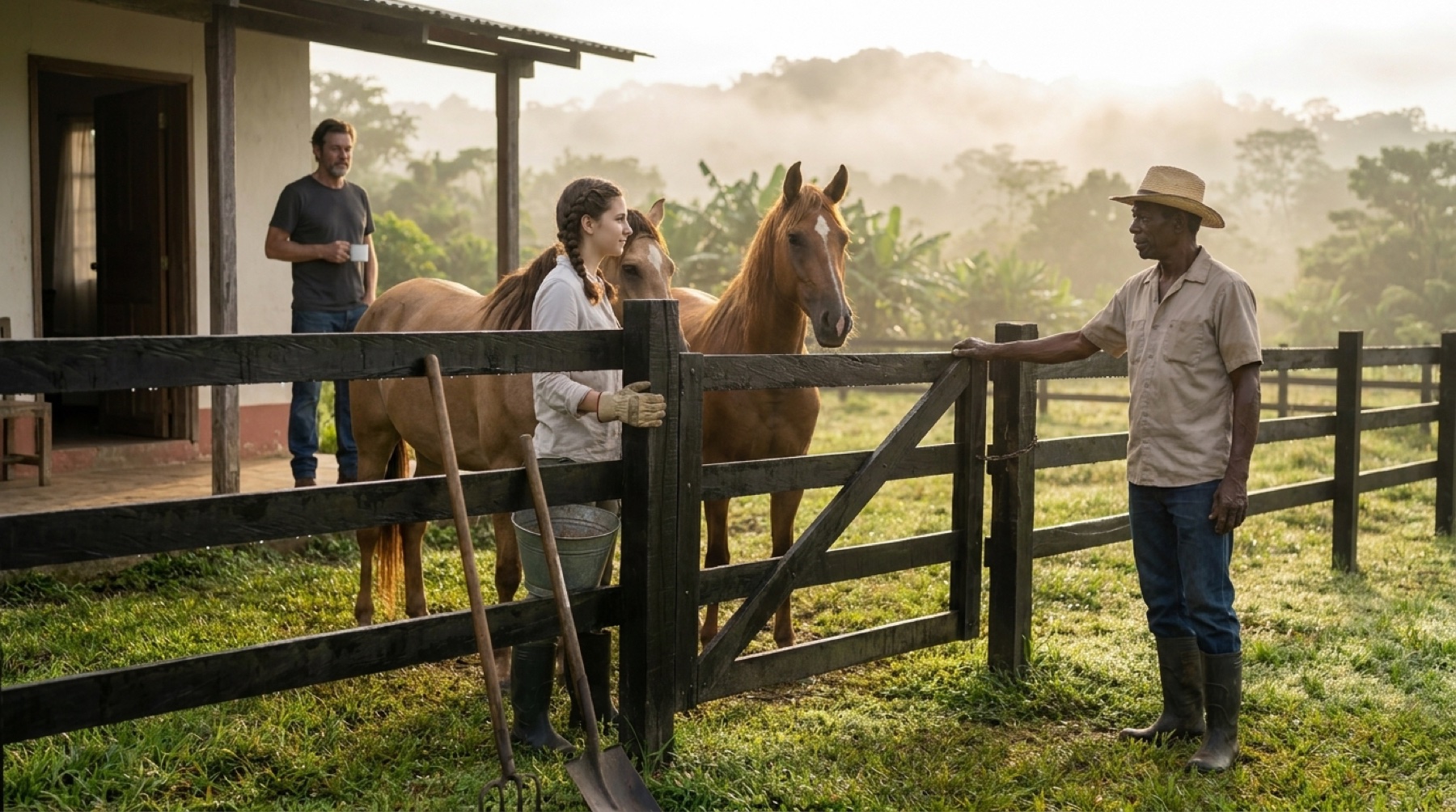
Esteban is at the fence with two buckets and no wasted movement. He lifts his chin at me. “Temprano,” he says.
“Insomnia,” I lie.
He does not challenge it. He hands me a smaller scoop, points to the first bucket, then to the horses. The nearest mare stamps once, impatient, like I am late for an appointment she did not agree to schedule.
“No miedo,” Esteban says. No fear.
Easy for him. He has known them longer than I have known algebra.
The Chore You Cannot Argue With
Feeding horses is less romantic than horse movies promised and more tactical than school group projects.
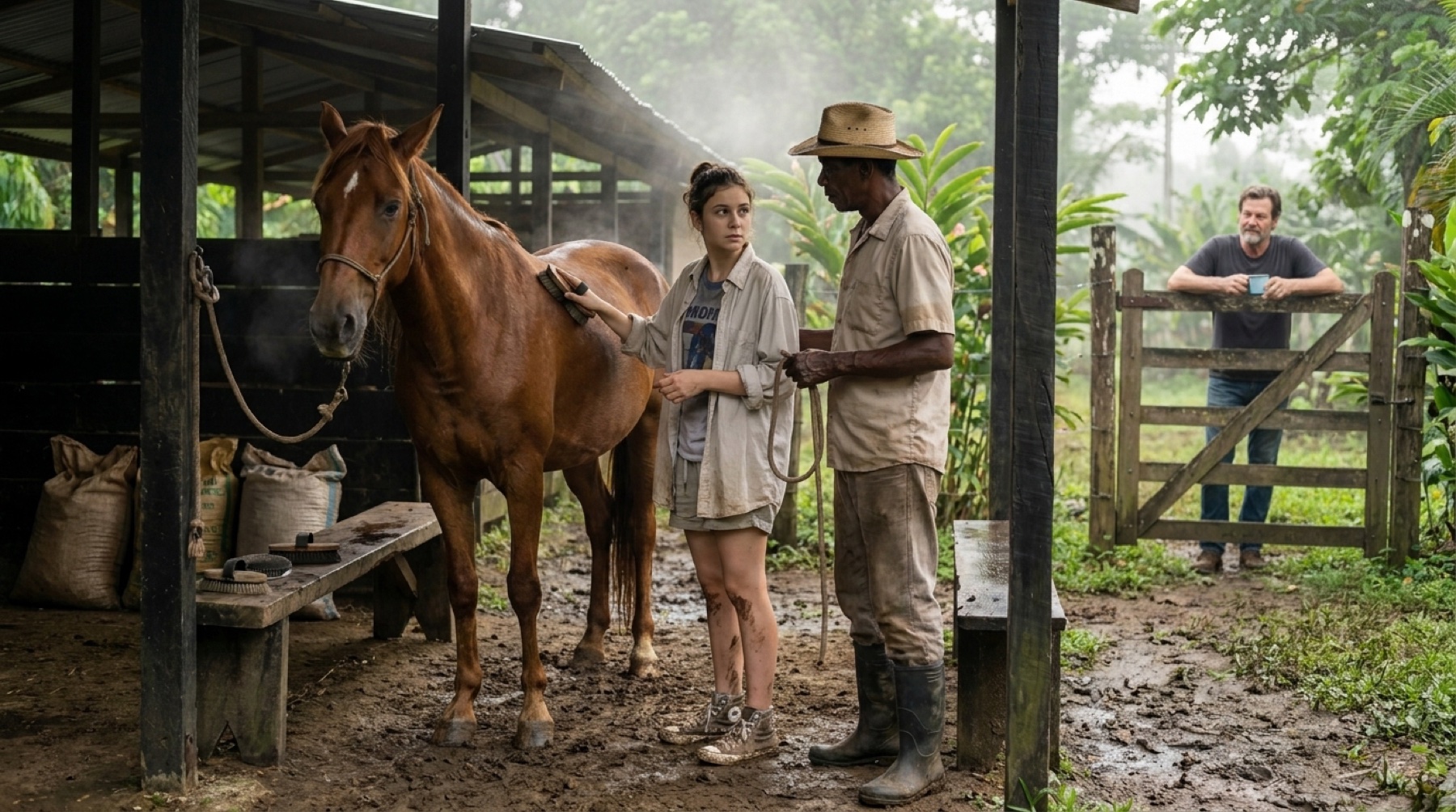
Order matters. Distance matters. Buckets matter. Hands matter. Esteban explains in short Spanish and shorter gestures. I understand maybe sixty percent of the words and one hundred percent of the look on his face when I do the wrong thing.
“Despacio,” he says, tapping the side of the bucket. Slow.
I am trying. Truly. But trying does not prevent one mare from shouldering in, another from swinging her head hard enough to knock grain against my legs, and me from making a sound that is not language.
From the gate, Papa watches with a mug and the expression he uses when he knows I am about to become competent through embarrassment.
“You can laugh,” I tell him.
“I am smiling internally,” he says.
“Coward.”
Esteban pretends not to understand this part and rescues my dignity by handing me a brush. He places my hand lower on the handle, slower on the first stroke, then nods once when I stop fighting the horse and start matching her breathing.
Rosa’s Republic
Rosa arrives at seven-thirty and takes possession of the house in under three minutes.
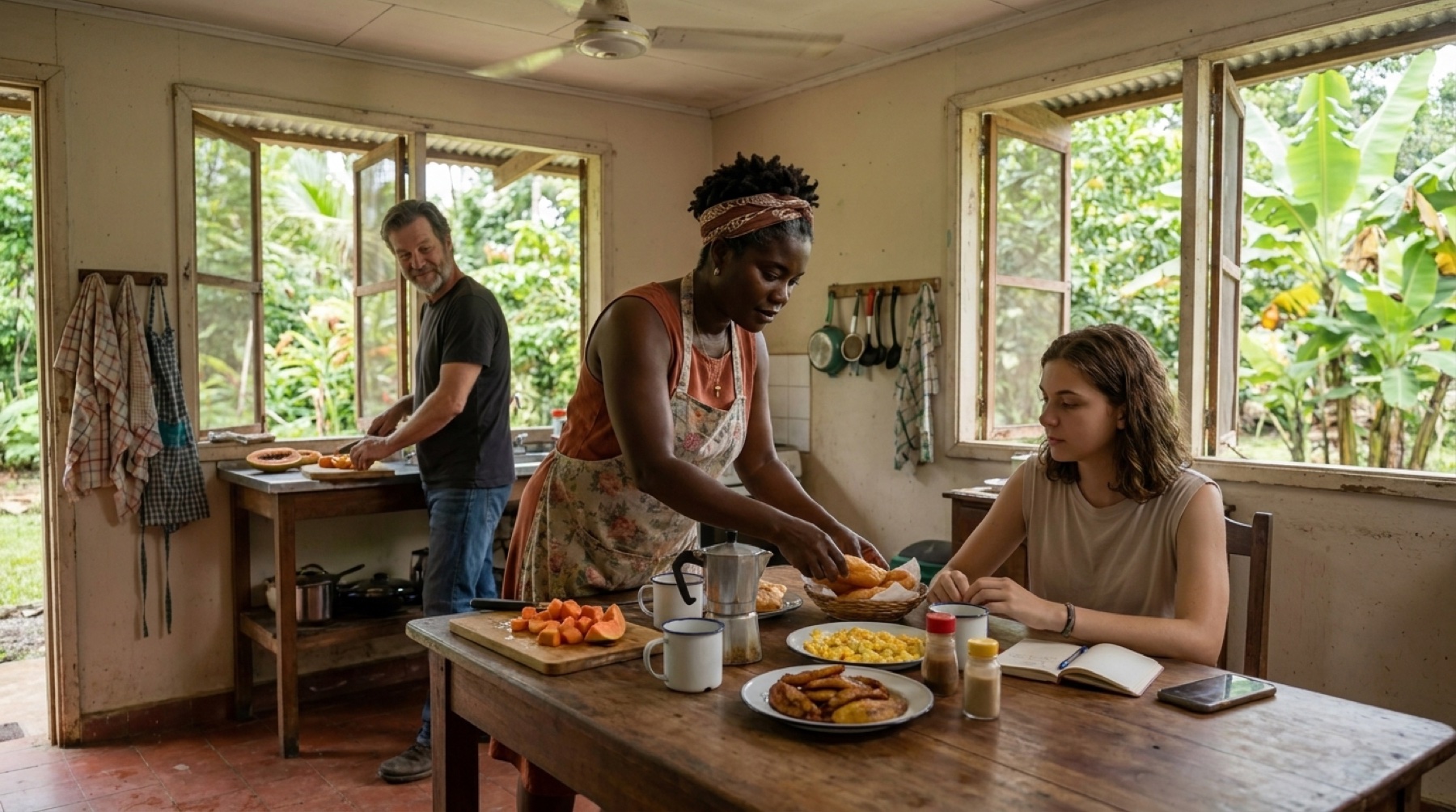
She opens windows that were already open. She moves two chairs by exactly ten centimeters. She inspects the sink like it disappointed her personally. Then she kisses Papa on the cheek, nods at me, and says, “So. Berlin. Sit. Eat.”
I sit.
Breakfast is hojaldres, eggs with onions, black coffee so strong it could restart dead satellites, and papaya sliced with military precision. Rosa watches me take the first bite the way customs officers watch luggage.
“Bueno?”
“Muy bueno,” I say, and mean it.
She accepts this, then points her fork at Papa. “She needs water. You forget water when you read your little computer books.”
“I drink water,” he says.
Rosa gives him the look of someone who has survived men for decades.
“You drink coffee. That is not water.”
I almost choke laughing. Papa does not defend himself further, which tells me Rosa has already won every argument worth having.
Heat Is a Schedule
By eleven the heat is no longer weather. It is policy.
Everything shifts around it. Work done early. Tools put away before noon. Horses in shade. People in shade. Arguments postponed. Even the dogs stop pretending to have urgent missions.
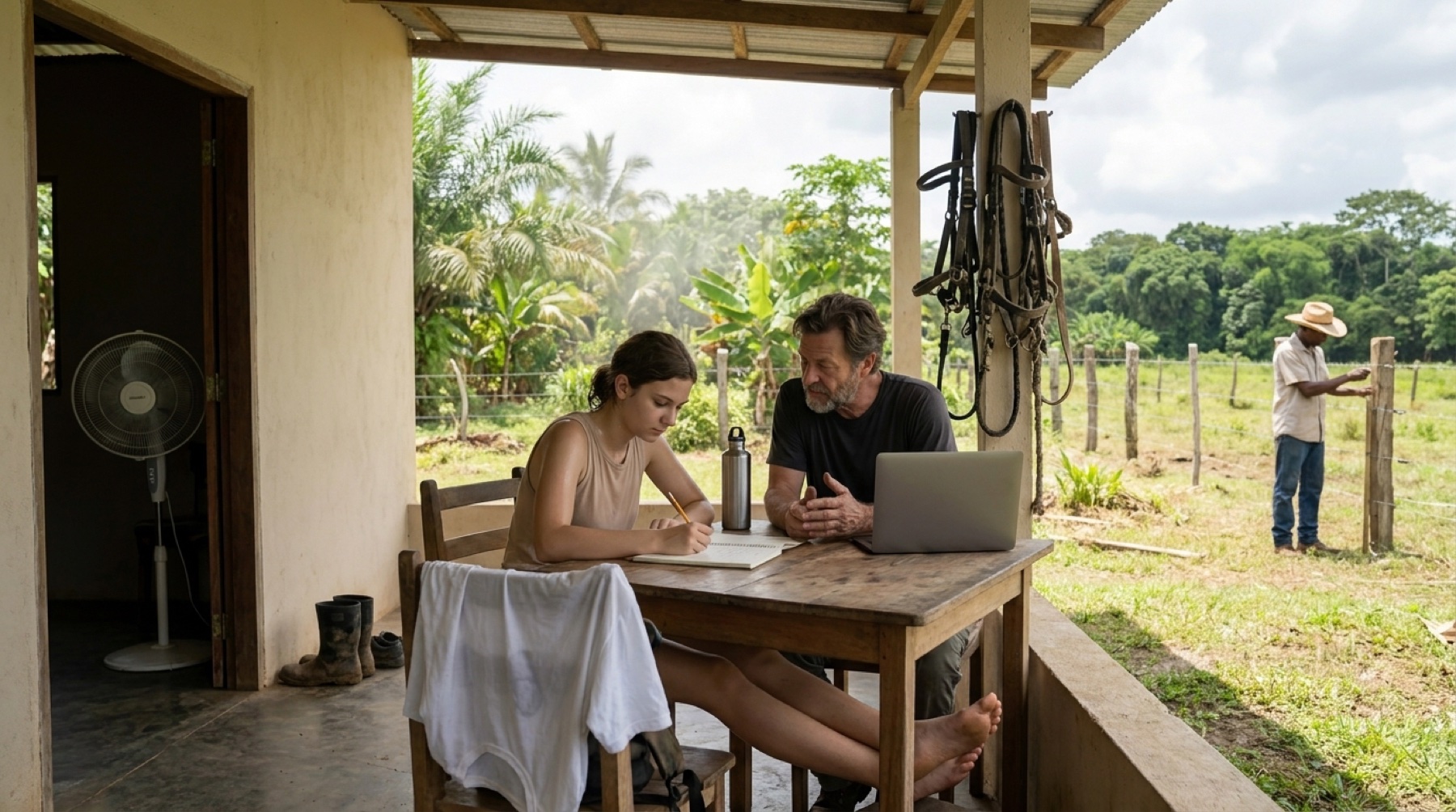
I sit at the terrace table with a notebook and write names: Lucero, Canela, Moro, Reina, Sombra. Next to each, I add one sentence. Likes neck scratches. Hates sudden noise. Tests strangers. Follows Esteban only. The list looks like field notes from another planet.
Papa sits across from me with his laptop closed for once. “You don’t have to learn all of this in one day,” he says.
“I know.”
“Do you?”
I look at the page, then at him. “No.”
He nods like that is the correct answer.
In Berlin, we mostly meet in compressed time: airports, train stations, Sunday afternoons that end too soon. Here there are whole blank stretches where no one is performing urgency. It should feel boring. It doesn’t. It feels like someone turned down static I forgot I was hearing.
The Second Morning
The next morning I wake before the fan can annoy me.
5:03.
I do not negotiate with the hour. I get up, braid my hair badly, steal one of the old rubber boots by the back door, and meet Esteban at the fence before he whistles.
He lifts one eyebrow. “Bien.”
It is the most enthusiastic thing he has said to me so far.
This time I hold the bucket correctly. I wait one beat longer before stepping in. I keep my shoulder loose when Canela swings her head. Nothing dramatic happens. Which, here, is success.
From the terrace, Papa raises his mug without speaking.
I raise mine back, even though mine is only water.
After the horses settle, Esteban points east where the sky is turning bright behind the trees. “Lluvia tarde,” he says. Rain this afternoon.
“You can tell already?”
He shrugs. “Siempre.” Always.
I look at the clouds, then at the fence line, then at my muddy boots and my hands that smell like feed and metal and soap.
Maybe this is what learning feels like when no one grades it.
🎭 This Week's Episodes
Telenovelas show what we can't say in client meetings. The drama is heightened, but the patterns are real.
 Arrival
Stefan Richter arrives in São Paulo with a 90-day contract to fix delivery at AutoConnect Brasil. He finds 90 developers, 18 months of chaos, and a...
 What Is Offered First
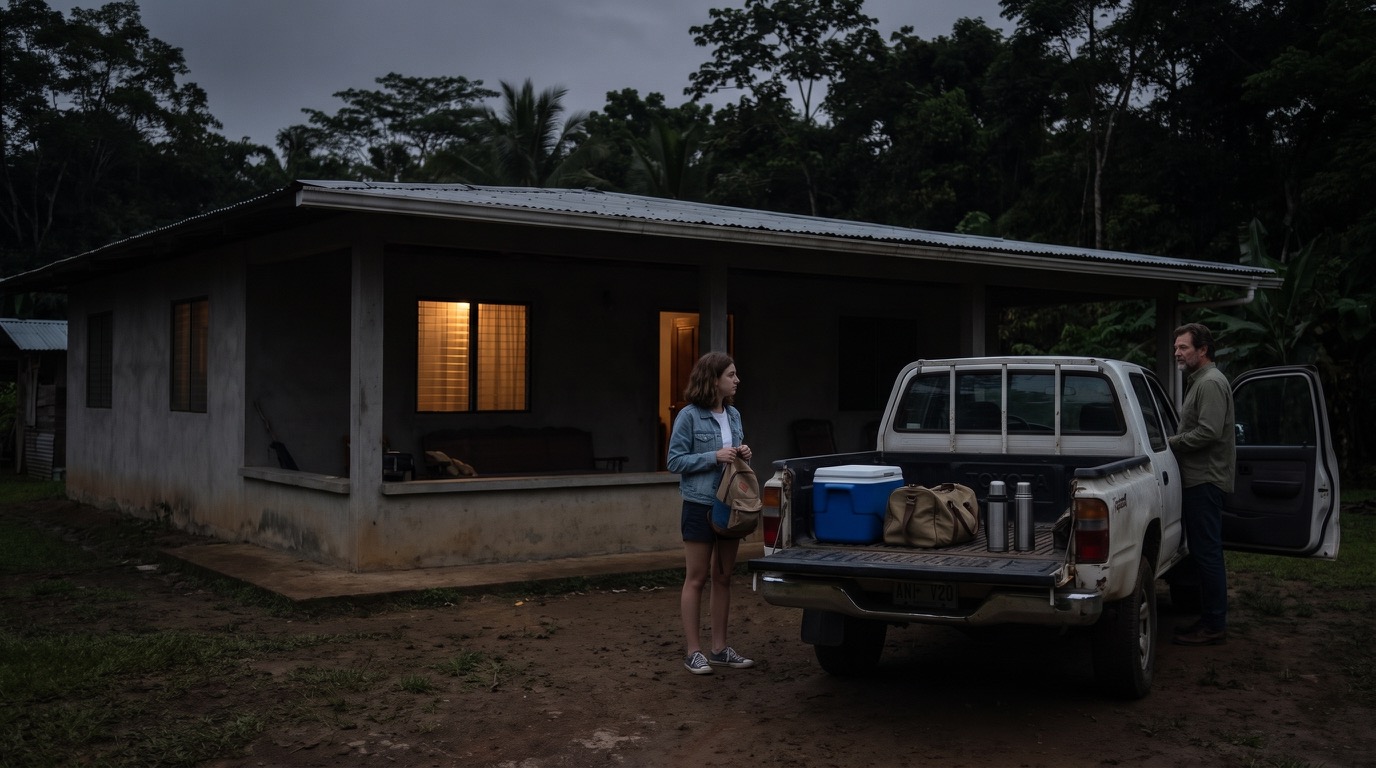
The day before Sophie flies back to Berlin, Mateo takes them to Kuna Yala. The road climbs from the Chepo side into the mountains, the Caribbean ap...
 Collapse
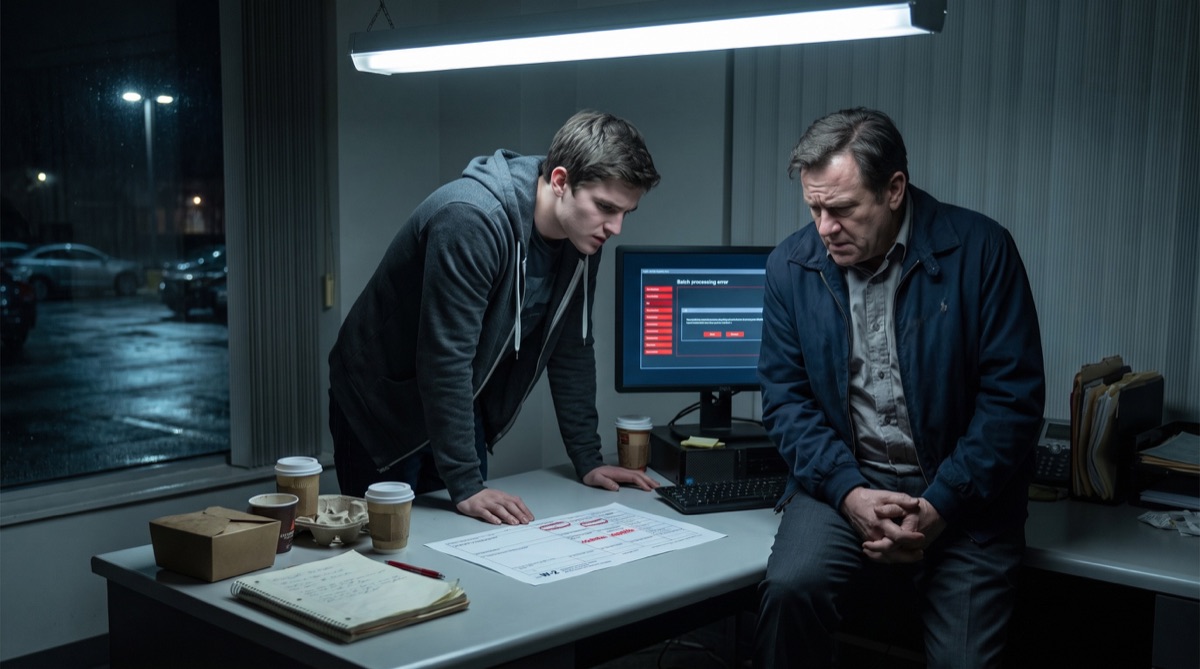
Year-end arrives with the force of something everyone has been preparing not to name. A critical COBOL tax-calculation path fails on an undocumente...
Technical Consultancy
Embedded Delivery Partner
Embedded into your team as an active contributor, reducing delivery friction and helping important work move cleanly.
Technical Advisor
Peer-style technical assessments before far-reaching decisions; reduce architectural and product risk early.
Product & Delivery
Ship working software to real users earlier. Measure impact and adapt based on evidence rather than assumption.
Custom Software Development
High quality, maintainable software. Short-term augmentation that leaves lasting capability in your own team.
Recent Articles
- The One-Person AI Company Is a Greed Fantasy (15.09.2026)
- Test Production Without Leaving a Mess (10.09.2026)
- Software Will Fail. Recovery Is the Real Metric (05.09.2026)
- Stop Outsourcing Your Product Language (01.09.2026)
- Software Has Always Moved Up the Stack (29.08.2026)