The Cost of Misposition
Where Your Investment Goes
Same client. Same people. Same constraints. Same starting point. A Developer Advocate is engaged to improve delivery. What happens next depends entirely on how the organization positions the role — as a trusted ally with clear sponsorship, or as just another contractor absorbed into the existing structure. This visual story shows both paths side by side.
Trusted Ally
Miscast Contractor
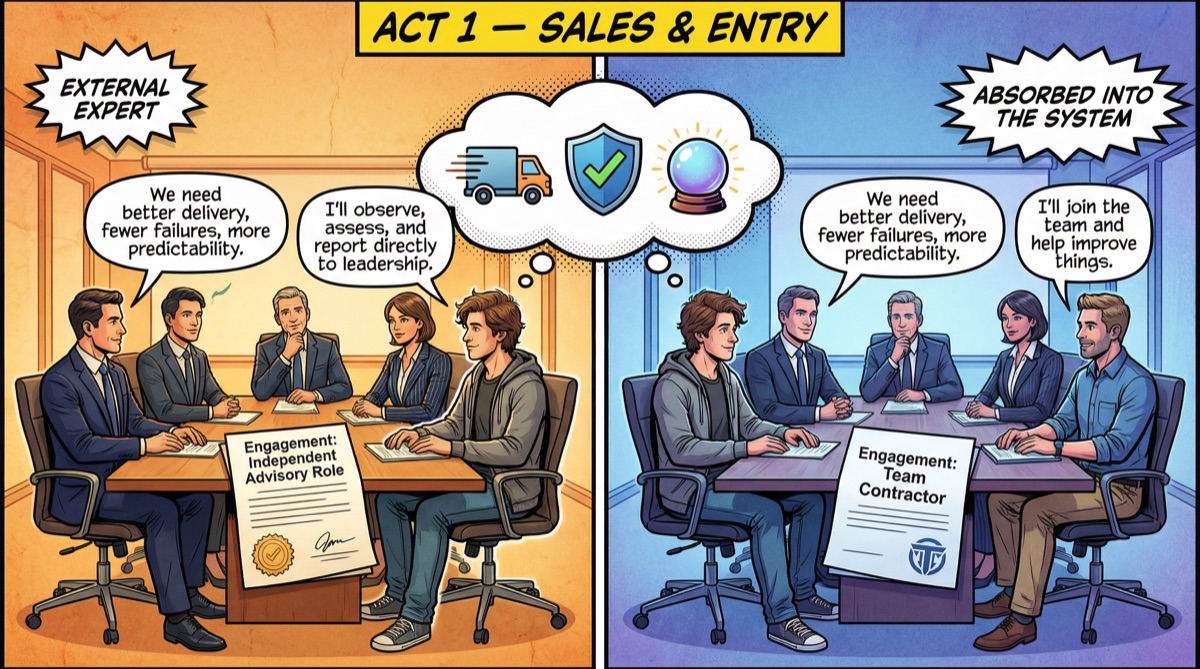
Act 1: Sales & Entry
A client reaches out. They want better delivery, fewer failures, more predictability. A Developer Advocate is contracted. Same starting point — but how the role is positioned makes all the difference.
Trusted Ally
The Advocate is positioned as a senior ally to the current CTO or sponsor. Their role: observe, support, and recommend. Management agrees on the communication path before the work begins.
Miscast Contractor
The Advocate is assigned to a team like a contractor. "Help the team. Improve things where possible." They are treated like extra capacity instead of a clearly sponsored support role.
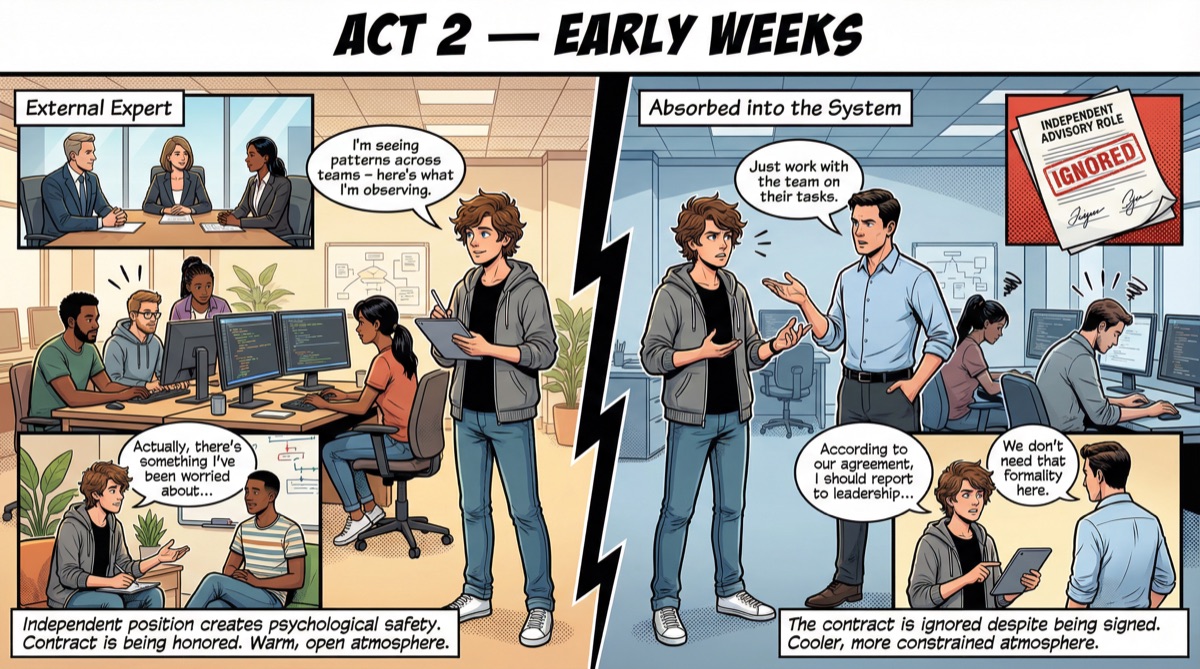
Act 2: Early Weeks
Reality begins to form. How the Advocate is perceived shapes what they can observe — and what they can say about it.
Trusted Ally
The Advocate observes patterns across the organization. They have a clear path to the sponsor and room to raise difficult topics directly. That clarity supports honest conversations.
Miscast Contractor
The Advocate becomes "one of us" — which means they inherit the team's constraints. They see problems but have no agreed channel to raise them clearly. Useful collaboration starts to break down.
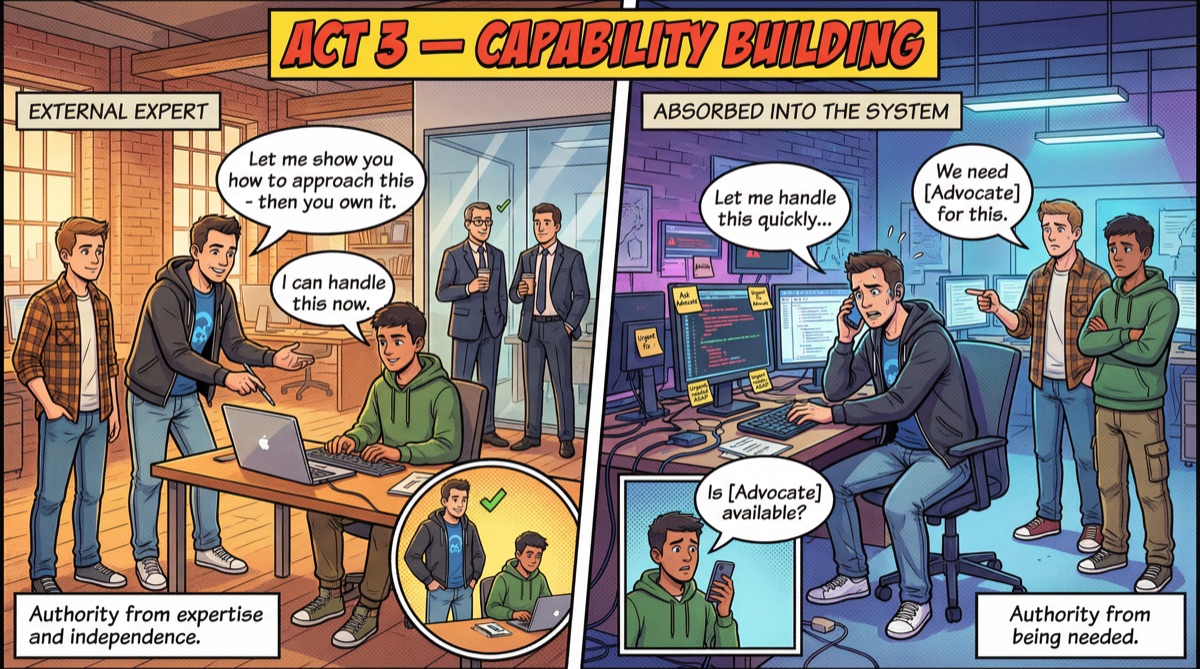
Act 3: Capability Building
Technical improvements accumulate. But whether they transfer to the team or remain locked in one person's head depends on the Advocate's perceived role.
Trusted Ally
The Advocate coaches, guides, transfers knowledge. Their job is to make themselves unnecessary. Trust comes from expertise and clear sponsorship. Leadership sees capability growing.
Miscast Contractor
The Advocate becomes the go-to person for fixing things. The team depends on them. Authority comes from being needed. They are valuable — but that value is personal, not transferred.
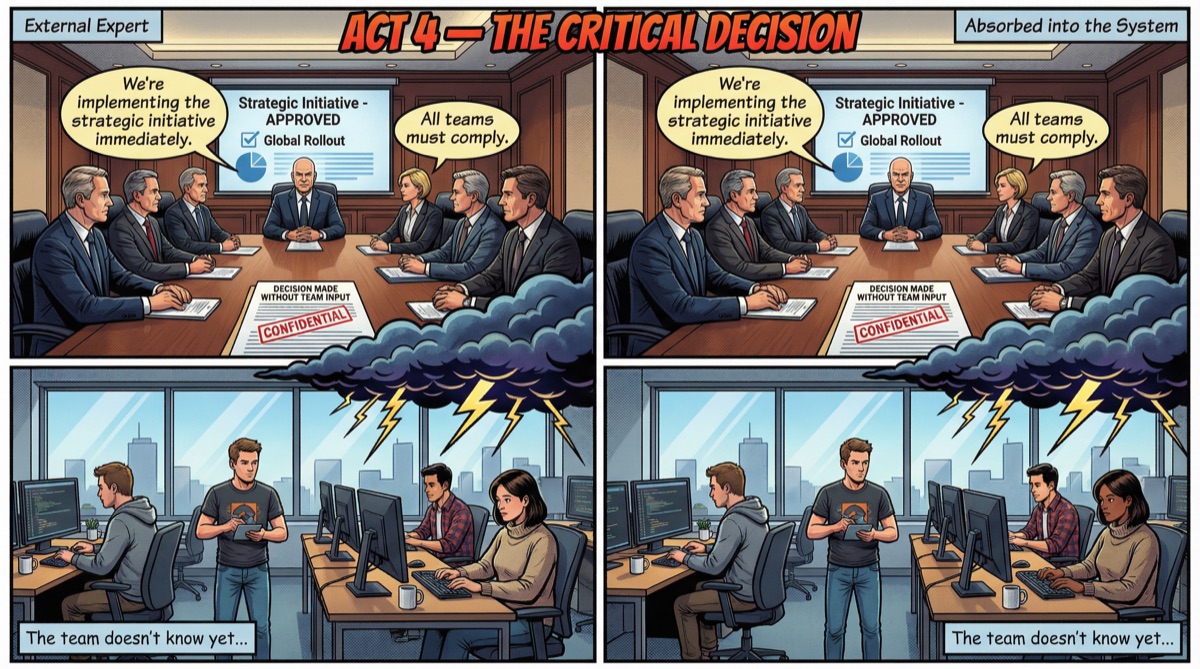
Act 4: The Critical Decision
A decision is made elsewhere in the organization — without involving the team. It threatens existing technical gains. This moment is shared. What happens next is not.
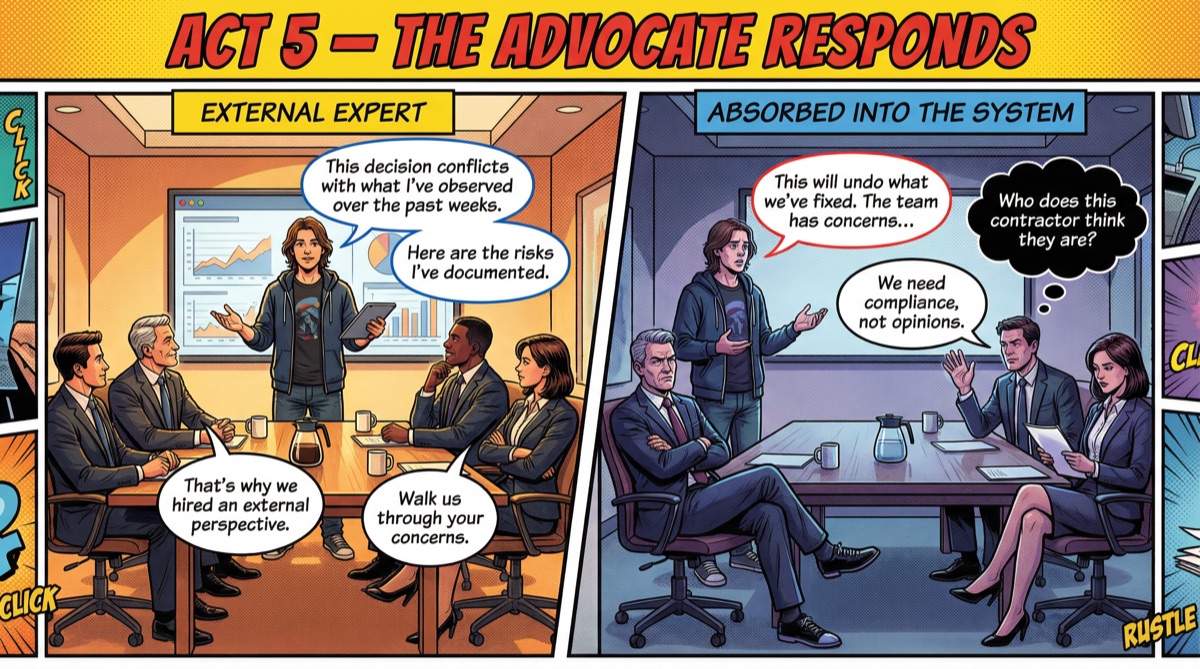
Act 5: The Advocate Responds
The Advocate must push back against a decision that will undo their work. Whether they can speak — and whether anyone listens — depends on how they're positioned.
Trusted Ally
"This decision conflicts with what I've observed. Here are the risks." Leadership expects this input. The Advocate has standing to advise because the role was positioned clearly.
Miscast Contractor
"This will undo what we fixed." But who is "we"? A contractor disagreeing with management. No standing. No authority. Just an employee with an opinion.
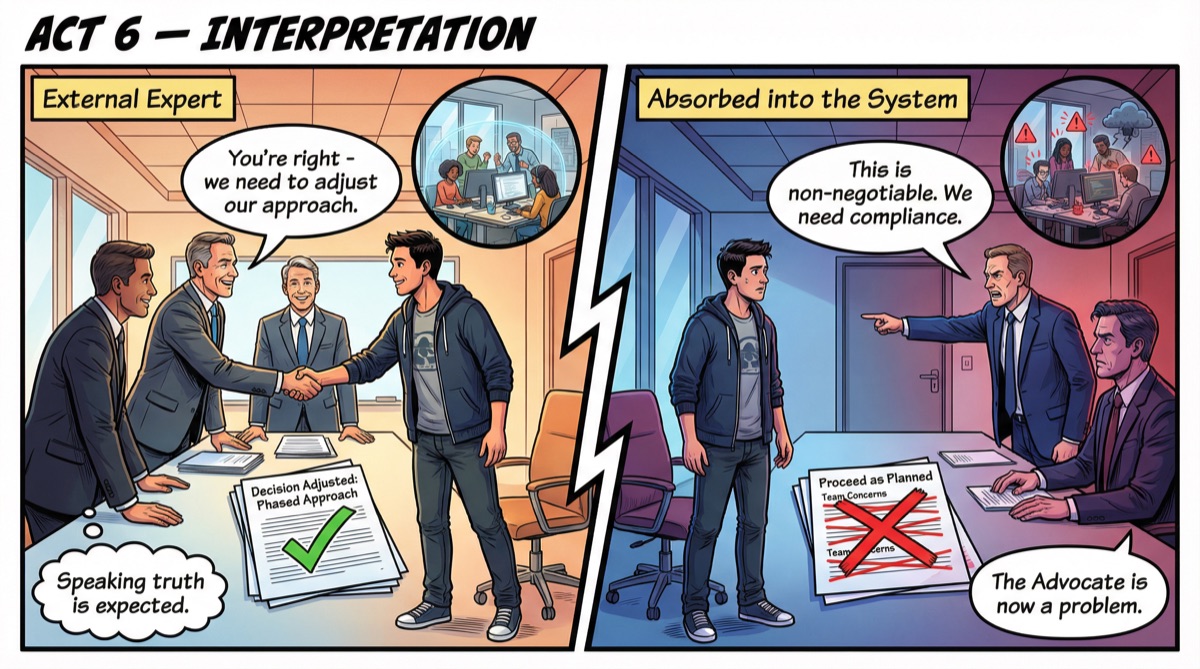
Act 6: Interpretation
The same message, heard in completely different ways. Position determines whether dissent is advice or insubordination.
Trusted Ally
The response is perceived as professional counsel. "That's why we brought in support." The decision is reconsidered. Raising risk is expected.
Miscast Contractor
The response is perceived as resistance, non-compliance. "Who does this contractor think they are?" The decision is defended. The Advocate is now a problem.
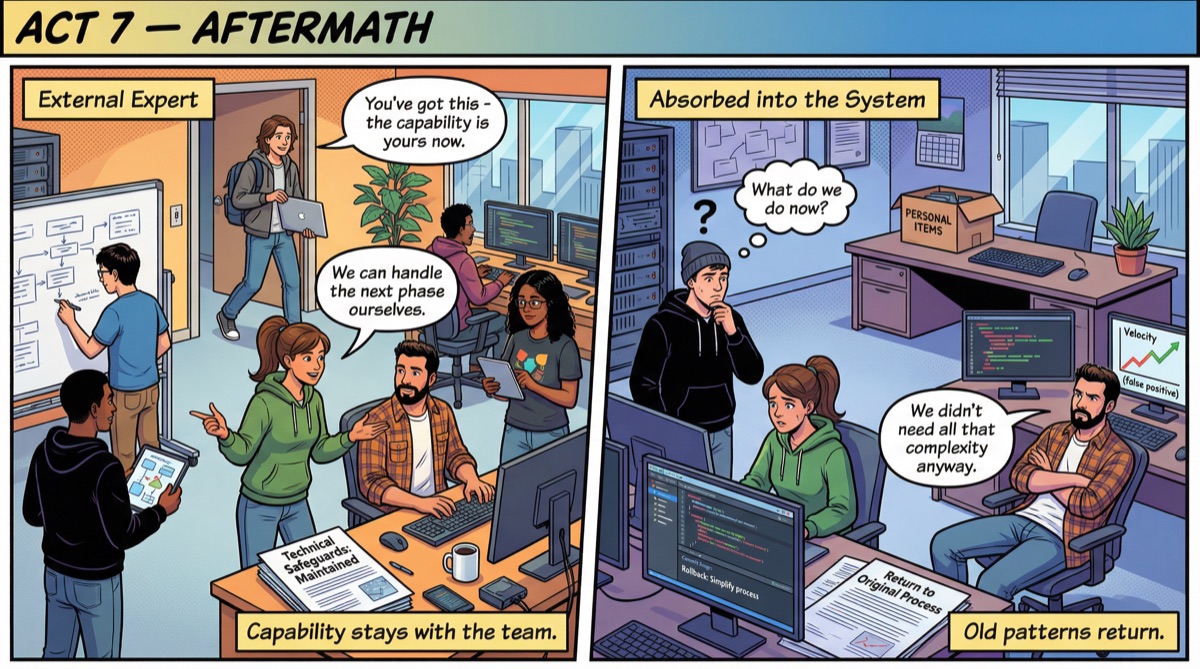
Act 7: Aftermath
The immediate consequences unfold. One path preserves capability. The other loses it — and celebrates the wrong metrics.
Trusted Ally
The Advocate remains credible. Technical safeguards remain. Capability stays with the team. The Advocate becomes less necessary. This is success.
Miscast Contractor
Contract terminated. Safeguards rolled back. Old patterns return. "See? We didn't need them anyway." Short-term speed appears to increase.
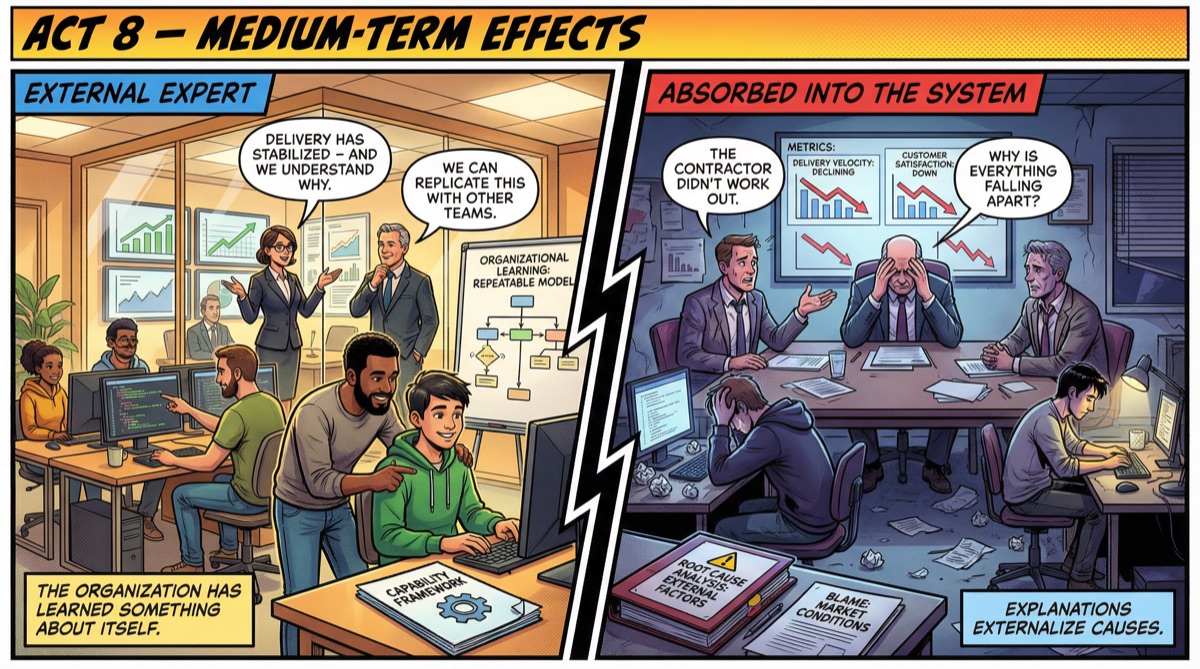
Act 8: Medium-Term Effects
Months pass. The true consequences become visible. One organization learns. The other avoids learning.
Trusted Ally
Delivery stabilizes. Management understands why. The organization has learned something about itself. Future engagements follow the same pattern.
Miscast Contractor
Delivery degrades. Customers leave. "The contractor didn't work out." Explanations externalize causes. It's always someone else's fault.
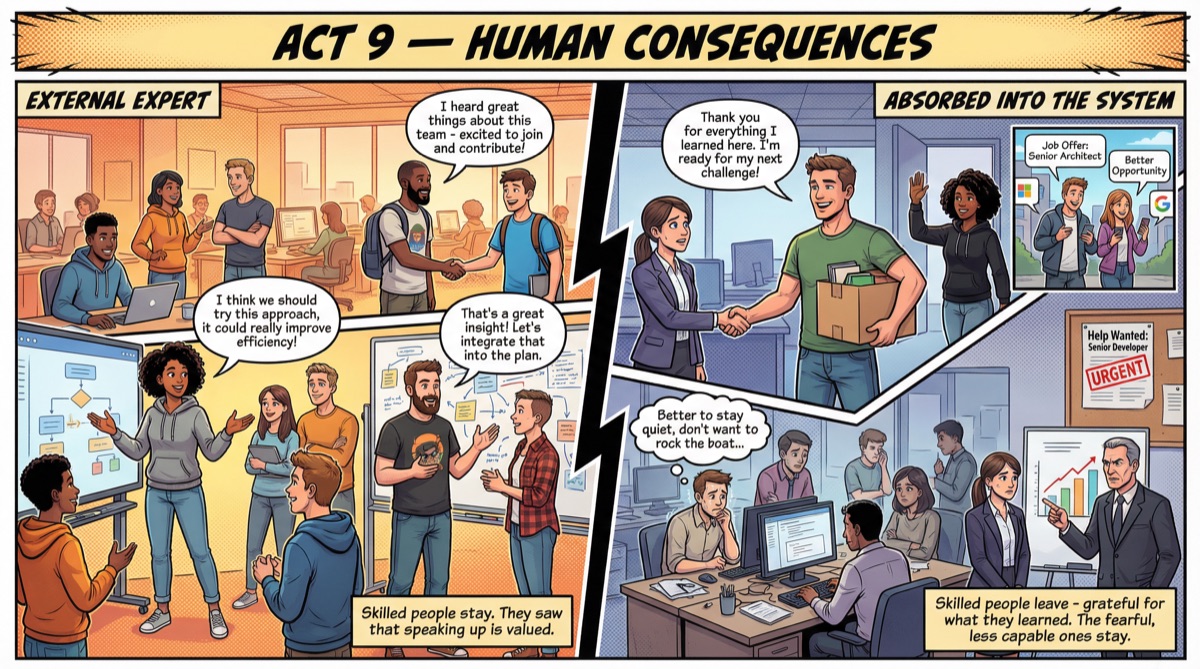
Act 9: Human Consequences
Organizations are made of people. What happens to the people determines everything else.
Trusted Ally
Skilled people stay. They saw that speaking up is valued. Confidence increases. Initiative remains local. The team owns their work.
Miscast Contractor
The organization paid for a skill uplift — and loses the investment. The Advocate taught people well. They grew. Their market value rose. Now they leave, taking those new capabilities with them. The organization funded their exit. Only the people who couldn't leave remain.
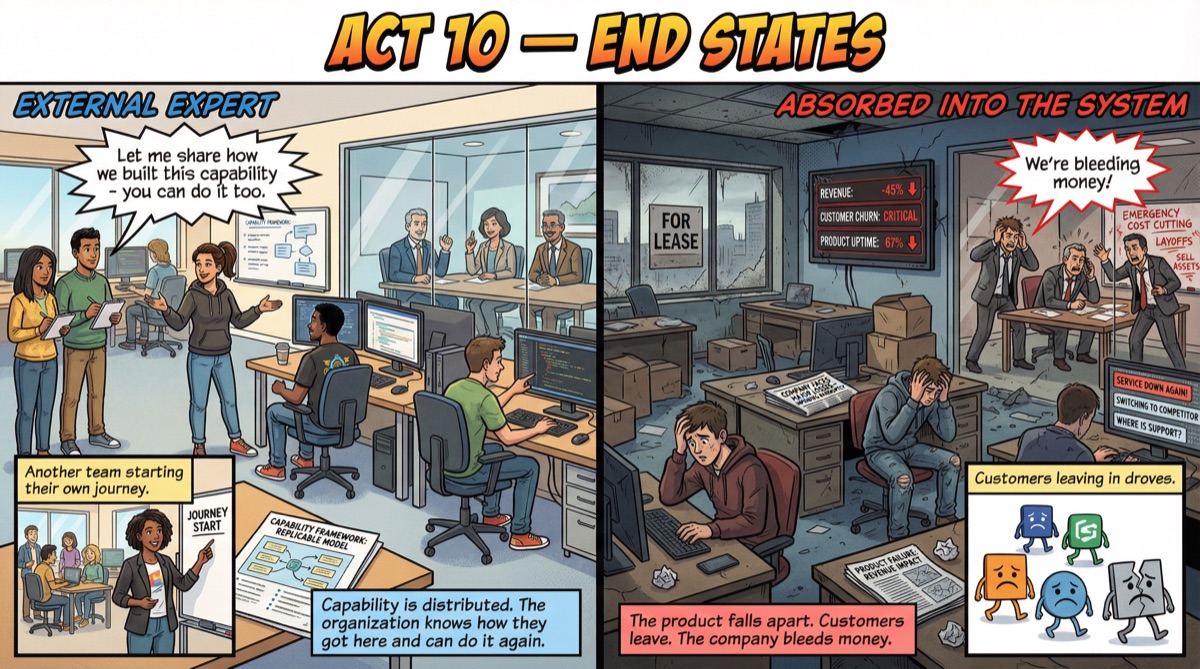
Act 10: End States
The final picture. One organization can repeat success. The other paid for its mistake.
Trusted Ally
Capability is distributed. The Advocate exits cleanly. The organization knows how they got here — and can do it again. Other teams start their own journey.
Miscast Contractor
They removed the person who had been helping them see and fix the real problems. Old issues returned. Good people left. Customers felt the instability. The cost of miscasting the role was higher than the discomfort of using it well.
The Difference Is Not Intent. The Difference Is Position.
Trusted Ally
- Clear sponsorship creates trust
- Raising risk is expected, not punished
- Observations reach the sponsor clearly
- Capability transfers to the organization
- Exit is planned and clean
- Success is repeatable
Miscast Contractor
- Role confusion removes authority
- Raising risk becomes harder than it should be
- Observations stay local or filtered
- You pay for skill uplift — then lose the investment
- Capable people leave, taking new skills with them
- Only those who can't leave remain