El Demo Day
With Alejo removed and Diego back, FinPulso seems poised for recovery. But Mariana announces she's bringing partners from her São Paulo fund for an investor demo — in 48 hours. Don Hernando refuses to show anything less than the complete vision. The team enters war room mode, racing to paper over the gaps. When Stefan argues for radical honesty, he's overruled. The countdown accelerates toward disaster.
The Announcement
FinPulso office. Tuesday, 9:15 AM.
The post-Alejo atmosphere is strange — lighter in some ways, heavier in others. The developers work with a cautious optimism, like survivors emerging from a storm who aren’t yet sure the sky has cleared.
Diego has claimed a desk near Camila. They’ve been reviewing her rebuild project since dawn, whiteboards filling with architecture diagrams and migration plans. Pipe watches from his corner, still suspicious but no longer hostile. The email Diego sent him — acknowledging Pipe’s deep knowledge of the legacy systems — had opened a door.
Stefan observes from his usual position, notebook in hand. The team dynamics are shifting. Not healed, but healing.
Then Mariana’s face appears on the conference room screen, and everything changes.
“I have news,” she says without preamble. “Good news, I think. But it comes with conditions.”

Don Hernando leans forward. “We’re listening.”
“After the board meeting, I briefed my partners on the situation. The fraud, the cleanup, the leadership changes.” Mariana pauses. “They were concerned. Understandably. But they were also impressed by how quickly you acted once the evidence was clear.”
“We did what was necessary,” Don Hernando says.
“You did. And that bought you credibility.” Mariana’s eyes are sharp. “My partners want to see FinPulso for themselves. They’re flying in Thursday. They want a demonstration of the platform — not slides, not promises. Working software.”
The silence is absolute.
“Thursday,” Sebastián repeats. “As in… the day after tomorrow?”
“As in 48 hours from now, yes.”
Don Hernando’s face is unreadable. “And if the demonstration goes well?”
“They’re prepared to discuss a bridge round. Additional funding to extend your runway while you execute the recovery plan.” Mariana’s voice softens slightly. “This is a lifeline, Don Hernando. But it’s also a test. They want to see if the team can actually deliver.”
Stefan watches the room absorb this. Sebastián looks terrified. Don Hernando looks calculating. And somewhere in the development area, Diego and Camila are still drawing on whiteboards, unaware that everything just accelerated.
“We’ll be ready,” Don Hernando says.
“I hope so.” Mariana nods once. “I’ll send the details. Thursday, 2 PM Bogotá time. Don’t disappoint me.”
The screen goes dark.
The War Room
Tuesday, 11 AM.
The conference room has transformed. Whiteboards line every wall. Post-it notes cluster in anxious constellations. Pizza boxes from last night’s dinner share space with untouched arepas from this morning’s breakfast.
Everyone is here: Don Hernando in his usual chair, radiating controlled intensity. Sebastián at the whiteboard, marker in hand, trying to map what exists versus what was promised. Isabella with her laptop, pulling up user flows and feature lists. Diego and Camila at a side table, debating technical feasibility in rapid-fire Spanish.
Stefan stands apart, watching. Pipe sits in the corner, arms crossed, waiting to see which way this goes.
“The payment processing module,” Sebastián says, pointing to a box on the whiteboard. “This is what Mariana’s partners will want to see. It’s our core value proposition.”
“And it doesn’t work,” Diego says flatly.

“It works partially,” Isabella corrects. “The happy path functions. If you enter exactly the right data in exactly the right order, you can process a payment.”
“And if you don’t?”
“Error screens. Timeouts. Occasionally a complete freeze that requires a server restart.” Isabella’s voice is tired. “We’ve been demoing the happy path to investors for months. It’s a very narrow path.”
“What about Camila’s rebuild?” Sebastián asks.
Camila looks up from her laptop. “The new payment module is clean. Good test coverage. But it’s not connected to the production database yet. We’d need to build the integration layer, test it, deploy it—”
“How long?”
“To do it right? Two weeks minimum.”
“To do it wrong?”
Camila exchanges a glance with Diego. “We could hack something together. Bridge the new code to the old database with duct tape and prayers. It might work for a demo. It might also corrupt transactions and destroy data.”
“Unacceptable,” Don Hernando says. “We cannot risk corrupting real user data for a demonstration.”
“Then we demo what we have,” Diego says. “The happy path. And we pray no one clicks the wrong button.”
The Code Review That Broke Diego
Flashback: Two months earlier. A rushed code review meeting.
The conference room smells of stale coffee and desperation. It’s 6 PM, and Diego is presenting his latest fix for the payment module — a complex refactoring that should finally stabilize the transaction processing.
Sebastián sits at the head of the table, laptop open, glancing at his watch. Isabella is there, taking notes. Alejo joins via video, his face impassive.
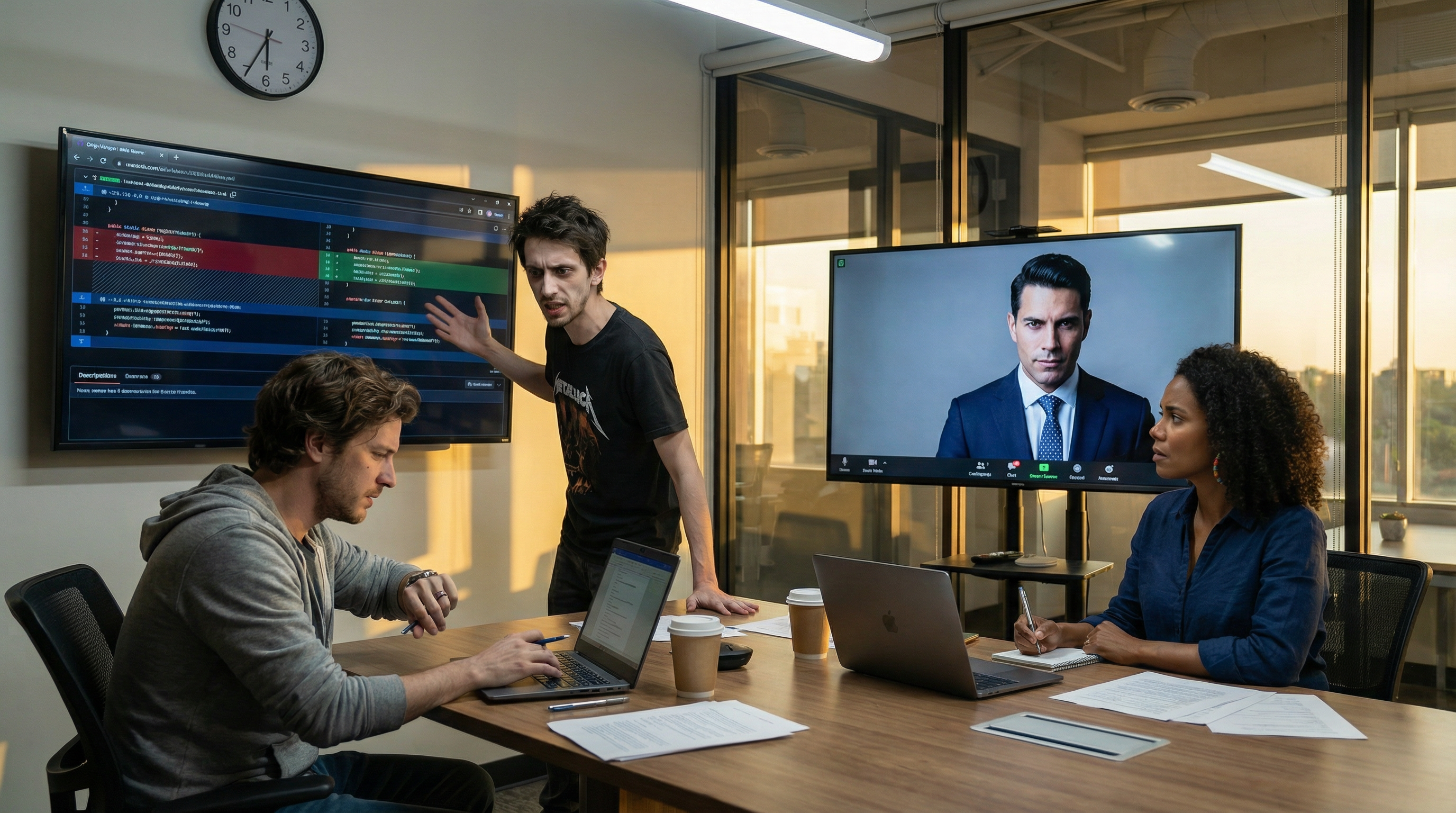
“This refactoring addresses the race conditions in the payment queue,” Diego explains, pointing to the code diff on the screen. “It adds proper locking and error handling. But it requires testing the full integration — we can’t just deploy and hope.”
“How long for testing?” Sebastián asks.
“Two days minimum. We need to simulate load, check for regressions—”
“We have the investor meeting next week,” Alejo interrupts. “The board wants to show progress. Can we deploy a simplified version? Just the core fix, skip the full testing?”
Diego’s jaw tightens. “Skipping testing is how we got the last outage. This code touches the payment flow — if it fails, real users lose money.”
“It’s a calculated risk,” Alejo says smoothly. “And we have Diego here to monitor it live.”
Isabella speaks up. “Diego’s right. We need proper validation. The investors will understand if we show stability over features.”
But Sebastián is already nodding. “Deploy the simplified version. We’ll monitor it closely. The board needs to see momentum.”
Diego meets Isabella’s eyes. She shakes her head slightly — not worth fighting. Not now.
The code goes live that night. It works. For the demo.
But Diego knows the debt is growing. Another compromise, another ghost in the sprint.
The Honest Proposal
Tuesday, 2 PM.
Stefan has been silent all morning. Now, during a break while the developers argue about database connections, he approaches Don Hernando.
“May I speak freely?”
The old man’s eyes narrow. “You’ve been speaking freely since you arrived. Why ask permission now?”
“Because what I’m about to suggest will sound like surrender.” Stefan sits across from him, setting his notebook on the table. “You’re planning to demo features that don’t work. To show a product that exists only in pitch decks. To continue the pattern that Alejo exploited.”
“That’s not—”
“It is exactly the same.” Stefan’s voice is quiet but firm. “Different motive, same behavior. Presenting a reality that doesn’t exist, hoping no one looks too closely.”

Don Hernando’s jaw tightens. “What would you have me do? Tell Mariana’s partners that we have nothing to show them?”
“Show them what you have. The actual working components. The rebuild Camila has been creating. The monitoring systems Diego installed. The real metrics — not inflated, not adjusted. Show them a team that knows its weaknesses and has a plan to address them.”
“They’ll think we’re amateurs.”
“They’ll think you’re honest.” Stefan leans forward. “These are sophisticated investors. They’ve seen a hundred demos. They know when they’re being sold a fantasy. What they haven’t seen — what almost no one ever shows them — is a team that admits reality and presents a credible path forward.”
Don Hernando is silent for a long moment. His hands rest on the table, still.
“And if they don’t invest?”
“Then you find out now, not six months from now when the runway is gone and the lies have compounded.” Stefan’s voice softens. “This is what sustainable delivery looks like. Small, honest steps. No more sprints toward cliffs.”
The door opens. Sebastián appears, looking frazzled. “We found a way to stabilize the payment flow. It requires disabling three features, but the core transaction path should hold for a 30-minute demo.”
Don Hernando looks at Stefan, then at his co-founder.
“Proceed,” he says. “We show them everything. The full vision.”
Stefan closes his notebook. Says nothing. Returns to his corner.
The Countdown
Wednesday, 11 PM.
The office has the feeling of a siege. Empty coffee cups form cairns on every surface. Someone has taped a countdown timer to the wall: 14:32:17 and falling.
Camila hasn’t slept in 36 hours. Neither has Diego. They’ve been working in parallel — Camila stabilizing the frontend, Diego patching the backend, both aware that they’re building a house of cards that needs to stand for exactly 30 minutes.
“The webhook timeout is fixed,” Diego announces, rubbing his eyes. “But we’ve got a new problem. The fraud detection module is throwing false positives on any transaction over 500,000 pesos.”
“So we demo with smaller amounts,” Isabella says.
“What if the investors ask about larger transactions?”
“We tell them it’s a feature, not a bug. Enhanced security for high-value transfers.” Isabella’s smile is exhausted. “I’ve been writing talking points all day. I have an answer for everything except ‘why doesn’t this work?’”
Pipe, surprisingly, is still there. He’s been migrating database configurations since noon, his COBOL-era experience proving invaluable for understanding the legacy systems no one else can navigate.
“The reporting module is stable,” he says gruffly. “First time in months. You’re welcome.”

Stefan walks the floor, observing. He’s seen this before — the adrenaline-fueled heroics, the last-minute miracles, the collective denial that this is any way to build software. Tomorrow, regardless of outcome, there will be a reckoning.
But not tonight. Tonight, the team believes they can do the impossible.
He hopes they’re right. He fears they’re not.
The Morning Of
Thursday, 8 AM.
Don Hernando arrives in a suit he hasn’t worn since his son’s funeral — dark, impeccable, carrying the weight of occasions that matter. He finds the development team exactly where he left them: at their desks, surrounded by the debris of battle.
“Status,” he says.
Sebastián stands, swaying slightly from exhaustion. “The demo environment is stable. We’ve run through the script fourteen times. It worked twelve of those times.”
“Twelve out of fourteen.”
“Eighty-five percent success rate.”
“And the other fifteen percent?”
Sebastián hesitates. “Various failures. A timeout here, a display glitch there. Nothing catastrophic. We’ve built in recovery points — places where we can restart if something goes wrong.”
Don Hernando nods slowly. “And what are the chances that something goes wrong during the actual demo?”
No one answers.

“Laura,” Don Hernando calls. His assistant appears instantly — she’s been hovering nearby, anticipating needs. “The conference room. Fresh flowers. The good coffee. Water with lime, not lemon — the Brazilians prefer it. And make sure the air conditioning is working. We cannot have sweating executives.”
“Already done, patrón.”
“Of course it is.” He almost smiles. “Everyone else: go home. Shower. Sleep if you can. Be back by noon looking like professionals, not survivors. We have one chance to show these investors who we really are.”
He pauses at the door.
“And who we really are is not a company that looks defeated before the battle begins.”
The Arrival
Thursday, 1:45 PM.
They come in a convoy of black SUVs from the airport — Mariana and three partners from her São Paulo fund. Two men and a woman, all in expensive casual, all carrying the confident energy of people who evaluate companies for a living.
Laura greets them in the lobby with the rehearsed warmth of someone who has managed ranchers and investors with equal skill. She guides them to the conference room, where Don Hernando waits with Sebastián and Isabella.
The developers are hidden in the back — Diego at the main terminal, Camila monitoring systems, Pipe watching the database like a hawk guarding its nest. Stefan stands near the window, present but uninvolved.
“Welcome to FinPulso,” Don Hernando says, shaking hands with each investor. “Thank you for making this journey.”

Mariana makes introductions: Eduardo, managing partner, grey-haired and sharp-eyed. Patricia, operations specialist, already scanning the room for signs of dysfunction. And Victor, the technical partner, who will be watching the demo with developer’s eyes.
“Shall we begin?” Eduardo asks.
“Absolutely.” Don Hernando gestures to the main screen. “Sebastián, our CTO and co-founder, will walk you through the platform.”
Sebastián steps to the podium. His hands are steady. His voice is clear. He’s rehearsed this a hundred times.
“FinPulso was founded on a simple belief: that financial services in Colombia are too complex, too expensive, and too inaccessible for ordinary people. Our platform changes that…”
In the back room, Diego’s fingers hover over the keyboard. The demo environment shows green across all monitors. The first API call is loading.
So far, so good.
The First Cracks
2:15 PM.
Twenty minutes into the demo, everything is working. Sebastián has shown the onboarding flow, the account dashboard, the transaction history. The investors nod along, occasionally asking questions that Isabella fields with practiced ease.
Then Victor speaks up.
“Can you show us a live transaction? Not a simulation — an actual payment between two accounts.”
Sebastián’s smile doesn’t waver. “Of course. We have a test environment that mirrors production exactly.”
He navigates to the payment screen. The cursor blinks in the amount field.
In the back room, Diego leans forward. This is the part that failed twice during rehearsals.
Sebastián enters 250,000 pesos — safely under the threshold that triggers the fraud detection bug. He selects a recipient account. He clicks “Process Payment.”
The loading spinner appears.

Three seconds. Normal.
Five seconds. Sebastián keeps talking, filling the silence.
Eight seconds. Victor’s eyes narrow.
“There’s sometimes a brief delay when connecting to our payment partners,” Isabella says smoothly. “Security verification at multiple levels.”
Ten seconds.
In the back room, Diego is already typing. The transaction is stuck in a queue — the same queue they thought they’d fixed at 3 AM.
“Camila,” he whispers. “The webhook isn’t responding.”
“I see it.” Her fingers fly across the keyboard. “Restarting the service.”
On the main screen, the spinner disappears. A green checkmark appears: Transaction Successful.
Sebastián exhales invisibly. “And there we have it. 250,000 pesos transferred instantly, with full encryption and regulatory compliance.”
“Impressive,” Patricia says. She’s writing something in her notebook.
Don Hernando allows himself a microscopic smile. The hard part is over.
Except it isn’t.
The Request
2:32 PM.
Victor has been quiet since the transaction demo, but now he raises his hand like a student with a difficult question.
“The multi-party payment feature,” he says. “The one mentioned in your pitch deck. The ability to split a transaction between multiple recipients in real-time. Can we see that?”
Sebastián’s face goes carefully blank. The multi-party feature was Alejo’s favorite slide — impressive in PowerPoint, nonexistent in code.
“That’s in our Phase 2 development,” Isabella says quickly. “We’ve been focused on perfecting the core transaction engine first.”
“The pitch deck mentioned it as a current capability.”
“The deck was… optimistic in some areas. We’ve refined our timeline based on technical realities.”
Victor nods slowly. He doesn’t look satisfied.

Eduardo clears his throat. “Perhaps we could see the fraud detection system. Mariana mentioned it was quite sophisticated.”
This, at least, exists — though “sophisticated” is generous. Sebastián navigates to the monitoring dashboard.
“Our AI-powered fraud detection analyzes transaction patterns in real-time—”
“AI-powered?” Victor interrupts. “What’s the underlying model? Random forest? Neural network? Something proprietary?”
In the back room, Diego and Camila exchange horrified glances. The “AI” is, of course, the Venezuelan contractors and their manual review process.
“It’s a hybrid approach,” Sebastián says carefully. “Machine learning combined with human verification for edge cases.”
“Can we see the model performance metrics? False positive rates, detection accuracy, latency?”
Sebastián looks at Isabella. Isabella looks at Don Hernando. Don Hernando’s jaw is set like stone.
“We can provide those in a follow-up document,” Isabella says. “The real-time dashboard focuses on operational metrics rather than model internals.”
Victor writes something in his notebook. His expression is unreadable.
The Crash
2:47 PM.
They’re almost through. Sebastián has shown the remaining features, deflecting the hardest questions with promises of documentation and follow-up calls. The investors seem… not convinced, exactly, but not walking out either.
Eduardo checks his watch. “One final item. Could we see the reconciliation report? The daily summary of all transactions, as it would appear to a bank partner?”
“Of course.” Sebastián navigates to the reporting module. “This is where Pipe’s work really shines — he’s been in banking for fifteen years and designed this system to match exactly what traditional institutions expect.”
He clicks “Generate Report.”
The screen freezes.
Not the loading spinner — a complete freeze. The cursor doesn’t move. The timestamp in the corner stops updating. The entire interface is locked.

“Technical difficulty,” Isabella says, her voice admirably steady. “Sebastián, perhaps try refreshing?”
Sebastián clicks. Nothing happens. He clicks again. The screen remains frozen.
In the back room, Diego is pulling up server logs, his face pale. “The database connection pool is exhausted. Every thread is locked waiting for a response that will never come.”
“Can you restart it?” Camila asks.
“Restarting means losing the demo session. They’d have to start over.”
“Do it.”
“It takes four minutes to reboot.”
Pipe appears behind them. “Move.” He shoulders Diego aside and starts typing commands that look like they belong in a museum. “The connection pool is hung on a legacy query — something in the reporting module that shouldn’t be running during a demo.”
“Can you kill it?”
“I can try.”
In the conference room, the silence has become unbearable. Don Hernando stands slowly.
“My apologies,” he says. “We appear to be experiencing—”
The screen flickers. Goes black. Then displays an error message in stark white text:
FATAL ERROR: Database connection timeout. Please contact system administrator.
“No.” The word rips out of Sebastián’s throat. “No, no, no, no —”
His face has gone the color of ash. His hands are shaking so violently that he knocks over his water glass, sending it shattering across the conference table. Isabella grabs his arm — whether to steady him or herself, she doesn’t know.
Patricia closes her notebook. Eduardo’s face is a mask of barely contained contempt. Victor is already standing.
“I think we’ve seen enough,” Eduardo says, and his voice is like a door slamming shut.
The Aftermath
3:15 PM.
The investors have retreated to a private conversation with Mariana in Don Hernando’s office. The door is closed. Laura stands guard outside, her face revealing nothing.
In the development area, the team sits in shell-shocked silence. Camila stares at her screen, where the error logs scroll endlessly. Diego has his head in his hands. Pipe is muttering a steady stream of profanities — hijo de puta, mierda, cabrón — his voice mixing Spanish curses with what might be COBOL commands.
Sebastián stands at the window, looking out at the Bogotá afternoon. His reflection is that of a man who has lost something important.

Stefan approaches him.
“This wasn’t your fault,” Stefan says.
“I’m the CTO. Everything technical is my fault.”
“The system failed because it was built on debt — technical debt, organizational debt, honesty debt. You inherited that debt. You didn’t create it.”
Sebastián turns. His eyes are red but dry. “I could have listened to you. Shown them what actually worked. Been honest about where we really are.”
“Yes.”
“Why didn’t I?”
“Because Don Hernando told you not to. And you still need his approval.” Stefan’s voice is gentle. “That’s not a criticism. It’s an observation. You’re still the co-founder who gave away his company because he didn’t want to fight.”
“And now I’ve lost it anyway.”
The office door opens. Don Hernando emerges, followed by the investors. His face is impossible to read.
Mariana approaches the development team. Her expression is… not angry, exactly. Something closer to resigned.
“The partners are returning to São Paulo tonight,” she says. “They’ll need time to discuss what they saw.”
“And?” Sebastián asks.
“And nothing is decided. But I won’t lie to you — it didn’t go well.” She pauses. “I argued for you. I reminded them of the leadership changes, the cleanup, the potential. But Victor was clear: he saw a platform that doesn’t work and a team that doesn’t know it.”
The words land like blows.
“We know it,” Diego says quietly. “We’ve always known it. We just weren’t allowed to say it.”
Mariana looks at him — really looks at him, seeing the returned developer for the first time.
“Then perhaps,” she says, “it’s time to start saying it.”
The Night After
Thursday, 11 PM.
The office is empty except for Stefan and Don Hernando. They sit in the old man’s office, a bottle of aguardiente between them that neither has touched.
“You were right,” Don Hernando says finally. “I should have listened.”
Stefan says nothing.
“My whole life, I’ve believed that you show strength by projecting success.” Don Hernando’s voice is thick, strange. His hands — those weathered hands that had built empires, broken horses, buried a son — are trembling. “On the ranch, you never let the workers see you doubt. In business, you never let investors see you struggle.”
He stops. A sound escapes him that might be a laugh or might be a sob.
“That philosophy built my fortune. And today…” His voice breaks. The old patriarch’s face crumples, and for a moment he looks every one of his seventy-three years. “Dios mío. Today it may have destroyed my son’s legacy. The only thing of Jorge’s I had left.”

“Jorge would have told them the truth,” Stefan says.
Don Hernando looks up sharply. “How do you know that?”
“Because you told me. The son who argued with you. Who pushed back. Who wanted to build technology companies while you insisted on cattle.” Stefan meets the old man’s eyes. “He wouldn’t have demoed features that don’t exist. He would have shown them what he was actually building and made them believe in the vision.”
“And I would have called him naive.”
“And you would have been wrong.”
The silence stretches. Outside, the city hums with a million lives unaware of the small drama in this office.
“What happens now?” Don Hernando asks.
“Tomorrow, you call a team meeting. You take responsibility for the demo failure — not the technical failure, but the decision to show more than what existed. You acknowledge that the old approach isn’t working.” Stefan pauses. “And then you ask them what they would do differently.”
“You want me to take advice from developers?”
“I want you to listen to the people who actually build things. The way you never listened to Jorge.”
The name hangs in the air between them.
Don Hernando reaches for the aguardiente. He pours two glasses. He slides one to Stefan.
“To my son,” he says. “Who was right about everything, and never got to hear me say it.”
They drink in silence.
The Shadow
Somewhere in Bogotá. Midnight.
Alejo watches the video on his phone for the third time. The demo crash. The frozen screen. The investors’ faces as they realized what they were seeing.
His contact inside FinPulso — someone he’s cultivated for months — sent the footage twenty minutes ago. It’s not official. It’s not complete. But it’s enough.

He types a message to Marco:
Alejo The demo failed spectacularly. Investors are gone. The old man is vulnerable.
Marco And the MiPago timeline?
Alejo Accelerating. They'll be desperate now. A rescue offer will look like salvation.
Marco And you?
Alejo Patience. Let them burn a little longer. Then I'll return with the solution to every problem I helped create.
Marco Elegant.
Alejo It always is.
He puts down the phone and pours himself a whiskey. The first battle was lost. But the war is far from over.
And in the ashes of FinPulso’s public humiliation, Alejandro Vega sees exactly the opportunity he’s been waiting for.
🎭 This Week's Episodes
Telenovelas show what we can't say in client meetings. The drama is heightened, but the patterns are real.
 Arrival
Stefan Richter arrives in São Paulo with a 90-day contract to fix delivery at AutoConnect Brasil. He finds 90 developers, 18 months of chaos, and a...
 What Is Offered First
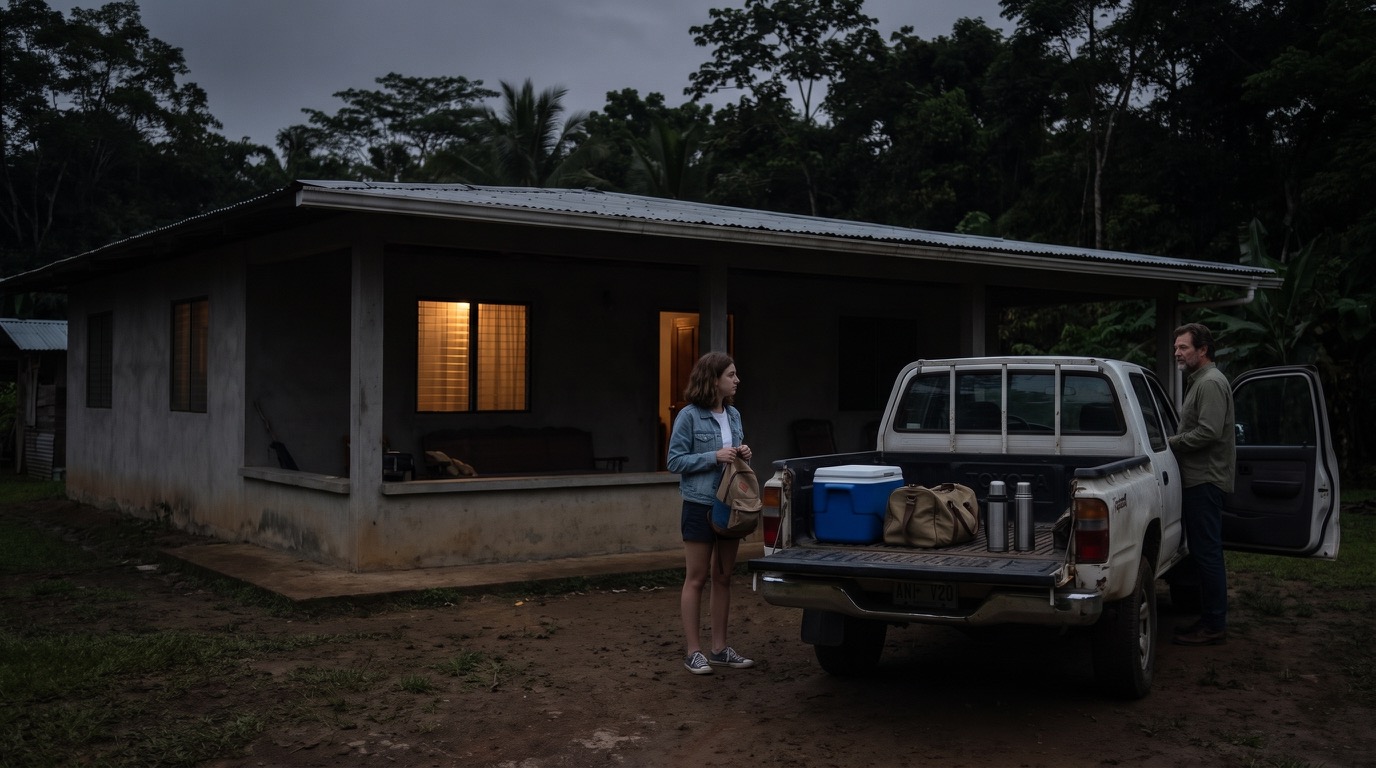
The day before Sophie flies back to Berlin, Mateo takes them to Kuna Yala. The road climbs from the Chepo side into the mountains, the Caribbean ap...
 Collapse
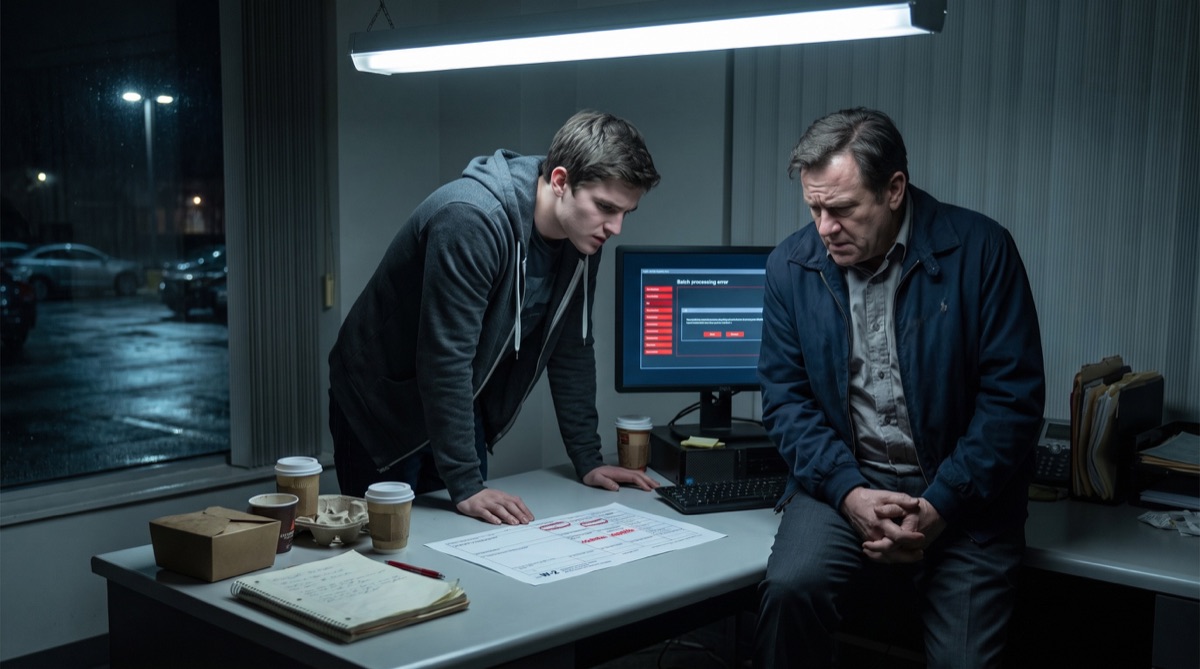
Year-end arrives with the force of something everyone has been preparing not to name. A critical COBOL tax-calculation path fails on an undocumente...
Technical Consultancy
Embedded Delivery Partner
Embedded into your team as an active contributor, reducing delivery friction and helping important work move cleanly.
Technical Advisor
Peer-style technical assessments before far-reaching decisions; reduce architectural and product risk early.
Product & Delivery
Ship working software to real users earlier. Measure impact and adapt based on evidence rather than assumption.
Custom Software Development
High quality, maintainable software. Short-term augmentation that leaves lasting capability in your own team.
Recent Articles
- The One-Person AI Company Is a Greed Fantasy (15.09.2026)
- Test Production Without Leaving a Mess (10.09.2026)
- Software Will Fail. Recovery Is the Real Metric (05.09.2026)
- Stop Outsourcing Your Product Language (01.09.2026)
- Software Has Always Moved Up the Stack (29.08.2026)
Explore More


