AI Makes Technical Execution Cheap. Judgment Stays Scarce.
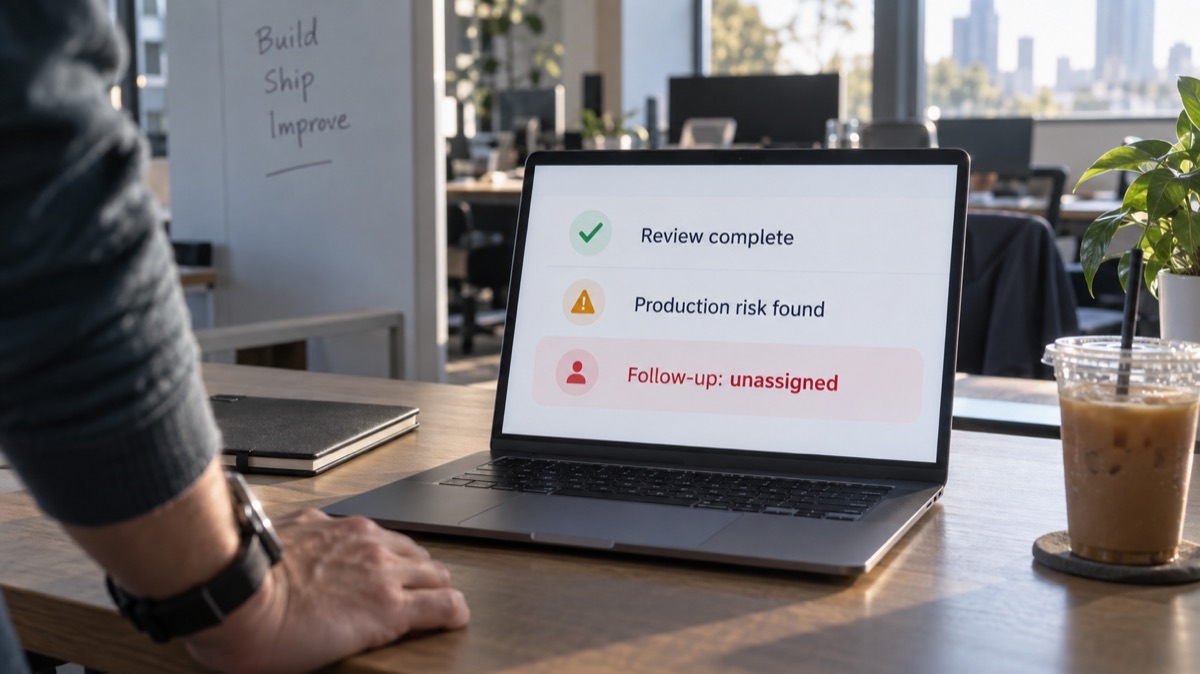
Hiring more developers or replacing them with AI agents leaves the same question unanswered: who will make the decisi...
8 min read
07.07.2026, By Stephan Schwab

Every time you board a plane, your life is in the hands of people you probably never think about. Pilots. Cabin crew. Air traffic controllers. You see a uniform and a coffee cart, and you assume the system just works. It does work, but only because aviation learned the hard way that humans break under sustained load, and that mistakes can kill hundreds of people in seconds. Every rule about shifts, breaks, paired duties, and handoffs in that industry is written in blood. Now look at how you run your developers, and especially how you run them in the age of agentic AI. Same human nervous system. Same finite attention. Almost none of the protections.
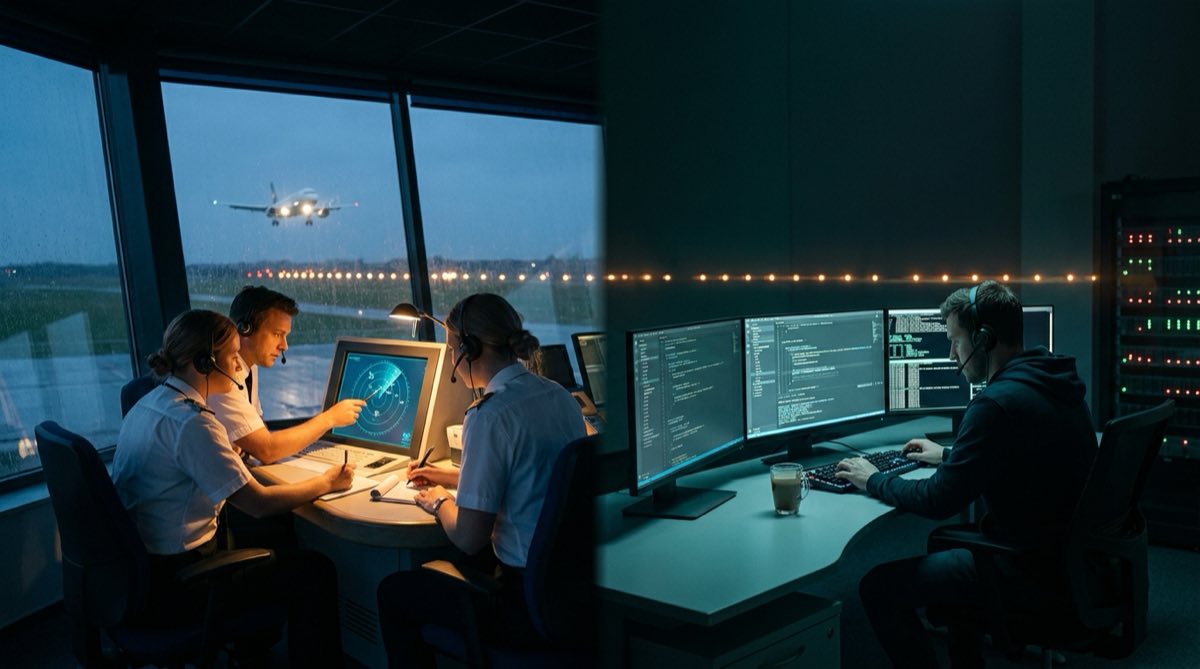
If you fly often, you have probably caught yourself thinking it: the pilots are glorified bus drivers, the cabin crew is glorified waitstaff, and the controllers somewhere in a tower are just government workers pushing buttons. That belief is comfortable. It lets you feel superior to the entire chain of people who are quietly keeping you alive at 11,000 metres.
It is also a lie you tell yourself.
The cabin crew is trained to evacuate a burning aircraft in 90 seconds. The pilots are running checklists in their sleep so that when an engine fails over the Atlantic at night, the response is reflex, not panic. The air traffic controllers are stacking aluminium tubes full of human beings in three dimensions, with separation rules that exist because, in earlier decades, people stopped existing when those rules were missing.
Aviation does not look this calm because the work is easy. It looks this calm because the industry buried its dead and rewrote its rules around what killed them.
Why do pilots have mandatory rest? Because exhausted crews flew perfectly working aircraft into the ground.
Why do controllers rotate off position and take real breaks? Because tired controllers cleared the wrong aircraft onto the wrong runway, and people died.
Why are checklists, callouts, and paired confirmations sacred in a cockpit? Because in the days when one captain was treated as the unquestionable authority, copilots watched problems develop and stayed silent, and entire planeloads of strangers paid for that silence.
The aviation industry did not choose this discipline because someone in HR thought it was nice. It chose it after counting coffins.
If you are a manager who flies often, you have personally benefitted from every one of those decisions. You have walked off a plane alive because somewhere, someone refused to let a tired pilot fly one more leg. Someone refused to let a controller stay one more hour. Someone insisted on a handoff briefing when it would have been faster to skip it.
Sit with that for a moment before you read the next part.
These rules are not folklore. They are written down, in multiple jurisdictions, by people who have read the accident reports:
Sources:
No serious aviation organisation pretends a controller can hold peak vigilance all day. No serious airline pretends a captain can fly an unlimited duty period. The details vary by country and traffic load. The principle does not vary: human attention is finite, and the cost of pretending otherwise is paid in lives.
Now look at how you treat your developers.
If you secretly think the cabin crew is just there for drinks, you probably also think your developers are just there to type. Hand them a Jira ticket, hand them an AI assistant, and watch the velocity numbers go up. Easy job. Anyone could do it. You could do it yourself if you had time.
You could not.
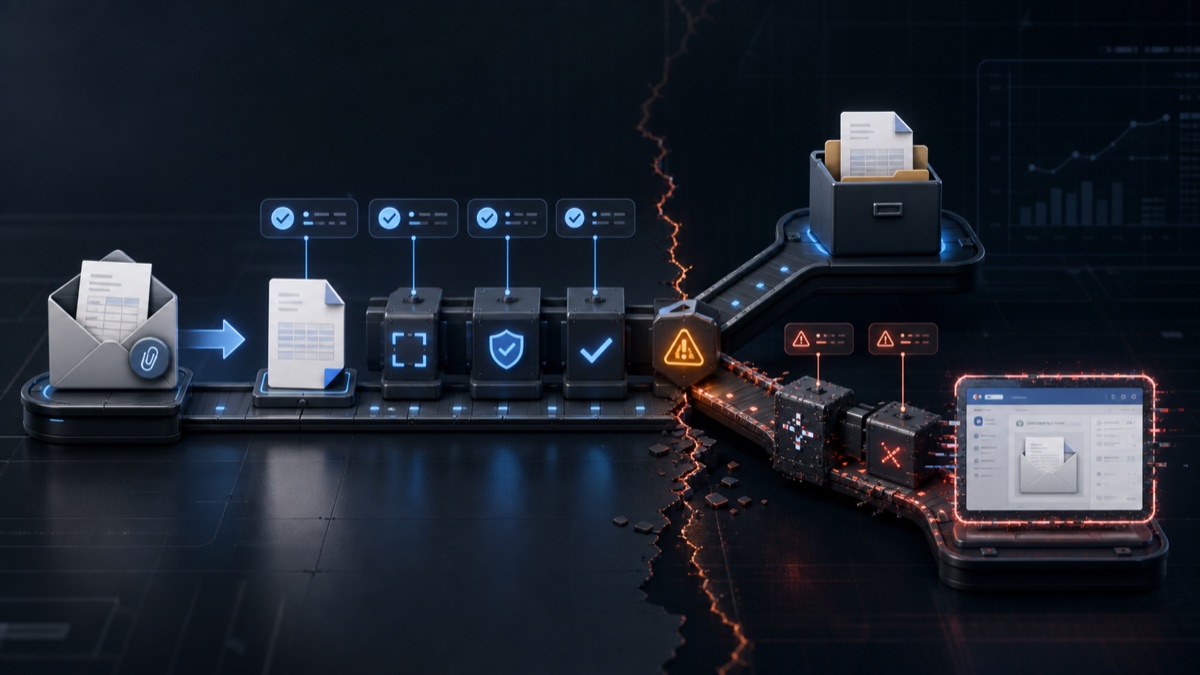
The senior engineer reviewing AI-generated changes in your codebase is doing something closer to what a controller does than to what a typist does. They are holding the safety of a system in their head while machines around them generate options at superhuman speed. They are catching the failure mode you will never see on a dashboard: the subtle data corruption that will surface in nine months, the auth bypass that will leak customer records, the silent loss of consistency across services that will eventually take down a payment flow on a Friday night.
Aviation already learned what happens when one tired human is asked to hold too much. Software has not learned it yet. You have a chance to learn it without burying anyone.
I have run multiple agentic coding sessions in parallel across multiple worktrees, tried to do “side work” while the agents ran, and felt the result in my own body. Tight chest. Sleep that does not restore. The strange exhaustion of being constantly on call while looking, on paper, completely idle.
If you push your developers into that pattern as a default, you are not getting more output. You are building up a debt that will be paid later, in mistakes, in attrition, in the kind of senior people who quietly stop caring because caring became too expensive.
Call it orchestration burnout. It is what happens when one human is expected to act as the supervising mind for multiple parallel AI streams, with no rotation, no real breaks, and no co-pilot. It maps cleanly onto patterns the occupational health field already documents:
Sources:
If you tell yourself this is “just office work,” you are doing the same thing the worst captains in aviation history did: pretending the human limit does not apply because the visible job looks calm.
A workable default for high-risk agent output: one paired supervision window of about two hours per day, treated like a cockpit phase of flight.
Inside the window:
Outside the window, low-risk items still flow. High-consequence agent output waits. The discipline is the point. The reason it works in aviation is exactly the reason it will work in your codebase.
If you genuinely care about the system, watch these:
If those numbers degrade while throughput climbs, you are not scaling capability. You are accelerating incident debt, and you will be the person standing in front of the board when it lands.
Air traffic control did not become safer by removing humans. It became safer by finally respecting them: their limits, their judgment, their need for rest, and their right to speak up when something feels wrong.
Agentic coding will demand the same shift. The people in front of those agents are not glorified typists, just as the people in front of you on your next flight are not glorified bus drivers. They are the last line of defence between your business and a very expensive failure.
You can keep treating them as interchangeable seat-fillers. You will pay for it. You may not see the bill for months, but it is being written, line by line, by every shortcut you take this quarter.
Or you can borrow the discipline that the people who keep you alive at 11,000 metres already learned the hard way, and apply it before your own industry has to write its rules in blood.
Tell me what is happening. I listen, ask a few practical questions, and reflect back what I see: where the risk may sit, what may be blocking delivery, and what looks worth checking next. No pitch, no obligation. Confidential and direct.
Talk it through. Practical reflection, no pitch.
Start a ConversationTelenovelas show what we can't say in client meetings. The drama is heightened, but the patterns are real.
 QuantumMind Arrives
Three weeks in, Stefan's teams are shipping. Radio plays podcasts. Navigation reads temperature sensors from the CAN bus. Climate control has its f...
Embedded into your team as an active contributor, reducing delivery friction and helping important work move cleanly.
Peer-style technical assessments before far-reaching decisions; reduce architectural and product risk early.
Ship working software to real users earlier. Measure impact and adapt based on evidence rather than assumption.
High quality, maintainable software. Short-term augmentation that leaves lasting capability in your own team.
Visibility and hands-on delivery
Navigator gives your leadership clear insight into patterns, blockers, and capacity. Our Embedded Delivery Partner writes production code with your team and gets delivery moving.