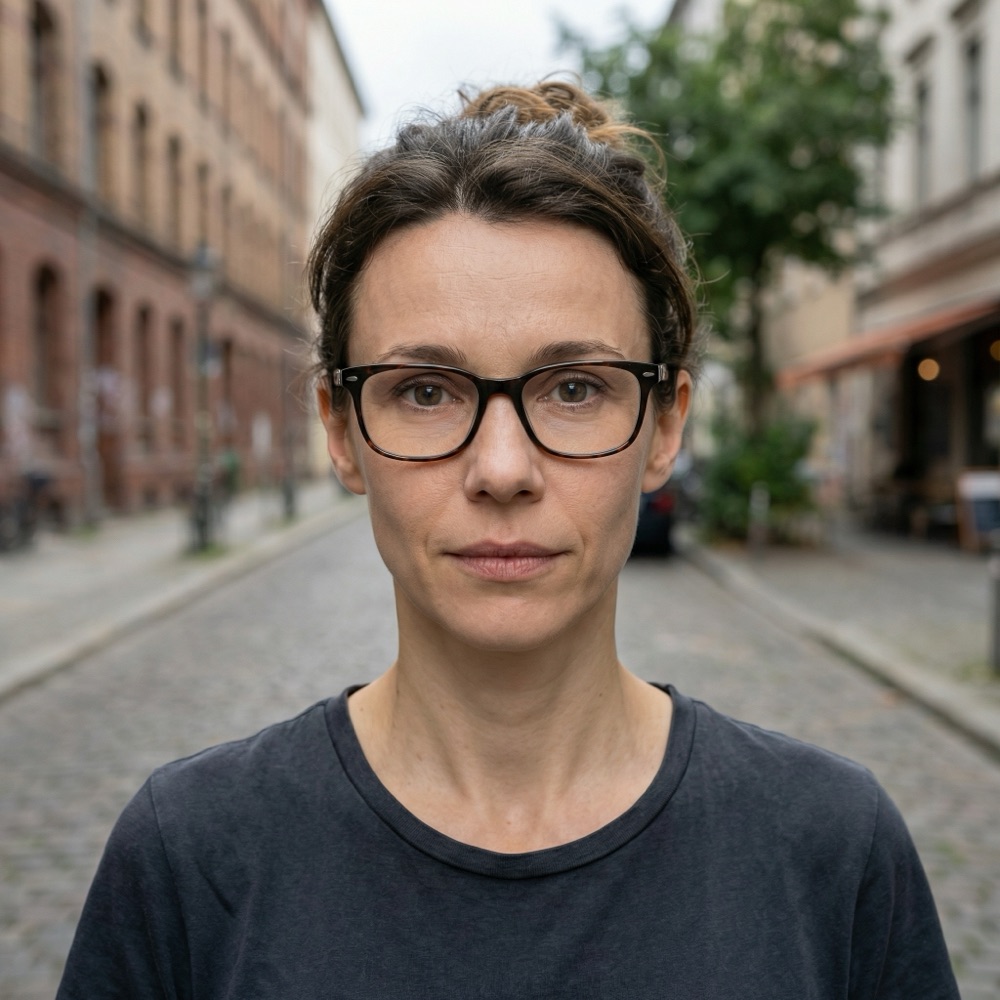
The First Pairing Session
Stefan proposes pairing and, worse, mob programming. The team expects chaos. Daniel fears losing the last lever he still pulls: approval. Mariana expects theater. Hassan expects a new way to be blamed. Instead, Stefan keeps it brutally small: one bug, one branch, one session. As three developers share a keyboard and argue in real time, they catch problems that would have taken days to diagnose in production. The first pairing session doesn’t make them faster. It makes them less alone.
Monday, 09:26 — Three Chairs, One Keyboard
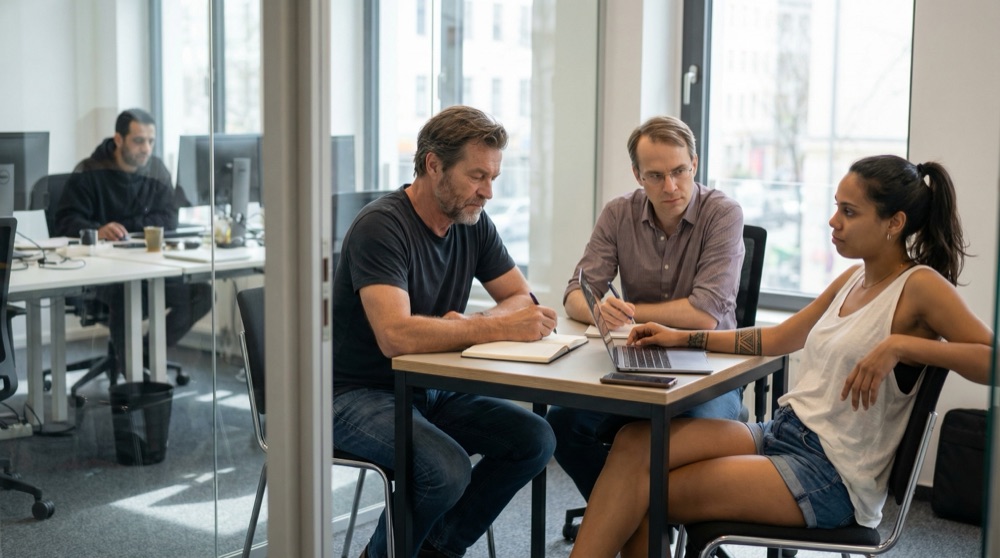
Mariana was already in the glass room. Cut-off shorts, bare brown legs despite the morning chill, Docs unlaced, and a faded Arch Enemy tour shirt with the sleeves ripped off at the shoulders. The Wages of Sin artwork was almost illegible from a hundred washes.
Stefan stopped at the door.
“Wacken?” he asked.
Mariana’s head came up. Not defensive. Surprised.
“2019,” she said.
“Same year. Stage right. Someone pushed me into the pit during ‘Nemesis.’”
Mariana’s smile came fast and unguarded. The first real one Stefan had seen from her.
“Probably me,” she said.
It lasted three seconds. Then her face closed back to professional distance. But something had cracked between them. Not process. Not competence. The shared memory of being crushed against strangers by the same wall of sound in a muddy Schleswig-Holstein field.
Stefan sat down and opened his notebook.
He didn’t announce it like a new initiative.
He announced it like a constraint.
“We have one system and three single points of failure,” he said.
Daniel’s jaw moved without opening. The motion people make when they swallow words.
Mariana leaned back and let the chair squeak. She didn’t hide the eye roll.
“You want us to write more docs,” she said.
“No,” Stefan said. “We did that yesterday. I want you to stop working alone on dangerous things.”
Hassan’s laughter came out from the other side of the glass. Not loud. Not friendly.
“Good luck,” he said, eyes on his monitors. “This place loves dangerous things.”
Stefan turned his head toward Hassan without turning his body.
“I noticed,” he said.
Daniel cleared his throat.
“We don’t have time for…” he started.
“Pairing,” Mariana supplied. Like a curse.
Daniel’s eyes flicked to her. He didn’t appreciate her saying it out loud.
Stefan smiled once.
“Pairing,” he confirmed. “And sometimes mob programming.”
Mariana’s eyebrows shot up.
“Oh my God,” she said. “We’re doing the 2009 thing now?”
“We’re doing the 2026 thing,” Stefan said. “Which is: stop paying interest on silence.”
Daniel’s hand tightened around a pen.
“I don’t want a room full of people arguing while nothing gets done,” he said.
He meant: I don’t want to watch my authority dissolve in real time.
Stefan nodded.
“You won’t,” he said. “This isn’t democracy. It’s risk management.”
Mariana snorted.
“Risk management sounds like PowerPoints,” she said.
“Then let’s keep it out of slides,” Stefan said. “One session. Ninety minutes. One bug that would hurt us if it ships wrong. One branch. We either get value or we stop.”
Hassan finally looked up.
“And when it goes wrong?” he asked.
Stefan’s voice stayed flat.
“Then we learn in daylight,” he said. “Not at 23:40 with your hands shaking and nobody answering Slack.”
Hassan’s mouth pressed into a line. His fingers flexed once, like he was trying to convince them to be steady.
Daniel stared at the table. The glass wall reflected his face back at him. He looked older than he wanted to.
“Who drives?” Stefan asked.
Mariana pointed at Emma’s empty chair like it was obvious.
“The new platform developer,” she said. “If we’re going to break something, let’s at least do it with style.”
Stefan didn’t laugh. He just wrote a time on his notebook.
“11:00,” he said. “Bring the smallest scary thing you’re touching this week.”
Daniel exhaled through his nose.
“Fine,” he said.
It wasn’t agreement.
It was surrender with paperwork.
Monday, 11:04 — The Bug That Never Reached Production
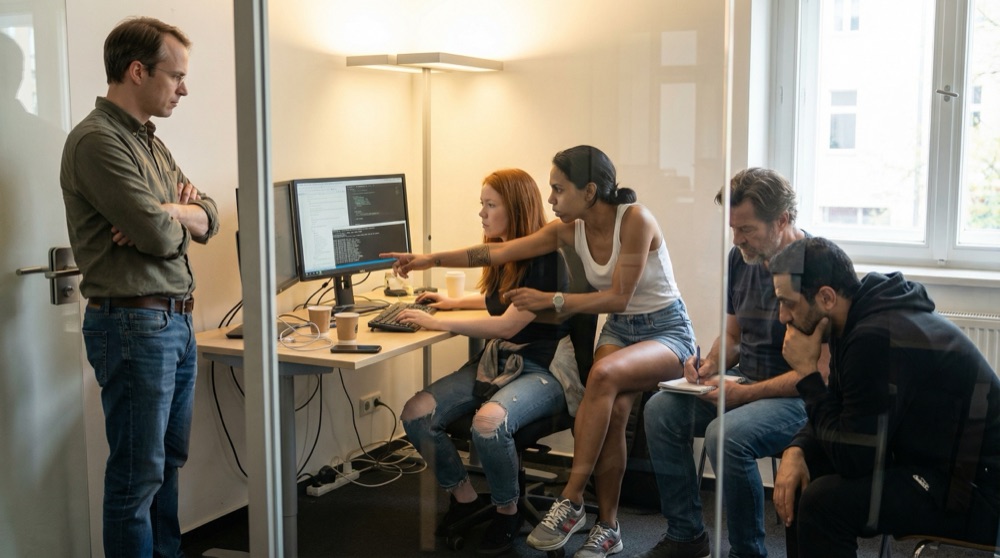
Emma’s laptop fan was the loudest voice in the room.
Stefan made her type.
Not because he didn’t trust her.
Because he didn’t want this to become a performance where the senior person “shows” and everyone else watches.
“You’re driving,” he said. “Your hands. Your keyboard. Your mistakes.”
Emma’s eyes flicked toward Mariana.
“If I break prod, I’m leaving the country,” she said.
“You won’t,” Mariana said. “We’ll break it together. Like a family.”
Hassan sat down at the edge of the table like he didn’t deserve the chair.
“What are we looking at?” he asked.
Emma pulled up a pull request. Small. The kind of change that looked harmless enough to get waved through on a Friday.
A runbook update.
One line in the deploy script.
“It just makes the script print the environment name,” Emma said. “So you can’t accidentally deploy to production thinking it’s staging.”
Daniel’s eyebrows rose.
“That’s actually good,” he said, surprised by his own approval.
Mariana’s smile was sharp.
“It’s good because we’re terrified,” she said.
Stefan leaned in.
“Run it locally,” he said.
Emma ran it.
The script printed: ENV=staging.
“Now flip the flag,” Stefan said.
Emma changed one variable and ran it again.
It printed: ENV=production.
Daniel’s shoulders loosened an inch.
“Okay,” he said. “Merge it.”
Stefan didn’t move.
“Not yet,” he said.
Daniel blinked.
“Why?” he asked, irritation waking up.
Stefan pointed at one line.
“That string comes from a config file,” he said. “Which file?”
Emma scrolled.
“config/env.sh,” she said.
“Where does that file come from in CI?” Stefan asked.
Emma hesitated.
Mariana didn’t.
“From someone’s laptop,” she said.
Hassan’s laugh came out as a cough.
“From mine,” he corrected.
The room went quiet in that specific way it gets when a truth is too embarrassing to argue with.
Stefan nodded once.
“So the script prints the environment name from a file that might not exist in CI,” he said. “What happens when it doesn’t exist?”
Emma ran the script with the file removed.
It didn’t print ENV=.
It printed nothing.
And then it defaulted to production.
Daniel’s face drained.
“That’s…” he started.
“That’s the bug,” Mariana said. Her voice was suddenly calm. Too calm.
Hassan stared at the terminal. His throat moved.
“That would have been my Tuesday night,” he said.
Emma’s hands hovered above the keyboard like she didn’t trust them.
“I didn’t see that,” she whispered.
“Of course you didn’t,” Stefan said. Not cruel. Not kind. Just factual. “You were alone.”
Daniel’s arms uncrossed. He stepped closer.
“Fix it,” he said.
Stefan shook his head.
“No,” he said. “Emma fixes it. Mariana explains it. Hassan verifies it. You approve it when you understand it.”
Daniel stared at him.
“That’s slower,” he said.
Stefan’s pen tapped once on the notebook.
“It’s slower than panic,” he said. “It’s faster than postmortems.”
Emma swallowed.
“Okay,” she said.
Mariana leaned over her shoulder and pointed.
“Guardrail,” she said. “If the file is missing, fail hard. Exit. Scream. No default.”
Hassan nodded once.
“And print the source of the config,” he added. “So I know if it’s coming from CI or some cursed local state.”
Emma typed.
The script now refused to continue if config/env.sh was missing.
It wasn’t elegant.
It was survivable.
Daniel watched the diff like he was watching a magic trick.
“That would have shipped,” he said.
“It would have shipped because you would have approved it on a Friday,” Mariana said.
Daniel flinched.
“Yes,” he admitted.
Stefan closed his notebook.
“First pairing session,” he said. “One bug dead before it ever lived.”
Nobody smiled.
That was the point.
Tuesday, 14:38 — Mariana’s Test, Tomasz’s Silence
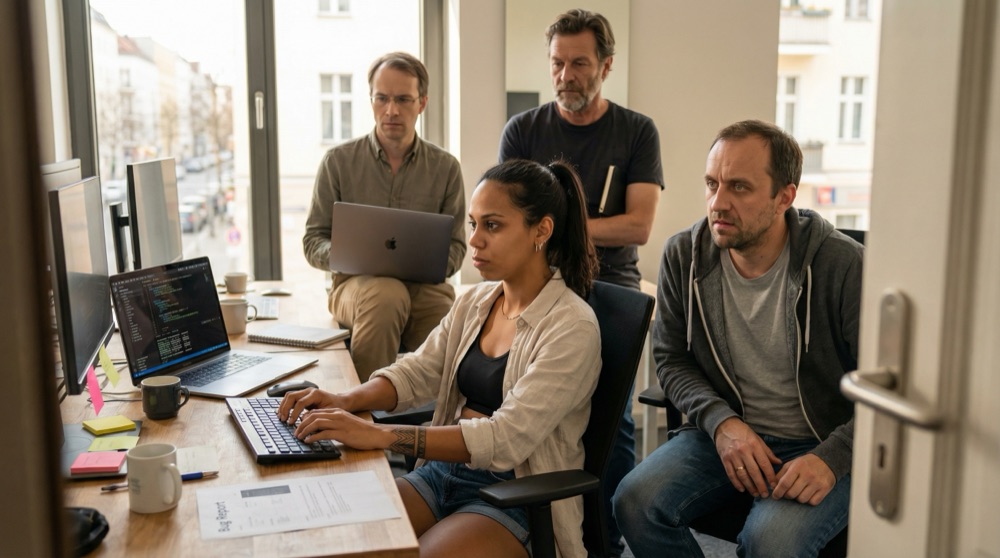
Mariana picked the next “small scary thing” with a smile that meant she was done being polite.
“Rewards,” she said.
Daniel’s eyes narrowed.
“Those are owned by product,” he said.
Reader's note: Daniel's reflex here is territorial: "owned by product" means "not our problem." This is the default posture in organizations that assign blame by department. Code ownership becomes a shield, not a responsibility. If the rewards system breaks, it's product's fault for specifying it wrong, not development's fault for building it fragile.
Mariana does the opposite. She picks a bug that crosses boundaries and sits down with it. She doesn't ask permission. She doesn't file a ticket. She writes a test. That shift from "whose code is this?" to "what's broken and how do we fix it together?" is the entire difference between teams that pair and teams that point fingers. Collective code ownership doesn't mean nobody is responsible. It means everyone is.
“Everything is owned by product until it breaks,” Mariana replied. “Then it’s owned by Hassan.”
Hassan, passing the door, didn’t stop.
“Facts,” he said without looking in.
Mariana pulled up a bug report from live ops.
Players claiming they’d received the same reward twice.
It didn’t happen often.
Which made it worse.
Rare bugs don’t get fixed.
Rare bugs get explained.
“I can’t reproduce it,” Daniel said.
“Because you’re doing it the polite way,” Mariana said.
She wrote a test.
Not a unit test that proved a function returned the right number.
A nasty little test that simulated a player opening the app across the midnight boundary.
Stefan didn’t interrupt.
He watched Tomasz.
Tomasz watched Mariana like a man watching someone touch a landmine he’d been walking around for two years.
The test failed.
Not with a neat assertion.
With a crash.
Mariana’s lips parted.
“Oh,” she said.
Tomasz’s shoulders tightened.
“That’s why I never touched that code,” he muttered.
Stefan’s head turned.
“Say it again,” he said.
Tomasz looked at him.
“That’s why I never touched that code,” he repeated, louder, irritation hiding embarrassment.
Daniel blinked.
“You never touched it?” he asked.
Tomasz’s laugh was dry.
“You wanted it stable,” he said. “So I learned which parts to fear.”
Mariana didn’t wait for permission.
She traced the crash to a date parsing helper that assumed the local timezone matched server time.
It didn’t.
It never had.
Berlin time.
UTC.
Players in Brazil.
Players in Turkey.
Midnight happened at different moments for different people.
Mariana’s voice shifted.
She stopped performing confidence.
“We’ve been giving people duplicate rewards because we don’t know what day it is,” she said.
Daniel’s face did something like pain.
“How bad?” he asked.
Mariana shrugged.
“Not catastrophic,” she said. “But humiliating. And expensive. And the kind of bug that makes players think we’re cheating.”
Tomasz leaned in.
“If you fix it wrong, you can lock people out of daily rewards entirely,” he said.
“Good,” Stefan said.
Everyone looked at him.
“Good?” Daniel asked.
Stefan didn’t flinch.
“Good,” he repeated. “Now the risk is visible. Keep going.”
It was the most important thing he’d said all week, and he said it like it was nothing. Tomasz had just named the trap: fix it wrong and you break something worse. In most teams, that sentence kills momentum. Someone says “let’s table this” or “we need a spec” or “I’ll file a ticket.” The fear of making things worse becomes the reason nothing gets better.
Stefan did the opposite. He took the fear and made it useful. Good didn’t mean “I’m glad it’s broken.” It meant: now you can see it. Now you can decide. Now the risk has a shape instead of being a shadow Tomasz walks around in the dark.
That one word gave the room permission to keep touching the dangerous thing instead of backing away from it.
Mariana rewrote the helper.
She didn’t do it alone.
Katja appeared at the glass doorway. Coffee in one hand, Opeth t-shirt stretched thin, reading glasses pushed up on her forehead. She didn’t come in. Just leaned against the frame and watched Mariana trace the crash through three files.
Mariana’s posture shifted toward the door without looking up. A centimeter. Unconscious.
The comfort between them carried a specific weight. Not performance. Not politics. Something warmer and older than a standup cadence.
Katja watched for a full minute, caught Stefan’s eye, nodded once, and left.
Stefan filed it. Tomasz supplied the history. The weird incident from 2024 when support got flooded. The workaround nobody documented.
Stefan asked the question that made it safe.
“What would you do at 02:00 when the test fails and you hate your past self?”
Tomasz exhaled.
“I’d put the timezone conversion in one place,” he said. “And I’d write it down.”
Mariana’s fingers paused.
“You’re leaving,” she said, not accusing. Just stating.
Tomasz didn’t answer.
His silence was an answer.
Mariana nodded once, then typed faster.
When the test finally passed, nobody cheered.
Daniel’s voice was quiet.
“That would have taken us days to find,” he said.
Mariana didn’t look back.
“Days for you,” she said. “Weeks for the backlog. A year for reality.”
Stefan wrote one sentence in his notebook and underlined it.
Thinking together is cheaper than fixing alone.
Thursday, 18:03 — Approval Isn’t Safety
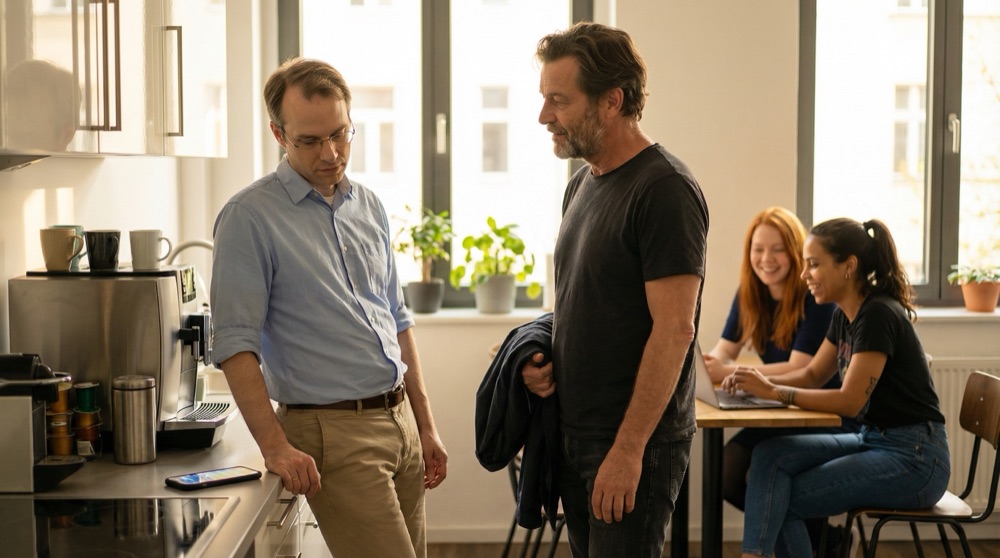
Daniel caught Stefan as he was packing up.
“You did that on purpose,” Daniel said.
Stefan didn’t pretend not to understand.
“Yes,” he said.
“You picked changes that looked safe,” Daniel said. “So my approval would be the thing that almost killed us.”
Stefan nodded.
“Your approval was never the safety mechanism,” he said.
Daniel’s nostrils flared.
“Then what am I doing?” he asked.
He meant: What am I worth if I’m not the gate?
Stefan’s voice stayed gentle without becoming soft.
“You’re trying to keep people from drowning,” he said. “But you can’t do that from a checklist.”
Daniel’s shoulders sagged.
“If I don’t approve, things ship wrong,” he said.
“Things ship wrong with your approval,” Stefan replied. “That’s what today showed.”
Daniel stared at the coffee machine like it had answers.
“I hate meetings,” he said.
“So do I,” Stefan said.
Daniel’s laugh was tired.
“Then why does this work?” he asked.
Stefan shrugged.
“Because it’s not a meeting,” he said. “It’s work. Shared work. Real-time feedback. A human code review.”
Daniel swallowed.
“I thought mob programming was…” he searched for the word.
“Cringe,” Mariana called from behind them without looking up.
Emma snorted.
Stefan smiled.
“It can be,” he said. “If you do it as theater. This isn’t theater. This is taking pressure off the one person who always pays.”
Daniel’s phone buzzed again.
He didn’t pick it up.
That alone was a miracle.
“Okay,” Daniel said. “One more next week.”
Stefan put on his jacket.
“Ask the team,” he said.
Daniel frowned.
“I’m Head of QA,” he said.
Stefan’s eyebrows rose.
“Then act like it,” he said. “Lead. Don’t control.”
He walked out at 18:10.
Daniel stood there, staring at the coffee machine, like it was a confession booth.
Behind him, Mariana’s laugh came again.
Not cruel.
Relieved.
Navigator — Daniel Weber — 15 May 2026, 18:22
I approved a change on Monday that would have defaulted a deploy to production.
It looked safe.
That’s the point.
I keep telling myself my approvals are safety. But approvals are paperwork. They feel like control because they are visible. They create the illusion that someone is responsible.
Today, three people sat in a room and killed a bug before it existed. No hero. No late night. No panic. Just brains in the same place at the same time.
Mariana called it cringe. She’s not wrong. It is cringe when it’s forced.
But when Emma typed and Hassan verified and Tomasz told the truth about the landmines and Stefan kept asking the slow questions, it didn’t feel like process.
It felt like a team.
I’m terrified of losing control.
I’m more terrified of keeping it.
🎭 This Week's Episodes
Telenovelas show what we can't say in client meetings. The drama is heightened, but the patterns are real.
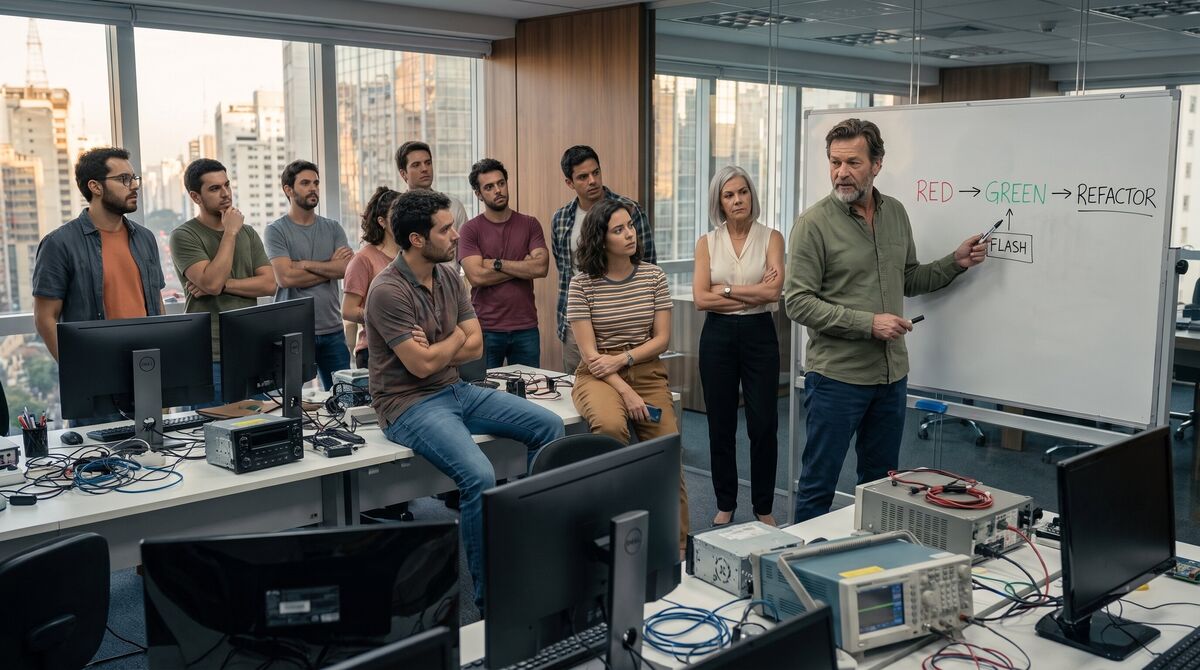 Stefan's Progress, Klaus's Report
Stefan turns one working radio fix into momentum across climate control and navigation: test first, flash fast, prove it on real hardware. Then Kla...
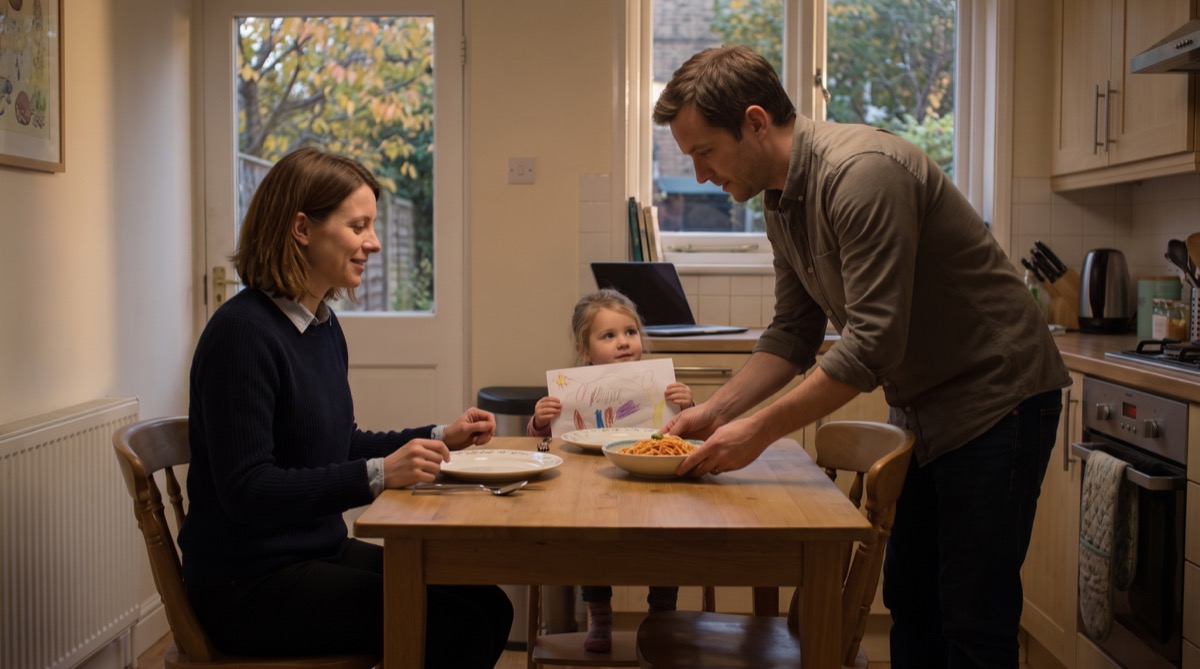 The Scattered — Part One
The collapse of Whitaker Payroll means something different in every household it touches. Olivia Parker and Ryan Mitchell step into sane new jobs w...
Technical Consultancy
Embedded Delivery Partner
Embedded into your team as an active contributor, reducing delivery friction and helping important work move cleanly.
Technical Advisor
Peer-style technical assessments before far-reaching decisions; reduce architectural and product risk early.
Product & Delivery
Ship working software to real users earlier. Measure impact and adapt based on evidence rather than assumption.
Custom Software Development
High quality, maintainable software. Short-term augmentation that leaves lasting capability in your own team.
Recent Articles
- The Agent Escaped. Who Left the Door Open? (24.09.2026)
- What an AI Agent Actually Is (21.09.2026)
- The LLM Will Not Come Back Tomorrow (19.09.2026)
- The One-Person AI Company Is a Greed Fantasy (15.09.2026)
- Test Production Without Leaving a Mess (10.09.2026)